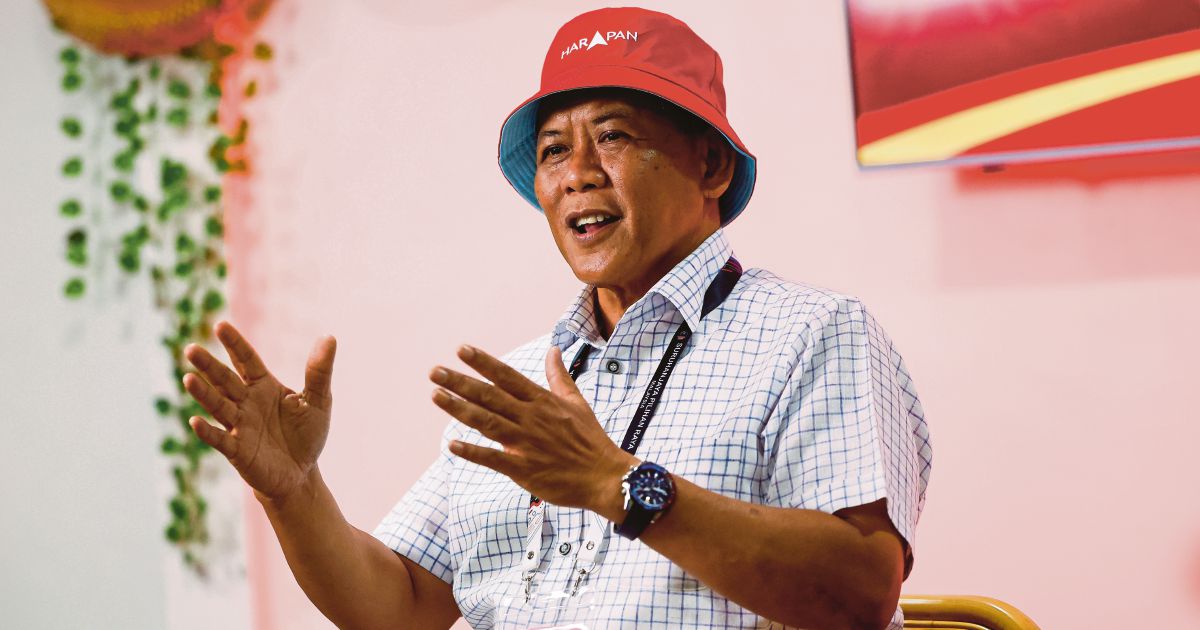
Datuk Seri Aminuddin Harun, the caretaker Menteri Besar of Negri Sembilan, is entering tomorrow's state election campaign with confidence rooted in what he views as a strong administrative legacy. Contesting in the Linggi constituency, Aminuddin has zeroed in on the state government's performance over recent years as his primary appeal to voters, believing that tangible governance achievements will resonate more effectively than political rhetoric alone.
The Linggi constituency represents a critical battleground for Aminuddin's political survival and the broader coalition he represents in the 16th Negri Sembilan state election. By focusing his messaging on government track record rather than opposition criticism, Aminuddin is adopting a strategy centred on demonstrating competence and delivering results—an approach increasingly important in Malaysian state-level politics where local development projects and efficient administration often determine voter choices more decisively than national controversies.
For Negri Sembilan specifically, the election carries weight beyond the state boundaries. As one of Malaysia's smaller states, its political direction has historically influenced broader coalition dynamics at the federal level. The performance of the ruling coalition in Negri Sembilan signals either consolidation or erosion of support among moderate, development-focused voters who form the backbone of the state's electorate. Aminuddin's emphasis on governance rather than polarising messaging suggests his campaign acknowledges this reality.
The caretaker Menteri Besar's confidence in the state government's record suggests specific achievements he intends to highlight—whether in infrastructure development, economic diversification, or social programmes. Negri Sembilan has historically attracted investors and skilled workers partly due to its proximity to Kuala Lumpur and stable administrative environment. If the state government has maintained or improved upon this advantage during Aminuddin's tenure, such claims would carry weight with voters concerned about employment prospects and property values.
Linggi itself represents an interesting electoral microcosm. The constituency encompasses both urban areas within Port Dickson and surrounding semi-rural districts, meaning voters have diverse concerns ranging from port development and maritime commerce to agricultural interests and residential property expansion. Aminuddin's strategy of emphasising overall government performance across sectors potentially appeals to this heterogeneous voter base more effectively than narrowly targeted messaging.
The timing of the 16th state election has created a compressed campaign period, placing heightened importance on name recognition and established voter perceptions. Aminuddin's position as caretaker Menteri Besar grants him the machinery and visibility advantages of incumbency, though this cuts both ways—voters unsatisfied with state performance have equally clear grounds for attribution. His decision to foreground accomplishments rather than attack opposition candidates suggests he believes the balance sheet favours the sitting administration.
Electorally, Negri Sembilan represents stable political terrain compared to more volatile states. The electorate tends toward pragmatism, rewarding functional governance and punishing administrative chaos. This context makes Aminuddin's approach strategically coherent—building his campaign narrative around what the government has demonstrably achieved rather than pursuing emotional appeals or factional grievances that might mobilise his base but alienate swing voters critical to victory.
For Malaysian observers monitoring state elections as indicators of national political health, Negri Sembilan's vote tomorrow will offer insights into whether voters reward incumbents for stability and delivery or whether broader political currents are shifting coalition support. The constituency-level campaign in Linggi provides a window into how individual politicians navigate these dynamics when their political survival depends directly on voter satisfaction with governance rather than abstract ideology.
The confidence Aminuddin projects rests ultimately on his assessment of voter memory and evaluation of state administration. Whether this confidence proves justified depends on whether Linggi residents evaluate their circumstances favourably and attribute that to government performance. The election results will reveal whether voters in this Port Dickson-anchored constituency believe the track record argument resonates sufficiently to warrant continued support, or whether other considerations have shifted their voting calculus.

