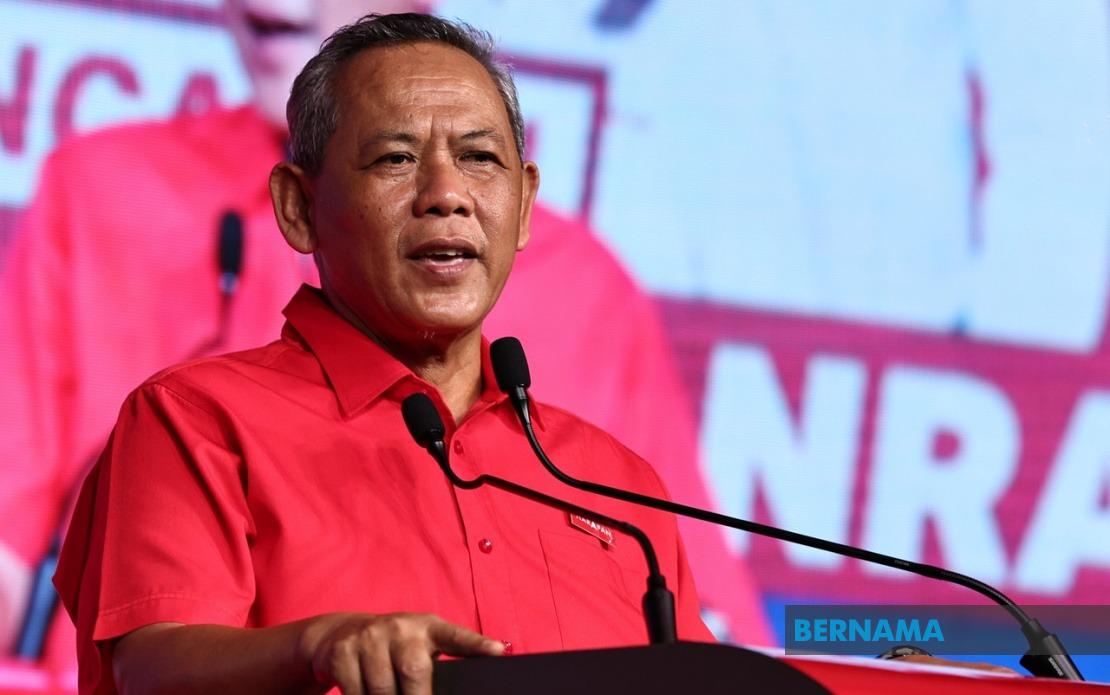
Ahead of Negeri Sembilan's 16th state election, Menteri Besar Datuk Seri Aminuddin Harun has made a direct appeal to constituents in the flood-prone Linggi constituency to base their electoral decision on the government's track record in tackling infrastructure problems, rather than permitting opponents to weaponise a long-standing environmental challenge for political advantage. Speaking after Friday prayers in Seremban on July 17, Aminuddin, who stands as the Pakatan Harapan candidate for the Linggi seat, sought to reframe public discussion around the state's recurring flood crisis by emphasising the tangible measures his administration has already set in motion.
The Linggi flooding issue has gained traction on social media platforms, with residents frequently reporting severe waterlogging during periods of heavy rainfall in the Seremban area. Rather than dismissing these concerns, Aminuddin acknowledged the legitimacy of the problem while insisting that solutions cannot materialise overnight through political rhetoric alone. He pointed to the state government's proactive approach, noting that two separate flood mitigation projects affecting Linggi have received formal approval and are now in the implementation phase through coordinated effort between state and federal authorities.
These dual infrastructure initiatives represent the government's commitment to systematic problem-solving grounded in proper planning and technical execution rather than electoral opportunism. Aminuddin emphasised that such projects inherently require substantial time to design, fund, and construct to specification, making them unsuitable subjects for quick political messaging or blame-shifting. By publicly articulating the timeline and collaborative nature of these efforts, the Menteri Besar sought to demonstrate administrative competence and strategic thinking to voters evaluating competing claims about governance capacity.
The framing employed by Aminuddin reflects a broader strategic choice by Pakatan Harapan in Negeri Sembilan to position itself as the party of institutional delivery and practical results. Rather than engaging in tit-for-tat political debate over who is responsible for Linggi's flooding history, the ruling coalition has elected to concentrate messaging on what it characterises as proven administrative performance throughout its tenure governing the state. This approach carries implicit criticism of opposition parties, suggesting that their tendency to exploit public grievances without offering substantive solutions represents poor governance instinct.
As the Negeri Sembilan Pakatan Harapan chairman, Aminuddin stressed that the coalition's electoral offering rests fundamentally on its development track record and ongoing infrastructure investments visible to constituents. He explicitly contrasted this evidence-based appeal with what he characterised as opposition political strategy, though he stopped short of naming specific competing parties or detailing their policy positions. This rhetorical restraint may reflect confidence that Pakatan Harapan's performance speaks sufficiently for itself, or alternatively, a calculation that direct attacks on opponents might undermine the statesman-like positioning he was attempting to establish.
The comments reveal underlying tensions within Negeri Sembilan politics between demands for immediate solutions to chronic problems and the structural reality that infrastructure remediation requires extended periods for planning, approvals, and execution. Residents frustrated by recurring floods may view incremental progress as insufficient, particularly if water damage to homes and businesses continues during the election campaign period. Aminuddin's appeal to voter maturity and wisdom suggests awareness of this disconnect, essentially asking constituents to distinguish between long-term strategic commitment and short-term populist positioning.
Geographically and politically, the Linggi constituency occupies significant importance within Negeri Sembilan's electoral landscape, and control of this seat could influence overall state composition following the August 1 polling day. Flood-affected communities represent a concentrated voting bloc with direct material interest in seeing actual resolution of their environmental challenge. How effectively Aminuddin's emphasis on approved projects and implementation timelines resonates with these voters will likely prove decisive in determining whether Pakatan Harapan retains the seat or surrenders it to opposition challengers.
The Election Commission has established a compressed timeline for the state electoral process, with nomination day scheduled for July 18, early voting on July 28, and general polling on August 1. This compressed schedule grants campaigns limited opportunity to build sustained messaging around infrastructure initiatives or shift public perception significantly. Aminuddin's early intervention on the flooding question suggests recognition that establishing narrative dominance over the issue requires prompt action before opposition candidates claim framing advantage.
For Malaysian voters and observers, the Linggi flooding controversy exemplifies recurring debates across the country regarding political responsibility for infrastructure deficiencies. In urban and semi-urban areas particularly, drainage and flood mitigation capacity frequently lags behind rapid development and climate-induced weather intensification. Politicians across the ideological spectrum have faced similar pressure to demonstrate competence in managing these increasingly expensive and technically complex problems.
Aminuddin's plea that voters distinguish between substantive governance and opportunistic politicking reflects deeper concerns about electoral discourse quality in Malaysian democracy. The implicit suggestion that opposition parties exploit flooding for political gain without offering credible solutions reflects partisan confidence but also hints at frustration with what ruling coalitions perceive as obstructionist opposition tactics lacking constructive alternatives. Whether voters in Linggi accept this framing or view it as dismissal of legitimate grievances will significantly shape the coming election's outcome and broader perceptions of how governance priorities are balanced against political messaging in Negeri Sembilan.

