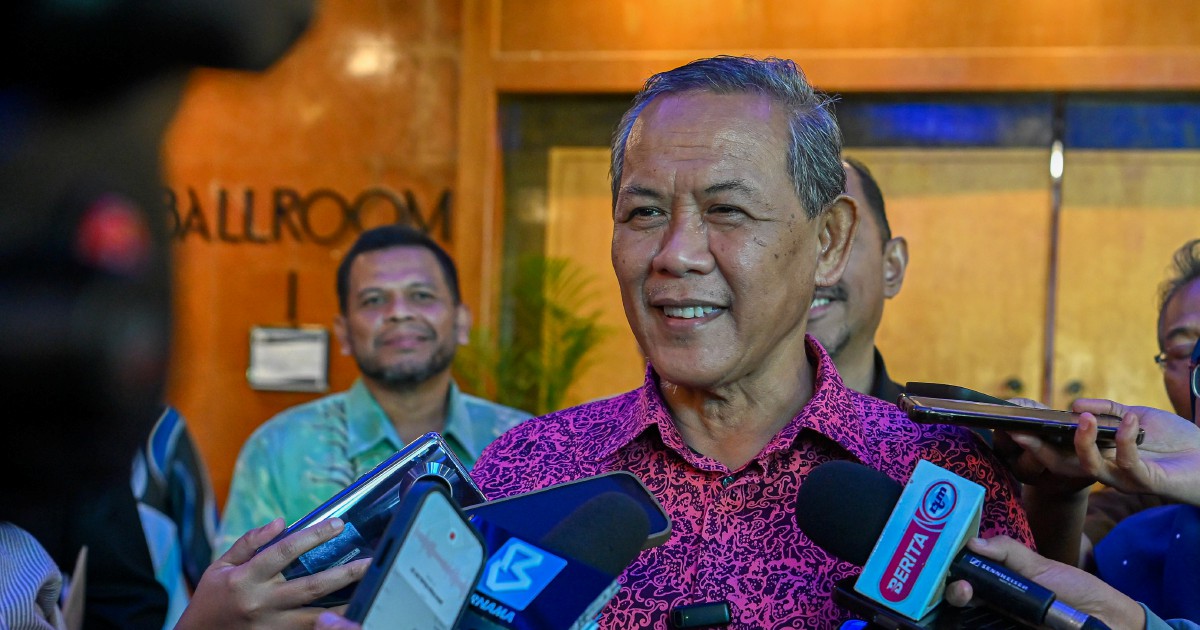
Negri Sembilan Menteri Besar Datuk Seri Aminuddin Harun has called for the Linggi flooding crisis to be evaluated on substantive grounds, urging the state's electorate not to permit the recurrent problem to be weaponised for partisan advantage as the 16th Negeri Sembilan state election approaches. Speaking from Seremban, Aminuddin emphasised that voters ought to weigh the government's demonstrated commitment to resolving the region's longstanding inundation challenges against rhetorical campaign pledges from rival factions.
The Linggi River system has haunted Negeri Sembilan's development for decades, with communities along its basin experiencing seasonal and increasingly unpredictable flooding that disrupts livelihoods, damages property, and strains state resources. The river's watershed encompasses critical agricultural zones and residential areas near Seremban, making flood mitigation not merely an administrative concern but a material issue affecting thousands of families who have endured repeated displacement and economic losses. The proximity to the state capital amplifies political interest in the problem, as solutions—or their absence—become visible benchmarks of governmental competence.
Aminuddin's intervention suggests mounting awareness within the state administration that opposition parties and rival coalitions intend to exploit the Linggi flooding narrative during the election cycle. In Malaysian state politics, infrastructure failures and environmental crises frequently become central campaign talking points, with each faction claiming superior remedial capacity. By preemptively framing the issue as one requiring measured assessment rather than opportunistic scoring, the Menteri Besar appears to be establishing a threshold for evaluating his administration's track record on this specific challenge.
The Negeri Sembilan government has undertaken mitigation works aimed at reducing flood severity and frequency along the Linggi corridor. These initiatives encompass river deepening, embankment reinforcement, retention pond construction, and improved drainage networks in vulnerable townships. The scope and timeline of these projects reflect both the technical complexity of watershed management and the budgetary constraints typical of state-level governance in Malaysia. Aminuddin's public reference to ongoing works suggests an attempt to demonstrate visible progress and forward momentum, countering potential opposition narratives of inaction or negligence.
Flooding in the Linggi catchment area stems from multiple interconnected factors: inadequate channel capacity relative to monsoon-season precipitation, rapid urbanisation in upstream areas that increases surface runoff, agricultural land-use changes that reduce natural water absorption, and the river's geographical characteristics creating bottlenecks at several locations. Addressing these root causes requires sustained, multi-year investment and coordination across different levels of government—state public works departments, federal water authorities, and local councils. The technical complexity means that campaign promises of quick fixes risk misleading voters about realistic timelines for meaningful improvement.
The electoral context heightens political sensitivity around the Linggi issue. In a 16-member state assembly, control often hinges on marginal seats where environmental and infrastructure concerns influence voter behaviour substantially. Communities that have suffered repeated floods may prioritise demonstrated competence over political rhetoric, yet they are also susceptible to demands for tangible change if existing programmes appear slow or insufficient. This dynamic creates pressure on both the incumbent administration and opposition parties to articulate credible solutions rather than merely assigning blame.
Aminuddin's emphasis on not politicising the issue reflects a broader governance challenge in Malaysian politics: balancing legitimate public criticism of government performance with the tendency for natural disasters and infrastructure problems to become electoral ammunition. Voters rightly expect their elected representatives to prioritise public safety and economic stability, yet the machinery of competitive politics often reduces complex challenges to simplified campaign messaging. The Menteri Besar's appeal implicitly acknowledges this tension while attempting to elevate the conversation toward substantive evaluation.
The Linggi flooding problem has historical dimensions that provide context for current efforts. Previous administrations have launched initiatives addressing the issue, with varying degrees of success and funding commitment. Some projects remain incomplete, others have yielded only partial results, and newer schemes attempt to incorporate lessons from earlier attempts. This history means that voters in affected areas possess direct experience against which to measure current claims and new proposals. Aminuddin's call for assessment based on concrete measures rather than campaign rhetoric may resonate with constituents fatigued by unfulfilled promises, but only if the government's actual results are demonstrably superior.
Regional and national observers view state-level flood management as an indicator of administrative capacity and resource allocation priorities. Negeri Sembilan's approach to the Linggi problem contributes to broader patterns of how Malaysian states tackle environmental crises and infrastructure deficiencies. Successful mitigation efforts could establish models for other flood-prone regions, whilst continued problems reinforce perceptions of governance limitations. The upcoming election provides an opportunity for voters to signal preferences about how they wish their state to address recurring environmental and development challenges.
Looking forward, the political dynamics surrounding Linggi flooding will likely intensify as campaign activities accelerate. Incumbent officials will highlight investment levels and project completions, whilst opposition candidates will emphasise inadequacies and propose alternative approaches. The electorate's assessment will ultimately reflect not only the severity of remaining problems but also their perception of which political formation demonstrates superior commitment to long-term solutions rather than opportunistic messaging. Aminuddin's preemptive call for focus on substantive measures may help frame voter expectations, yet the proof of governmental competence will rest on tangible outcomes rather than rhetorical appeals.

