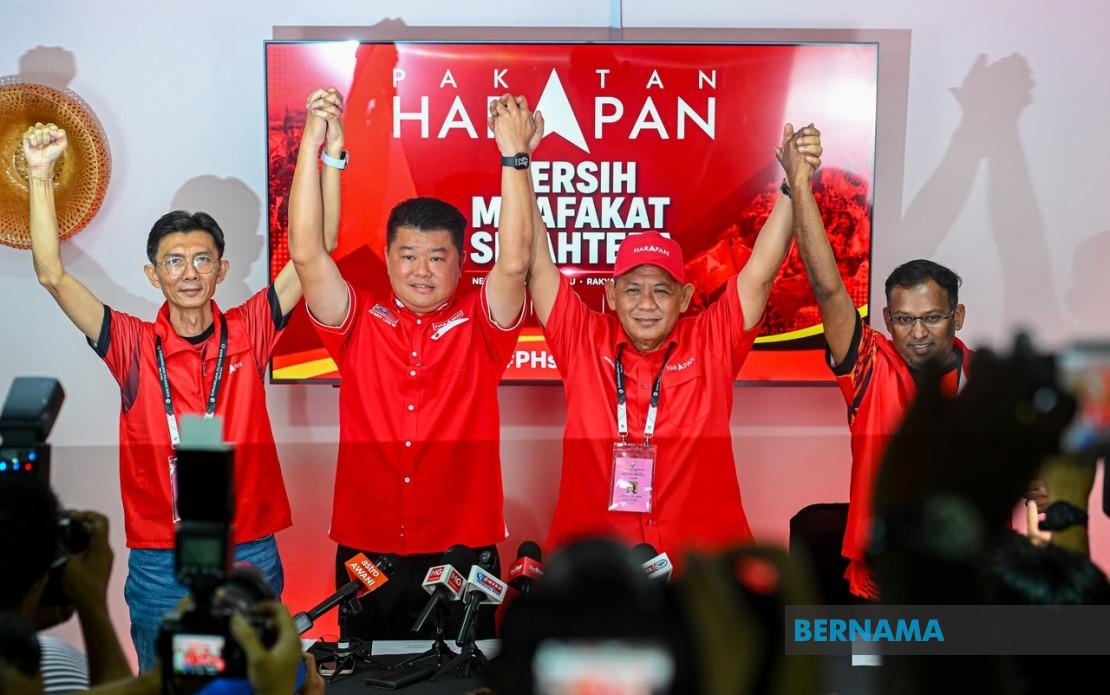
The Negeri Sembilan chapter of Pakatan Harapan sought to present a unified front on Saturday when its state chairman Datuk Seri Aminuddin Harun publicly addressed mounting speculation about tensions within the coalition's Port Dickson division. Speaking in Port Dickson, the menteri besar categorically rejected suggestions that disagreements between senior party figures or campaign operatives had compromised the coalition's prospects in five state constituencies falling under the Port Dickson parliamentary seat—namely Chuah, Lukut, Sri Tanjung, Bagan Pinang and Linggi.
The reassurance appeared designed to counter narrative damage triggered by controversy over the re-nomination of Chuah's sitting assemblyman Datuk Yew Boon Lye, which had sparked discussion on social media platforms and implicated Port Dickson PKR deputy division chief Datuk Kenny Chiew Chi Kin in the dispute. Rather than permitting the matter to fester publicly, Aminuddin framed the disagreement as already settled through internal processes, emphasizing that both party machinery and senior figures remained committed to a coordinated electoral strategy across the five constituencies.
In his remarks, Aminuddin underscored Chiew's continued dedication to strengthening party operations despite not securing a candidate nomination for the state election. The menteri besar characterized Chiew's decision to pledge full backing for all PH contenders as reflective of a broader commitment within the coalition to prioritize collective victory over individual advancement. This gesture—publicly acknowledged and praised by Aminuddin—appeared intended to neutralize perceptions that internal competition had bred lasting acrimony or operational divisions that might undermine campaign effectiveness.
Aminduddin himself contests the Linggi state seat as PH's nominee, positioning him as a direct stakeholder in the coalition's performance across the Port Dickson parliamentary zone. His intervention carried particular weight given his dual roles as menteri besar and PH's state chairman, roles conferring both symbolic and practical authority over party direction in Negeri Sembilan. By personally addressing the matter and publicly commending Chiew's commitment, Aminuddin signaled that leadership remained engaged and invested in resolving potential friction before it could metastasize into visible dysfunction.
The timing of Aminuddin's statement proved strategically significant, arriving mere days before early voting scheduled for July 28 and the main polling date of August 1. With the election less than two weeks away, any perception of internal division risked undermining voter confidence in PH's capacity to govern effectively. The coalition's messaging therefore concentrated on reassurance, with Aminuddin explicitly attributing speculation about rifts to deliberate efforts by unnamed parties keen to portray PH negatively in the electoral contest.
Yew's position as the incumbent Chuah assemblyman added context to the dispute. In the 2023 state election, he secured the seat with a comfortable margin of 6,298 votes against Perikatan Nasional candidate Tang Jay Son. This time, however, Yew faces a different electoral landscape, with Barisan Nasional fielding Pau Jeou Ching as the opposition contestant. The shift in opposition composition potentially altered strategic calculations within the Port Dickson division, though Aminuddin's remarks avoided direct discussion of electoral dynamics or why the re-nomination process had generated friction initially.
The Port Dickson parliamentary constituency encompasses five state seats, making the zone strategically important for PH's performance in the Negeri Sembilan state election. Coalition control of all five seats would substantially strengthen PH's position in the state assembly, whereas losses in any constituency could signal slippage in voter support or coalition unity. Aminuddin's emphasis on winning all five seats reflected awareness that partial victories would invite questions about the coalition's appeal and cohesion, potentially emboldening rivals to claim momentum heading into subsequent elections.
From a broader Southeast Asian perspective, this episode illustrates how Malaysian electoral coalitions manage internal tensions during campaign periods. Pakatan Harapan, formed as an opposition alliance and repositioned as governing coalition after the 2018 general election, remains a work-in-progress in terms of organizational integration and conflict resolution. The Port Dickson case demonstrates that state-level PKR operations and broader coalition structures occasionally generate disputes over candidate selection—a perennial tension in multi-party alliances where regional parties compete for influence and nominations.
The timing and scale of the dispute warrant attention because Malaysian political culture closely monitors coalition stability through proxy indicators such as internal nomination controversies and public statements by senior figures. International observers and regional analysts frequently examine such episodes for signs of coalition weakness that might presage electoral reverses or structural fracturing. Aminuddin's intervention, though relatively routine in Malaysian political practice, represented an attempt to contain damage and prevent speculation from crystallizing into genuine organizational strain.
Looking forward, the Port Dickson outcome will provide early evidence of whether PH's Port Dickson apparatus remains operationally unified or whether tensions identified in this pre-election period translate into voter defection. A decisive sweep across all five constituencies would vindicate Aminuddin's claims that internal processes had resolved disagreements effectively. Conversely, losses or narrow victories might invite retroactive analysis attributing poor performance to underlying divisions that the coalition's public messaging had sought to minimize.
The broader implications for Malaysian politics extend to questions about coalition durability in a complex multiparty system where accommodation of regional interests and equitable distribution of candidacies remain perpetually challenging. PH's ability to manage nomination disputes while maintaining campaign momentum will shape perceptions of its readiness to govern effectively. For Negeri Sembilan voters, the coalition's handling of internal disagreement provides one lens through which to assess whether PH offers competent, stable administration or whether visible tensions suggest vulnerability to further fracturing.

