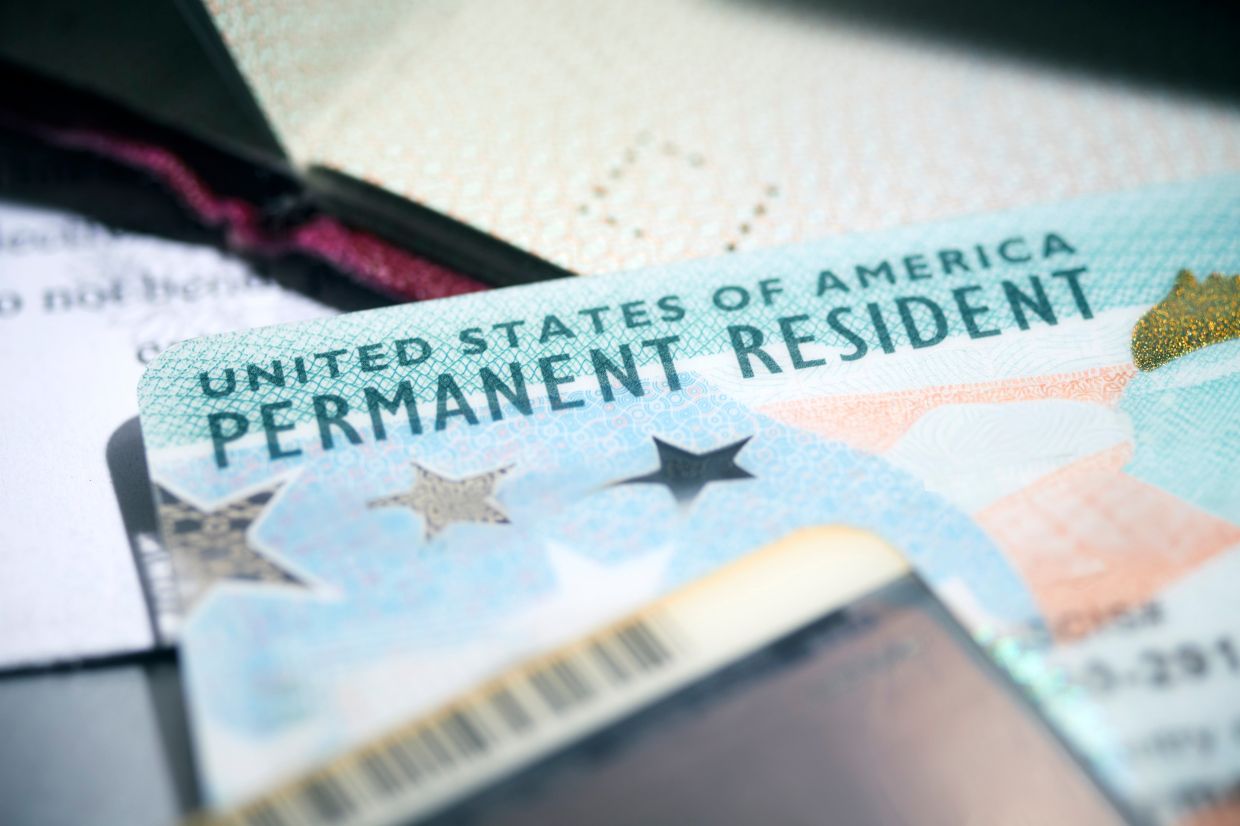
The United States is making it substantially more difficult for legal immigrants to obtain residency through a sweeping overhaul of how consular officers evaluate applicants' financial prospects and likelihood of using government assistance. Diplomatic missions across the globe have suspended immigrant visa interviews to ensure staff can be trained on an intensified application of the "public charge" doctrine—a legal framework determining whether prospective residents might become dependent on public benefits. This interruption in visa processing, announced just days after a federal court blocked a separate restrictions targeting 75 nations, signals a fundamental shift in how Washington administers immigration law at the ground level.
The expansion of public charge rules represents a significant departure from established practice, though the underlying criteria themselves are not novel. Immigration officers have long considered age, health, family composition, financial resources, educational background, professional skills and employment prospects when assessing applicants. What has fundamentally changed is the instruction to evaluate these factors with markedly greater scrutiny, and in some instances to require applicants to post financial bonds as assurance they will not draw on social services. Sarah Pierce, who previously worked as an analyst at the US Citizenship and Immigration Services and currently directs social policy research at Washington-based think tank Third Way, characterises the Trump administration's approach as deliberately disruptive, selecting the most confrontational possible method for implementation across the global consular network.
The practical consequences for family-sponsored immigration will be severe. Charles Kuck, an Atlanta-based immigration attorney who has represented more than 100 clients challenging government immigration policies, warns that immigration officers are being explicitly trained "on how to deny cases under public charge rules." He anticipates that immediate family members seeking to join sponsors already established in America will encounter substantially higher evidentiary burdens and rejection rates. The impact will extend beyond traditional family petitions; diversity visa lottery winners, whose selection already involves an element of chance, will also face heightened scrutiny. This represents a particularly acute problem for applicants from Southeast Asian countries with large populations seeking migration pathways to North America.
The current interview freeze does not automatically invalidate previously approved petitions or eliminate applicants' priority dates in the queue. Pierce clarifies that while the State Department has postponed scheduled interviews, it has not announced that underlying approvals previously granted will be cancelled or revoked. However, the operational reality creates substantial hardship for individuals and families who have already taken concrete steps toward relocation—booking flights, selling property, undergoing medical examinations, and arranging employment. The absence of any announced timeline for resuming normal interview scheduling compounds the uncertainty and financial burden borne by applicants who are in compliance with all legal requirements but caught in administrative suspension.
Diversity visa recipients face particular time constraints that amplify the disruption. These visas must legally be issued before September 30, the end of the US government's fiscal year. Applicants holding diversity lottery selection letters should verify that the National Visa Centre maintains current contact information—specifically valid email addresses, functional telephone numbers, and mailing addresses. Any administrative delays during this critical window could result in forfeited visa allocations that cannot be reissued in subsequent years. For Southeast Asian nationals who have won the diversity lottery, this freeze represents a potentially irreversible loss of opportunity.
The policy's architects have sought to contain its scope, at least formally. The visa interview suspension applies exclusively to immigrant visa processing conducted overseas; it does not directly encompass H-1B specialty worker visas, student visas, or tourist visa adjudications. However, immigration attorneys note that the public charge doctrine could theoretically be extended to non-immigrant categories as well, though current implementation appears limited to permanent residency applicants. Kuck observes that while H-1B visas involve their own complications—including a proposed USD$103,000 fee increase not yet implemented and potential changes to the allocation lottery system—these are distinct policy matters affecting different applicant populations. Nevertheless, the uncertainty about possible future expansions has created anxiety among visa holders in all categories.
For those already holding lawful immigration status, the environment has become considerably more precarious. Immigration lawyers now advise individuals with valid work authorisation, green card holders, or those with other forms of legal status not to depart the United States except in genuine emergencies. Kuck emphasises that anyone whose continued residence depends on obtaining a new visa upon return should reconsider international travel entirely. Even applicants with approved petitions in other visa categories—such as holders of O-1 visas for individuals with extraordinary ability—should not presume that an approved petition is sufficient protection if they travel internationally and subsequently require a new visa stamp. The calculation has shifted dramatically; previously taken-for-granted travel options now carry potentially severe consequences.
Consular officers, while granted discretion in implementing the stricter public charge standard, do not possess unlimited authority to override determinations previously made by USCIS. If an interview uncovers evidence of fraud, reveals substantial changes in an applicant's circumstances, or identifies a clear administrative error in the prior approval, the consular officer may return the file to USCIS for reconsideration. The USCIS then makes a final determination on whether the case should proceed. This provides some procedural safeguard, though Kuck notes the absence of statutory guidance on how aggressively officers should probe and challenge existing approvals. That interpretive vacuum, he warns, creates considerable potential for inconsistent application and, effectively, discriminatory enforcement against certain populations or national groups.
Applicants preparing for visa interviews now face heightened documentation requirements and must approach questioning with precision. Pierce advises prospective immigrants to thoroughly understand all information that has been submitted in their name and to avoid speculative answers when consular officers inquire about specific details. The stakes for mistatement—whether intentional or arising from confusion—have risen considerably. Family-based cases, where relationships and marital status are legally clear-cut once established, are difficult for consular officers to overturn on evidentiary grounds. Employment-based petitions, by contrast, receive greater secondary scrutiny regarding job legitimacy, salary levels, and ongoing job availability. Kuck reports that while many returned employment petitions are eventually reapproved upon resubmission, the reprocessing creates months or years of delay.
Individuals arriving as new residents experience an additional reduction in procedural flexibility. Newly admitted immigrants previously received open-ended duration of status, allowing them to remain until their immigration category or legal status was modified. Current policy assigns fixed departure dates, typically permitting residence for up to four years with a subsequent 30-day grace period—a reduction from the prior 60-day extension. This compressed timeline means newly arrived immigrants have substantially less flexibility to address unexpected complications or changes in circumstances without immediately risking deportation. Workers from overseas countries arriving on work visas should carry employment letters and recent pay documentation at all times, while those without lawful status—including individuals on H-1B extensions beyond their authorised period, or those with only pending green card or asylum applications—should not travel internationally under any circumstances.
The systematic tightening of legal immigration pathways reflects a deliberate policy choice to restrict the volume of newcomers permitted permanent residence, achieved not through legislated quotas but through aggressive administrative enforcement and interpretation. Pierce warns that while this approach may not constitute a formal "blanket ban" under statutory language, aggressive implementation across the consular network functions operationally as a near-total blockage for specific populations or national origins. The combined effect—interview suspensions, intensified public charge enforcement, reduced grace periods, and expanded use of financial bonds—creates a functioning restriction on legal immigration without requiring explicit legislative prohibition. For Southeast Asian professionals, family members, and diversity visa winners, the practical reality is that pathways previously difficult have become substantially more narrow.

