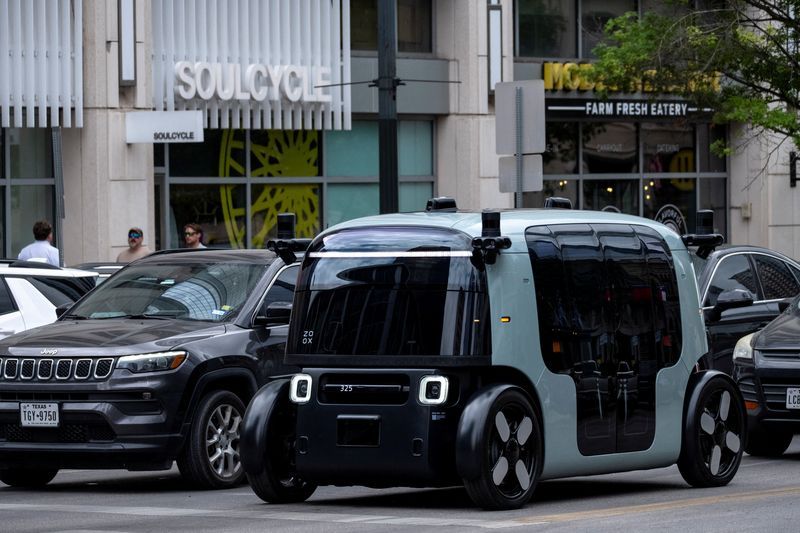
Amazon's autonomous vehicle subsidiary Zoox is moving into the paid robotaxi business, having announced plans to begin charging passengers for rides in Las Vegas starting this week. The announcement follows a pivotal regulatory breakthrough when the U.S. National Highway Traffic Safety Administration granted the company an exemption from federal safety standards requiring human controls, positioning Zoox as the first autonomous ride-hailing operator to achieve this milestone independently rather than by retrofitting conventional vehicles.
The Las Vegas launch represents a watershed moment for the autonomous mobility industry globally. Zoox's distinctive electric carriage, which features two rows of seats facing inward toward passengers rather than toward the direction of travel, has undergone an extended testing period across four major American cities including San Francisco, Austin, and Miami. During this phase, the company transported passengers without charging fares, accumulating operational data and refining its autonomous systems in real-world conditions across diverse urban environments.
Zoox's pricing model mirrors the premium positioning that ride-hailing platforms use for their comfort-class services, typically commanding a 20 to 40 percent fare premium over standard offerings. The service employs a transparent pricing structure combining base fares with time and distance charges, calculated along the most efficient route. Notably, passengers receive upfront disclosure of destination-specific surcharges such as airport fees, and the company has committed that riders will incur no additional charges if the vehicle navigates an alternate path longer than originally anticipated. This pricing transparency addresses a common consumer complaint about ride-hailing services and may provide Zoox with a competitive advantage.
The commercial deployment in Las Vegas intensifies an already crowded competitive landscape in American robotaxi services. Alphabet's Waymo has already established paid driverless operations across multiple metropolitan areas, accumulating significant operational experience and market share. Tesla, meanwhile, has recently initiated its own autonomous ride-hailing rollout, leveraging its massive installed base of vehicles equipped with advanced autonomous driving capabilities. These three major technology companies are now racing to demonstrate the viability and profitability of fully driverless transportation at meaningful scale.
However, the NHTSA's exemption contains important constraints that limit rapid expansion. The approval permits Zoox to deploy a maximum of 2,500 vehicles during each of the subsequent two years, effectively capping growth and preventing the company from saturating markets with its robotaxis during this critical commercialisation phase. This regulatory guardrail reflects ongoing cautious optimism from federal authorities who view autonomous vehicles as promising while maintaining oversight of safety concerns.
Regulatory oversight extends beyond deployment caps. NHTSA determined that Zoox's vehicle meets the safety standards of conventionally manufactured vehicles meeting federal motor vehicle safety requirements. Yet the agency imposed additional compliance obligations, including mandatory reporting of incidents such as accidents or inappropriate stops along roadways. These supplementary monitoring requirements acknowledge that fully autonomous systems operate in fundamentally different ways than human-driven vehicles and require tailored oversight mechanisms.
Safety concerns remain the central challenge confronting the robotaxi sector as it scales from limited pilots to broader commercial availability. Multiple stakeholders including regulators, insurers, and the public have questioned how autonomous vehicles respond during emergency situations and interact with other road users in complex scenarios. These concerns are not merely theoretical; they represent genuine operational challenges that companies must overcome to gain public confidence and regulatory approval.
Zoox's own operational history underscores these persistent safety questions. The company has initiated multiple software recalls over the past two years, with the most recent occurring in July when one of its robotaxis failed to properly detect heavy smoke emanating from an emergency scene. This incident, while not resulting in reported injuries, exemplifies the edge cases and unusual scenarios that autonomous systems must handle reliably. Emergency situations demand rapid response and sophisticated environmental understanding that remains technically challenging, even for well-funded technology companies.
The timing of Zoox's Las Vegas commercial launch, occurring immediately after the NHTSA exemption approval, demonstrates the company's confidence in its technology and urgency to establish market presence before competitors consolidate their positions. The decision to prioritise Las Vegas, rather than San Francisco or another city where the company already operates, suggests strategic calculations about regulatory environment, operational feasibility, and market opportunity. Las Vegas provides a relatively contained urban environment with predictable traffic patterns and established tourism infrastructure that could facilitate robotaxi adoption.
For Southeast Asian observers, the rapid advancement of American robotaxi commercialisation carries significant implications. Regional governments including Malaysia are evaluating autonomous vehicle policies while monitoring international developments. The regulatory frameworks emerging in the United States may influence how Malaysian and regional authorities approach future autonomous mobility applications. Additionally, the competitive dynamics among Amazon, Alphabet, and Tesla suggest that whichever company dominates robotaxi markets in developed economies will likely attempt expansion into Asian markets within the next several years.
The proliferation of paid autonomous ride-hailing services also raises questions about labour markets and employment disruption. While these platforms promise convenience and safety benefits to consumers, the long-term implications for transportation workers and urban economies warrant careful consideration. Southeast Asian policymakers may benefit from observing how American cities manage workforce transitions as robotaxi adoption accelerates.
Zoox's commercial launch also reflects broader trends in autonomous vehicle development favouring purpose-built platforms over adapted conventional vehicles. The company's distinctive inward-facing seating configuration and custom-designed electric chassis represent a fundamentally different approach compared to competitors who modify existing vehicle platforms. This design philosophy prioritises passenger experience and safety optimisation from the ground up rather than layering autonomy onto designs conceived for human drivers.
The coming months will prove critical in determining whether Zoox can sustain and profitably scale its paid robotaxi operations in Las Vegas while simultaneously preparing for expansion into other markets. Success metrics will extend beyond simple ride volumes to encompass safety records, customer satisfaction, operational efficiency, and the company's ability to manage regulatory relationships effectively across multiple jurisdictions.

