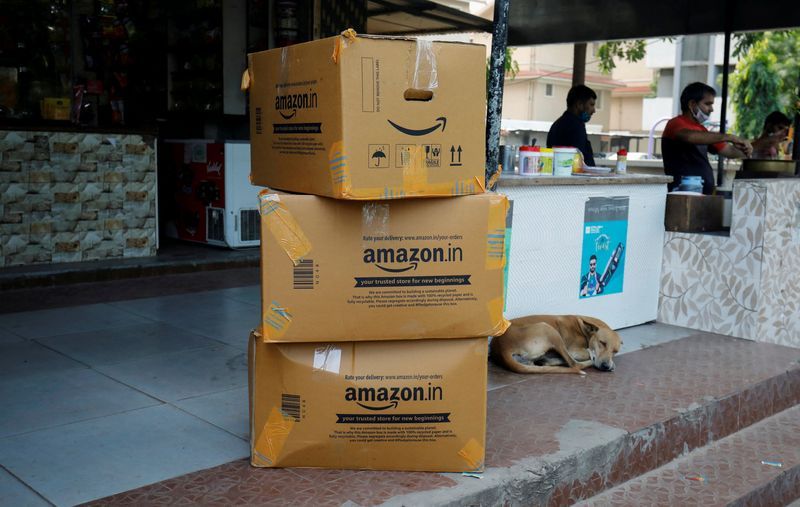
Amazon has committed to disciplining its delivery partner M&M Logistics Solutions in India following a fatal fire that claimed two lives, the e-commerce giant announced on Thursday. The commitment comes as local police conclude their investigation into the June 5 incident at the northern state of Uttarakhand, with the company reserving the right to take what it terms "appropriate action" in accordance with its established policies once authorities complete their probe.
The incident has drawn unwelcome attention to safety standards across Amazon's delivery network in India, one of the company's most strategically important markets. Preliminary findings by Uttarakhand's state police revealed alarming gaps in basic fire safety infrastructure at the M&M Logistics facility, including the absence of a valid fire safety certificate, functional fire alarms, smoke detection systems, and properly designated emergency exits. These deficiencies paint a picture of a workplace where fundamental protective measures were either absent or ignored, raising serious questions about oversight across the broader network of third-party logistics partners.
In addition to external inquiries, Amazon has initiated its own internal investigation into the circumstances surrounding the deaths, according to sources familiar with the matter. The company's statement suggests a methodical approach to accountability, yet the pledge to wait for police conclusions before imposing consequences has drawn criticism from labour advocates who view such delays as insufficient given the severity of the incident and the clear evidence of safety violations.
M&M Logistics Solutions operates an extensive delivery infrastructure for Amazon across northern India, managing 45 distribution centres in 21 cities according to a 2023 company disclosure. This scale of operations makes the company a critical link in Amazon's logistics chain, handling the last-mile delivery of packages across a vast region. The scope of this partnership underscores how deeply Amazon relies on third-party vendors to maintain service levels across the country, and conversely, how significant any corrective action against such a partner could be.
The incident arrives at an uncomfortable moment for Amazon in India, where the company has faced mounting scrutiny over labour conditions and worker welfare. In 2024, India's National Human Rights Commission launched investigations into allegations of labour law violations during operations at an Amazon warehouse near New Delhi during an extreme heatwave. Subsequently, state authorities initiated legal proceedings under Indian labour legislation against the company over those complaints. These recurring controversies suggest a pattern of safety and compliance concerns that extend beyond a single incident or location.
Amazon's supplier code of conduct explicitly prohibits working environments deemed unsafe for employees, with particular emphasis on controlling fire hazards. The code provides for suspension or termination of third-party contractors who breach its standards, establishing a clear framework through which the company could impose substantial penalties. However, the practical application of such policies has proven contentious, with labour unions and rights organisations questioning whether enforcement mechanisms are sufficiently rigorous or timely.
The Amazon India Workers Union has responded to the tragedy by demanding a judicial inquiry into the deaths, framing the incident as symptomatic of deeper failures in workplace protection. The union's call for independent judicial investigation signals distrust in both corporate and state-level accountability mechanisms, reflecting broader concerns within India's labour movement about the adequacy of existing oversight structures for gig and contract workers in the e-commerce logistics sector.
For Malaysian and Southeast Asian observers, the situation highlights emerging concerns about labour standards in the rapid expansion of e-commerce logistics networks across the region. As companies like Amazon scale operations through networks of third-party vendors and contractors, questions arise about whether regulatory frameworks and corporate accountability mechanisms can keep pace with growth. The incident serves as a cautionary example of how cost pressures and competitive dynamics can create incentives for vendors to cut corners on safety investments.
The fire at M&M Logistics underscores the vulnerability of workers in contract roles within the e-commerce supply chain. Unlike direct employees, third-party logistics workers often lack equivalent regulatory oversight, access to formal grievance mechanisms, and legal protections. This structural asymmetry creates conditions where safety violations can persist undetected until tragedy occurs, after which investigations proceed on timelines that may feel distant from the lived experience of affected families and communities.
Amazon's stated commitment to "appropriate action" remains vague, leaving open questions about what consequences M&M Logistics might face. Suspension or termination would create immediate disruptions to service delivery across northern India but might be necessary to signal seriousness about safety compliance. Alternatively, the company might impose financial penalties or demand comprehensive safety upgrades, approaches that could allow the partnership to continue while theoretically improving conditions.
The broader implications extend to regulatory bodies across India and the region, which face pressure to strengthen oversight of logistics infrastructure and enforce existing safety standards more consistently. The incident demonstrates that voluntary corporate commitments, while rhetorically important, require reinforcement through regulatory enforcement and transparent accountability mechanisms to translate into meaningful workplace protection.
As Amazon navigates the conclusion of police investigations, the company's actions will be closely watched by labour advocates, investor groups, and regulators concerned about supply chain safety across South Asia's booming e-commerce sector. The choices made in this case will likely establish precedents for how Amazon and competing platforms address similar incidents, potentially shaping safety standards across the region's rapidly expanding delivery networks.

