Negeri Sembilan's opposition-led coalition is pinning its re-election strategy on demonstrating effective governance rather than campaigning through spectacle. Parti Amanah Negara, a key component of Pakatan Harapan, is competing in the 16th state election with nine candidates out of the coalition's total slate of 36, alongside Parti Keadilan Rakyat's 16 seats and DAP's 11 seats under a pre-agreed allocation. The emphasis on track record and problem-solving capability signals a broader confidence in the incumbent administration's performance since 2023, when PH secured 17 of 36 seats to form government.
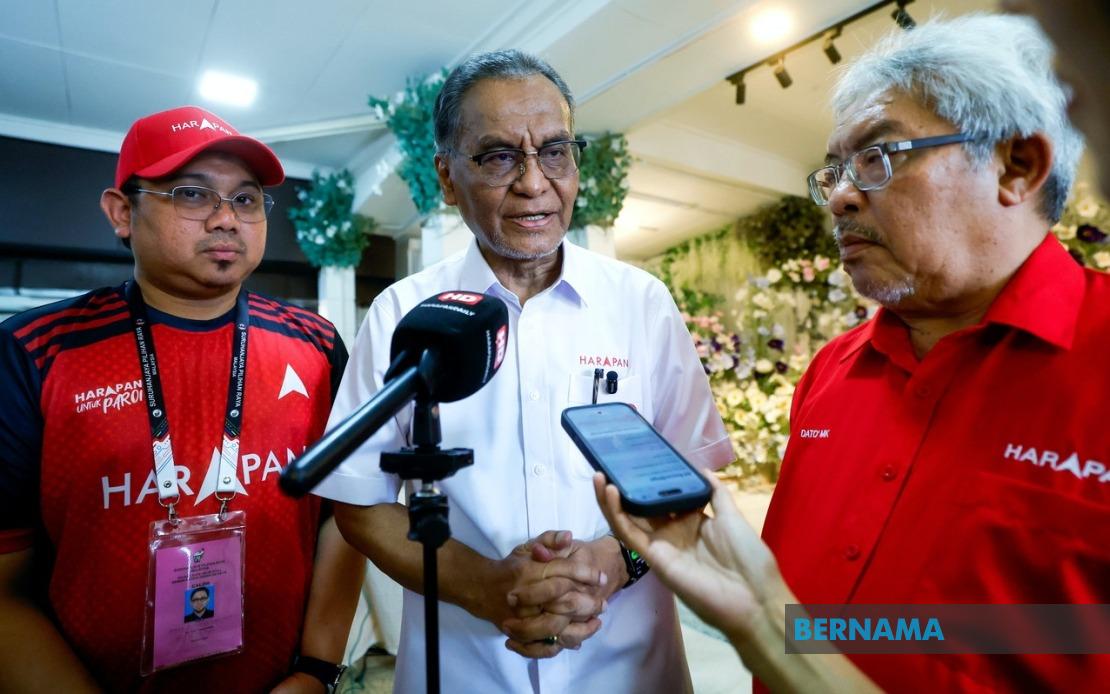
Amanah's vice-president Datuk Seri Dr Dzulkefly Ahmad articulated the rationale behind this approach during campaign activities in Seremban. Rather than compete for volume in public rallies, the party intends to build voter confidence through demonstrable achievement and the credibility of its candidates. This reflects a strategic calculation that in Malaysian state elections, where constituencies often number in the tens of thousands of registered voters, granular engagement and visible problem-solving matter more than mass mobilization. The coalition's emphasis on small-group discussions, door-to-door canvassing, and targeted social media communication reflects this understanding that contemporary voters increasingly value direct, personalised interaction with representatives.
The Amanah candidates contesting the election represent a mix of incumbents and fresh faces with demonstrated community involvement. Defending his Klawang seat is incumbent Datuk Bakri Sawir, while seven additional candidates bring experience in various local contexts: Yaacob Mahmood (Serting), Zarrina Abu Zarin (Lenggeng), Mohd Hanis Alimin (Senaling), Mohd Zailan Mohd Munawar (Johol), Muhammad Allif Ibrahim (Kota), Nasir Raman (Bagan Pinang), and Abd Latif A. Tambi (Gemencheh). This roster suggests the party's strategy of maintaining representation across diverse constituencies whilst leveraging existing relationships and local knowledge where possible.
The Paroi state seat offers a case study in how PH's messaging is being translated on the ground. With over 65,000 registered voters and approximately 140,000 residents, Paroi exemplifies the complexity of constituency management in Negeri Sembilan's mixed urban-rural landscape. PH's candidate for the seat, Ahmad Shahir Mohd Shah, has identified small trader empowerment as a priority, proposing to streamline licensing procedures and upgrade business infrastructure in coordination with local authorities. This focus reflects recognition that economic anxiety among petty traders and small business owners remains significant in constituency politics, particularly in districts where hawker markets and informal retail sectors employ substantial portions of the working population.
The initiative to simplify bureaucratic processes for traders speaks to a persistent friction point in Malaysian governance. Licensing procedures, often layered across multiple agencies, consume time and resources that small traders can ill afford. By explicitly committing to streamline these processes and upgrade physical business environments through collaboration with Dewan Bandaraya and municipal councils, the candidate positions himself as a problem-solver rather than a distant administrator. This resonates particularly in constituencies where traditional small businesses face pressure from e-commerce and rising rents, making operational efficiency a matter of business survival.
Negeri Sembilan's electoral trajectory since 2023 provides important context for understanding campaign dynamics. The incumbent coalition's 17-seat majority came amid a broader realignment that saw Perikatan Nasional capture five seats whilst Barisan Nasional retained 14. This fragmented outcome meant that PH's control was neither commanding nor secure, creating ongoing pressure to deliver visible improvements and maintain coalition discipline. The intervening period has thus been critical for demonstrating that the government can manage state affairs effectively despite the narrow parliamentary margin and competing demands from component parties.
Campaign strategy emphasising local engagement and representative credibility also reflects lessons from recent Malaysian electoral contests. High-decibel campaigns and personality-driven politics have increasingly given way to expectations of granular policy discussion and evidence-based commitments. Voters in constituencies with substantial working and trading classes particularly demand specificity: not promises of nebulous development but concrete answers to immediate problems such as traffic congestion, refuse collection, market access, and business registration timelines. By tasking candidates with conducting house-to-house engagement and identifying local grievances for referral to relevant agencies, the coalition creates a feedback loop that demonstrates responsiveness and generates data for targeted problem-solving.
The scheduling of the Negeri Sembilan election itself carries procedural significance. The Election Commission has designated July 28 for early voting, with general polling set for August 1. This timeline allows campaigning from the dissolution through late July, compressing the campaign period to roughly two weeks in many cases. Shorter campaigns advantage parties with existing administrative apparatus and established community networks, benefiting the incumbent coalition's ground organization. The early voting date also tests voter commitment and turnout patterns in a state where many constituencies have substantial commuter populations working across Klang Valley and Selangor.
From a broader Southeast Asian perspective, Negeri Sembilan's election represents a test of whether centrist coalition governance can maintain traction with voters amid polarisation pressures. PH's construction as a multi-racial, reform-oriented coalition has always depended on demonstrating effective administration that transcends traditional patronage politics. Amanah's emphasis on service delivery and problem-solving reflects an attempt to operationalise this vision at state level, where voters most directly experience governance quality through potholes fixed, development approvals processed, and trader concerns addressed. A strong showing for PH would suggest that such pragmatic governance narratives retain purchase with Malaysian voters; conversely, significant losses would indicate that voters prioritise other factors such as cultural positioning or partisan affiliation.
The nine candidates Amanah is fielding also signal the party's confidence in its ability to expand or at minimum maintain representation. As a component party in a multi-party coalition, Amanah must balance its own organisational interests with coalition discipline and electoral mathematics. Fielding nine candidates suggests sufficient internal organisational capacity and candidate development, yet the number reflects Amanah's weight within PH—smaller than PKR's 16 or DAP's 11, yet substantial enough to claim legitimate partnership status. This allocation pattern has itself become a bargaining issue in Malaysian coalition politics, with component parties constantly negotiating seat numbers as proxies for voice and influence within broader arrangements.
The emphasis on community-grounded governance and service delivery ultimately positions this Negeri Sembilan election as a referendum on whether Malaysia's voters reward demonstrable administrative performance. Amanah's campaign strategy—focused on representative credibility, problem-solving capacity, and systematic engagement rather than rhetorical flourish—represents a calculated bet that in state-level contests where voters experience government closest, competence and responsiveness matter more than personality or spectacle. Whether this strategy succeeds will offer important signals about voter preferences and the durability of reform-oriented coalition governance in Malaysia.

