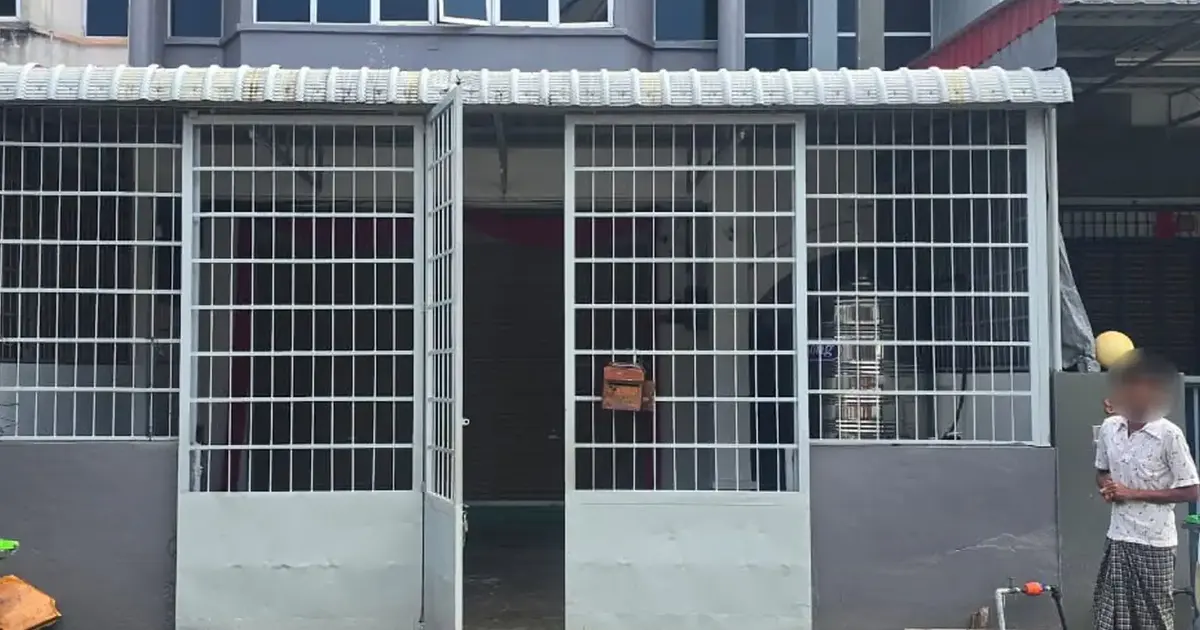
The Alor Setar City Council has taken enforcement action against an industrial property being used as an unregistered school serving Rohingya refugee children, marking another instance of regulatory scrutiny directed at informal education arrangements within migrant communities across Malaysia. The raid on the premises represents an effort by local authorities to ensure compliance with zoning regulations that govern how commercial and industrial land can be utilised within municipal boundaries.
The investigation centres on two separate violations: the misuse of an industrial zone property for purposes beyond its designated commercial classification, and the operation of an educational institution without the requisite authorisation from the Ministry of Education. Such dual-layered breaches reflect the complexity of informal settlement patterns and service provision that often emerge within displaced or refugee populations seeking to maintain cultural continuity and learning opportunities in host countries.
The Rohingya population has faced significant displacement across Southeast Asia following escalating persecution and military operations in Myanmar's Rakhine State. Many have sought refuge in Malaysia, where they exist in a precarious legal limbo—neither fully recognised nor formally registered by the Malaysian government, despite the presence of UNHCR operations. This status creates barriers to accessing mainstream public education, prompting informal community-based learning arrangements in spaces not originally intended for schooling.
The operation of unauthorised education facilities in converted industrial and commercial spaces reflects broader structural challenges facing stateless populations seeking to preserve educational access for their children. Without legal residency status, Rohingya families often cannot enrol children in government or private schools, forcing reliance on ad-hoc educational models established by community members and humanitarian organisations. These arrangements typically operate in low-visibility settings to avoid regulatory detection.
Local authorities across Malaysian municipalities face increasing pressure to enforce existing regulations uniformly, regardless of the humanitarian context surrounding individual cases. The Alor Setar action demonstrates this enforcement momentum, where zoning and licensing violations provide legal grounds for intervention even when the underlying motivation involves providing educational services to vulnerable populations. The tension between regulatory compliance and humanitarian accommodation remains unresolved at the municipal level.
The investigation will likely examine whether the operators possessed proper business registration, whether the industrial lease permitted educational use, and whether teaching staff held relevant qualifications. These technical requirements, while straightforward from an administrative perspective, become complicated when applied to community-run facilities serving populations without formal legal standing in Malaysia. The outcome may establish precedent for how other councils address similar situations.
Rohingya communities in Malaysia have increasingly established informal schools, language programmes, and vocational training centres across urban areas to address educational gaps created by their exclusion from public schooling. Kuala Lumpur, Penang, and Kedah have all seen such facilities emerge as population concentrations have grown. These arrangements typically operate with minimal resources and volunteer instruction, functioning largely outside official oversight until enforcement actions occur.
The council's intervention raises questions about the practical alternatives available to Rohingya families facing educational barriers. While regulatory compliance remains a legitimate concern, authorities have offered limited pathways for legalising or regularising such education provision. Without coordinated policy frameworks that address both zoning requirements and humanitarian education access, enforcement actions may simply displace operations to different premises rather than resolving underlying needs.
From a regional perspective, Malaysia's approach to informal education facilities serving refugee populations contrasts with responses in other Southeast Asian host countries. Thailand and Indonesia have similarly encountered challenges managing unauthorised schools within displaced communities, though enforcement intensity and legal frameworks vary considerably. The absence of harmonised regional standards complicates coordination and creates inconsistency in how host nations address education access for stateless populations.
The case also reflects broader questions about municipal enforcement priorities and resource allocation. Local councils must balance multiple competing regulatory demands whilst operating under fiscal constraints. Enforcement actions against community education facilities may divert attention and resources from other zoning violations or building safety issues that could pose more immediate public risks.
For Malaysian policymakers, the Alor Setar situation underscores the inadequacy of current frameworks for managing education access among refugee and displaced populations. Strategic intervention would require coordinated policies spanning the Ministry of Education, UNHCR, local authorities, and community organisations to establish legal pathways for educational provision that satisfy both regulatory requirements and humanitarian imperatives. Without such coordination, enforcement actions will continue addressing symptoms rather than underlying policy gaps.
The investigation's outcome will likely determine whether the Rohingya education centre can be relocated, restructured to comply with regulations, or forced to cease operations entirely. Each possibility carries different implications for affected children and broader community stability. The council's determination will provide insight into the degree of regulatory flexibility Malaysian municipalities are willing to exercise when addressing education access for vulnerable populations.

