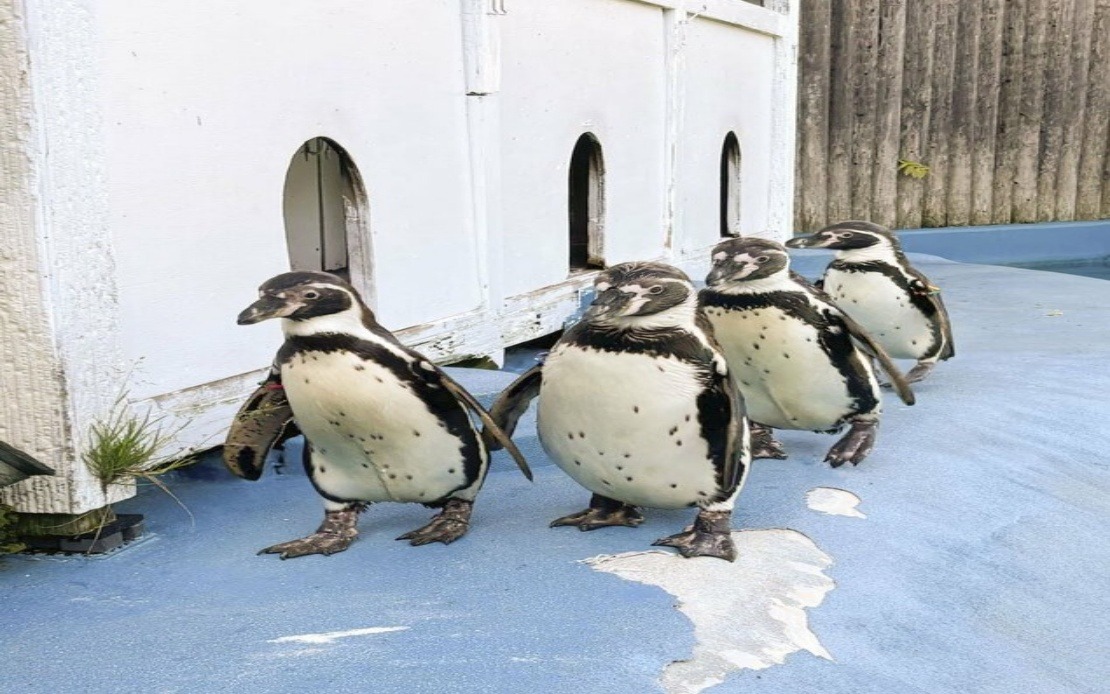
An investigation has confirmed that all four Humboldt penguins housed at Yagiyama Zoological Park in Sendai, a city in northeastern Japan, died from avian malaria, with authorities releasing their findings on Friday. The unexpected deaths of the birds between July 9 and 19 prompted immediate concern at the facility, leading Iwate University to conduct a comprehensive examination into what caused the rapid succession of fatalities among the zoo's penguin collection.
The outbreak began with the death of a male penguin named Aramasa on July 9, followed by the successive deaths of three other penguins over a ten-day period. What made the situation particularly concerning was the absence of observable warning signs in any of the birds prior to the day immediately preceding their deaths. This rapid progression from apparent good health to fatal illness within a single day highlighted the aggressive nature of the mosquito-borne pathogen that ultimately claimed their lives. The swiftness of the disease's development left zoo staff with minimal opportunity to intervene or treat the infected animals.
Avian malaria, transmitted through mosquito vectors, represents a significant health threat to captive bird populations despite posing no transmission risk to human visitors or staff members. The disease demonstrates a particularly insidious characteristic in that it can remain asymptomatic in infected individuals before suddenly accelerating into a terminal phase. This unpredictable trajectory makes detection and treatment extraordinarily challenging in zoo settings, where preventive measures become the primary strategy for safeguarding vulnerable animal populations. The case at Yagiyama Zoological Park underscores how rapidly environmental conditions can enable mosquito-borne pathogens to devastate specialized animal collections.
Humboldt penguins, indigenous to the coastal regions of Peru and Chile, represent a species adapted to warmer climates compared to Antarctic penguins and other cold-water species. This relative tolerance for elevated temperatures has made them particularly popular exhibits across Japanese zoos, where they attract substantial visitor interest. However, their climate adaptation—which allows them to thrive in temperate zones—simultaneously exposes them to mosquito populations that flourish in warmer environments, creating an ecological vulnerability that cold-climate penguin species do not typically face in captivity. The species' popularity in Japanese institutions means that avian malaria outbreaks in these facilities warrant close attention throughout the zoological community.
Following the confirmation of avian malaria as the causative agent, Yagiyama Zoological Park has indicated that no immediate timeline exists for acquiring replacement penguins. This cautious approach reflects the zoo's recognition that simply restocking the exhibit without addressing underlying environmental conditions would likely result in repeat infections and further losses. The institution is prioritizing comprehensive remediation efforts before reintroducing birds to the affected enclosure, demonstrating a commitment to learning from the outbreak rather than rushing to restore visitor attractions.
Central to the zoo's recovery strategy is a redesigned enclosure specifically engineered to eliminate mosquito breeding habitats. Standing water—which serves as the essential breeding medium for mosquitoes—will be systematically prevented through improved drainage infrastructure and modified water management systems. This architectural approach targets the fundamental environmental condition that enabled mosquito populations to flourish and spread avian malaria within the penguin collection. By eliminating puddles and other water accumulation points, the zoo aims to disrupt the mosquito life cycle at its earliest stages.
The broader implications of the Sendai incident extend beyond a single zoo's operational challenges. The outbreak illustrates how climate, facility design, and disease ecology intersect in ways that demand sophisticated zoo management practices. For regional zoo operators and wildlife institutions across Southeast Asia and the Pacific, the case demonstrates the critical importance of rigorous environmental monitoring and proactive mosquito control strategies. As global temperatures continue to shift, tropical and subtropical regions—including Malaysia and surrounding nations—may face increasing pressure from vector-borne diseases affecting both captive and wild animal populations.
The investigation's findings also highlight the value of partnering with academic institutions for disease diagnosis and epidemiological analysis. Iwate University's involvement provided scientific credibility and expertise that enabled the zoo to understand the precise nature of the threat and formulate evidence-based responses. For Malaysian zoos and wildlife facilities managing exotic animals, access to reliable diagnostic capabilities through partnerships with veterinary research institutions remains essential for rapid response to disease outbreaks.
The temporary closure of the penguin exhibit, while economically costly for the facility, represents responsible stewardship of animal welfare. Rather than implementing superficial measures or attempting to mask the underlying problem, Yagiyama Zoological Park has chosen to invest in genuine infrastructure improvements. This approach may serve as a model for other institutions managing tropical and subtropical species in regions where mosquito-borne pathogens pose persistent threats. The zoo's commitment to preventing recurrence through environmental modification rather than reactive treatment sets a professional standard for disease management in zoological settings.

