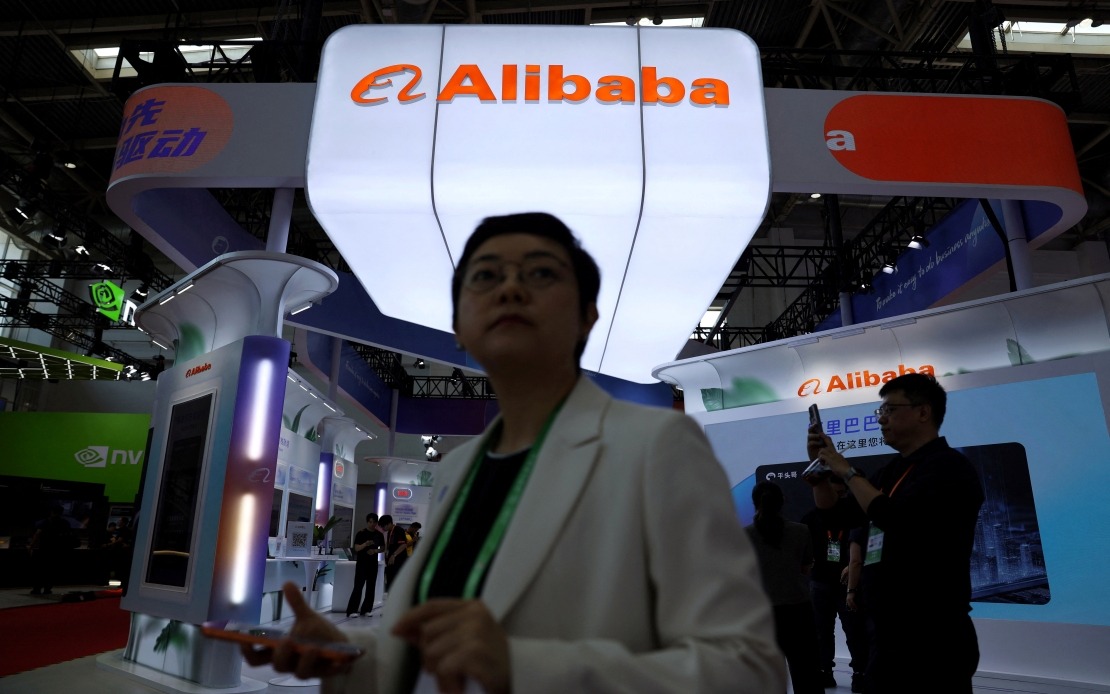
Chinese technology conglomerate Alibaba has initiated legal proceedings against the United States Department of Defense, challenging its recent classification as an entity affiliated with China's military-industrial apparatus. The lawsuit, filed in court and disclosed on Tuesday, represents a significant escalation in tensions between Washington and one of China's most prominent technology firms, as the company seeks to overturn a designation that could severely hamper its international business operations.
The June Pentagon announcement expanded its list of companies deemed connected to the Chinese military's commercial interests, adding 188 entities to what is formally known as the Military End-Use (MEU) list. This move placed Alibaba alongside other major Chinese corporations including Tencent, one of the world's largest gaming and social media companies, and BYD, the global leader in electric vehicle manufacturing. The inclusion on this list carries profound consequences, potentially restricting the company's access to American technology, investment, and partnerships, whilst sending shockwaves through regional tech ecosystems dependent on Chinese digital infrastructure.
Alibaba's legal challenge disputes the factual foundation of the Pentagon's determination, asserting that the designation contradicts available evidence regarding the company's structure, operations, and strategic direction. The company emphasizes that its board of directors comprises independent executives with no military background or affiliation, a structural arrangement typically designed to insulate corporate decision-making from governmental influence. This governance argument forms a central pillar of Alibaba's defence, suggesting that independent board oversight should serve as meaningful evidence against claims of military coordination or control.
Furthermore, Alibaba contends that its entire commercial portfolio is oriented exclusively towards civilian purposes spanning retail commerce, logistics infrastructure, and enterprise information technology services. The company manufactures no defence equipment, develops no military technologies, and provides no specialised services that would support military operations or capabilities. According to the lawsuit filing, the company's business model depends fundamentally on serving merchants, consumers, and corporate clients through e-commerce platforms, cloud computing services, and digital payment systems—sectors with transparently commercial rather than strategic military applications.
The corporation also highlights its explicit contractual prohibitions against military end-use, establishing contractual language that customers cannot redirect products or services towards military purposes. Alibaba states it maintains comprehensive compliance policies designed to monitor and prevent such misuse, demonstrating institutional commitment to civilian-only application. Additionally, the company notes it possesses neither military certifications nor defence-related licences from Chinese authorities, pointing out that such credentials would logically accompany genuine military-industrial involvement.
The Pentagon's expansion of its military-linked companies list reflects broader American strategy to restrict Chinese technological advancement and limit the global influence of firms deemed strategically important to Beijing's defence establishment. This approach has intensified under successive US administrations and carries profound implications for technology supply chains across Asia-Pacific. Regional companies, including Malaysian technology investors and enterprises, face growing pressure to choose between access to American components and partnership with sanctioned Chinese firms, forcing difficult strategic decisions.
Alibaba's lawsuit represents one of few instances where a major Chinese technology corporation has directly contested Pentagon designations through the American legal system rather than accepting the determination. This aggressive legal posture signals the company's assessment that the classification threatens core business interests and warrants the reputational and financial costs of protracted litigation. The outcome could influence how other Chinese firms respond to similar designations and reshape the competitive landscape for technology services across Southeast Asia.
For Malaysian businesses and investors, Alibaba's legal challenge carries particular relevance given Malaysia's position as a technology hub and the extensive commercial relationships between Malaysian enterprises and Chinese digital platforms. Many Malaysian companies rely on Alibaba's cloud services, supply chain logistics, and payment systems for export competitiveness. Pentagon restrictions on Alibaba could disrupt these operational arrangements, whilst the company's potential legal victory might affirm the separation between commercial technology firms and state military apparatus—a distinction increasingly blurred in geopolitical rhetoric.
The dispute also reflects deeper tensions regarding how nations classify dual-use technologies and the accountability mechanisms available to corporations facing government designation as security threats. Alibaba's invocation of American legal procedures to challenge Pentagon determinations illustrates the complicated position of Chinese corporations attempting to maintain legitimate global operations whilst navigating competing national security frameworks. The case may establish precedent for how extensively such designations can be contested through judicial review.
Regionally, this lawsuit underscores the vulnerability of technology companies operating across geopolitical fault lines. Southeast Asian nations, including Malaysia, increasingly recognize that technology decisions carry geopolitical consequences extending far beyond commercial considerations. The Alibaba case demonstrates how corporate legal strategies intersect with grand strategic competition between the United States and China, potentially reshaping technology availability and investment flows throughout the region.