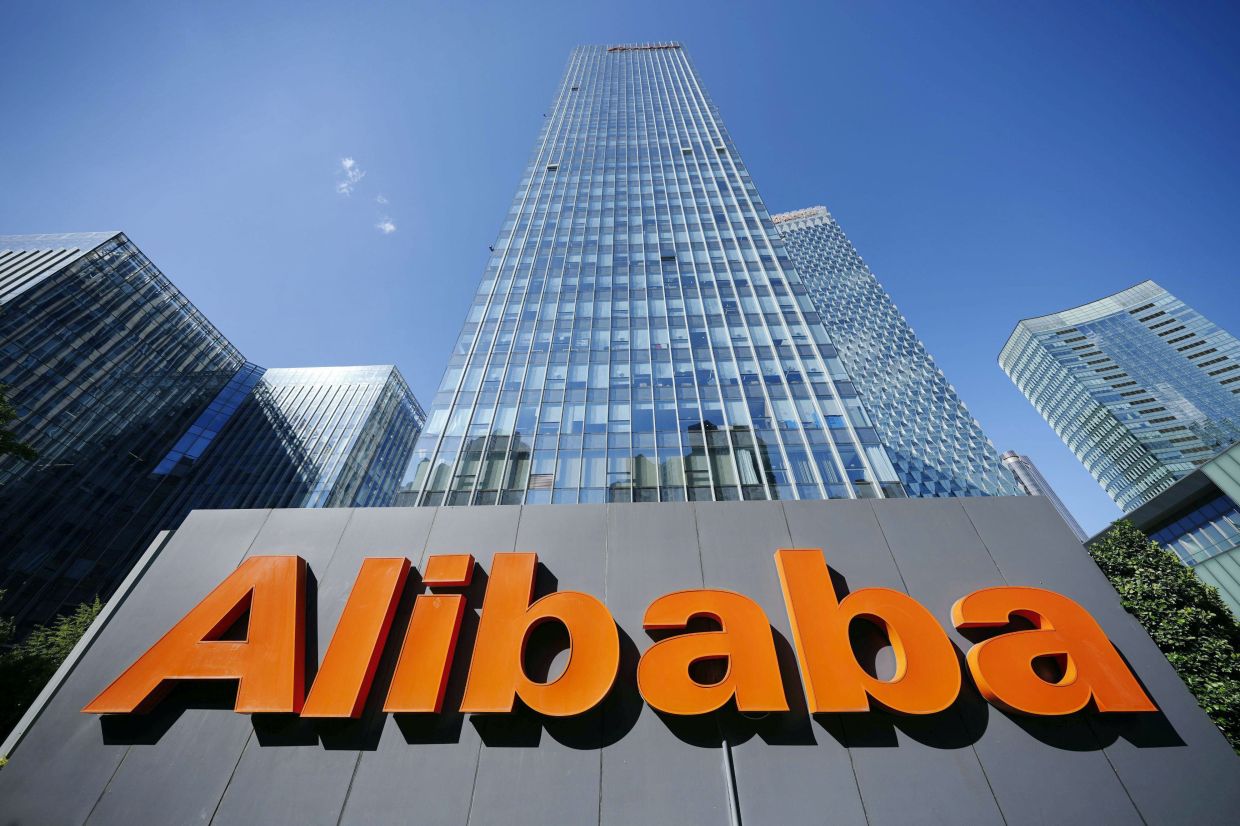
Chinese technology powerhouse Alibaba Group Holding has initiated legal action against the US Department of Defence, contesting its placement on a Pentagon blacklist that categorizes the company as supporting China's military apparatus. The lawsuit, filed this week in a federal district court in San Jose, California, represents a direct challenge to Washington's expanding national security restrictions on Chinese firms and signals the company's determination to defend its commercial interests in the American market.
The Pentagon's decision to designate Alibaba as a Chinese military company came in June, following an executive action that added multiple technology firms to an official list under Section 1260H of the National Defence Authorisation Act. Alongside Alibaba, the blacklist encompassed electric vehicle manufacturers BYD and Nio, search engine provider Baidu, robotics firm Unitree Robotics, networking equipment maker TP-Link, and several other enterprises spanning artificial intelligence, biotechnology, and solar energy sectors. The designation strikes at industries representing the technological frontier where American and Chinese capabilities directly compete for global dominance.
In its legal filing, Alibaba argues that the Pentagon's characterization is fundamentally unjust and constitutionally flawed. The company contends that the blacklist violates its constitutional rights to due process and free speech, asserting that the designation lacks proper legal foundation. An Alibaba spokesperson stated unequivocally that the company "is not a Chinese military company nor part of any military-civil fusion strategy", rejecting the Pentagon's core rationale for the listing. The company further characterized the defence department's action as "arbitrary and capricious", suggesting that political pressure rather than factual analysis drove the decision.
While the Pentagon's designation does not automatically impose direct financial sanctions, its practical consequences could prove severe. Companies on the blacklist face substantial impediments in accessing American capital markets, securing government contracts, and conducting certain business operations within the United States. For a company like Alibaba with significant ambitions in the US technology ecosystem, such restrictions represent a meaningful economic barrier that extends beyond mere symbolic disapproval.
Alibaba specifically contests two central Pentagon findings that allegedly justified the blacklist designation. First, the company rejects the defence department's assertion of indirect affiliation with China's State-owned Assets Supervision and Administration Commission, which oversees major government-controlled enterprises. Alibaba denies any relationship with SASAC and characterizes such claims as factually baseless. Second, the company disputes Pentagon allegations that it functions as a military-civil fusion contributor through supposed ties to China's Ministry of Industry and Information Technology. Alibaba argues that its interactions with MIIT amount merely to routine regulatory compliance that any technology firm operating within China's regulatory environment must satisfy.
The timing of Alibaba's legal challenge follows a documented engagement process that underscores the company's procedural objections. In January, Alibaba representatives met with Pentagon officials to address the potential designation, and the company subsequently submitted a comprehensive written response in March detailing why it should not appear on the blacklist. Despite this proactive engagement, the Pentagon proceeded with the June listing without demonstrating responsiveness to the company's arguments. This sequence suggests that Alibaba views the Pentagon's process as predetermined and immune to contrary evidence, strengthening its constitutional claims about denial of due process.
Alibaba's lawsuit emerges within a broader escalation of US-China technological decoupling that reflects strategic competition extending far beyond any single company. The Pentagon's blacklist strategy aims to prevent Chinese enterprises from accessing American investment, expertise, and supply chain integration at precisely the moment when both nations compete aggressively for artificial intelligence dominance, advanced manufacturing capabilities, and clean energy leadership. For Southeast Asian technology companies and investors, this confrontation carries immediate relevance, as regional firms must increasingly navigate the reality of bifurcating global technology standards and supply chains.
Beijing's response to Washington's actions demonstrates that the conflict continues escalating beyond individual corporate disputes. On the same day Alibaba filed its lawsuit, China's Ministry of Commerce announced export restrictions targeting ten American companies, including defence contractors Ball Aerospace & Technologies and robotics firm Teal Drones. Simultaneously, China's Ministry of Finance announced restrictions on government procurement from forty-six American firms, notably defence powerhouses Lockheed Martin, Raytheon Missiles & Defense, and General Dynamics Land Systems. China explicitly framed these countermeasures as responses to Washington's "malicious actions", indicating that both superpowers view technological competition through a lens of strategic conflict rather than normal commercial competition.
For Malaysian enterprises and stakeholders, this deepening divide carries significant implications. The weaponization of blacklists, export controls, and procurement restrictions suggests that companies operating in sensitive technology sectors cannot remain neutral bystanders. Malaysian firms with operations, partnerships, or supply chain connections in both markets face increasing pressure to make strategic alignment decisions. The case also highlights how geopolitical tensions can suddenly disrupt established commercial relationships, making diversification of technology suppliers and development partners an essential risk management priority for Malaysian businesses dependent on cross-border technology flows.
The outcome of Alibaba's legal challenge remains uncertain, but the lawsuit's filing itself demonstrates that Chinese companies are prepared to contest American restrictions through the US legal system rather than accept them passively. If Alibaba succeeds in overturning its designation, it could establish precedent constraining Pentagon authority to blacklist foreign companies without demonstrating more rigorous factual justification. Conversely, if American courts uphold the Pentagon's discretion, the decision would validate a broad executive power to exclude foreign competitors based on national security grounds that remain largely classified from public scrutiny. Either outcome will significantly influence how subsequent disputes between American and Chinese technology firms proceed through the courts and how other nations view the American legal system's capacity to provide neutral resolution of geopolitical commercial conflicts.

