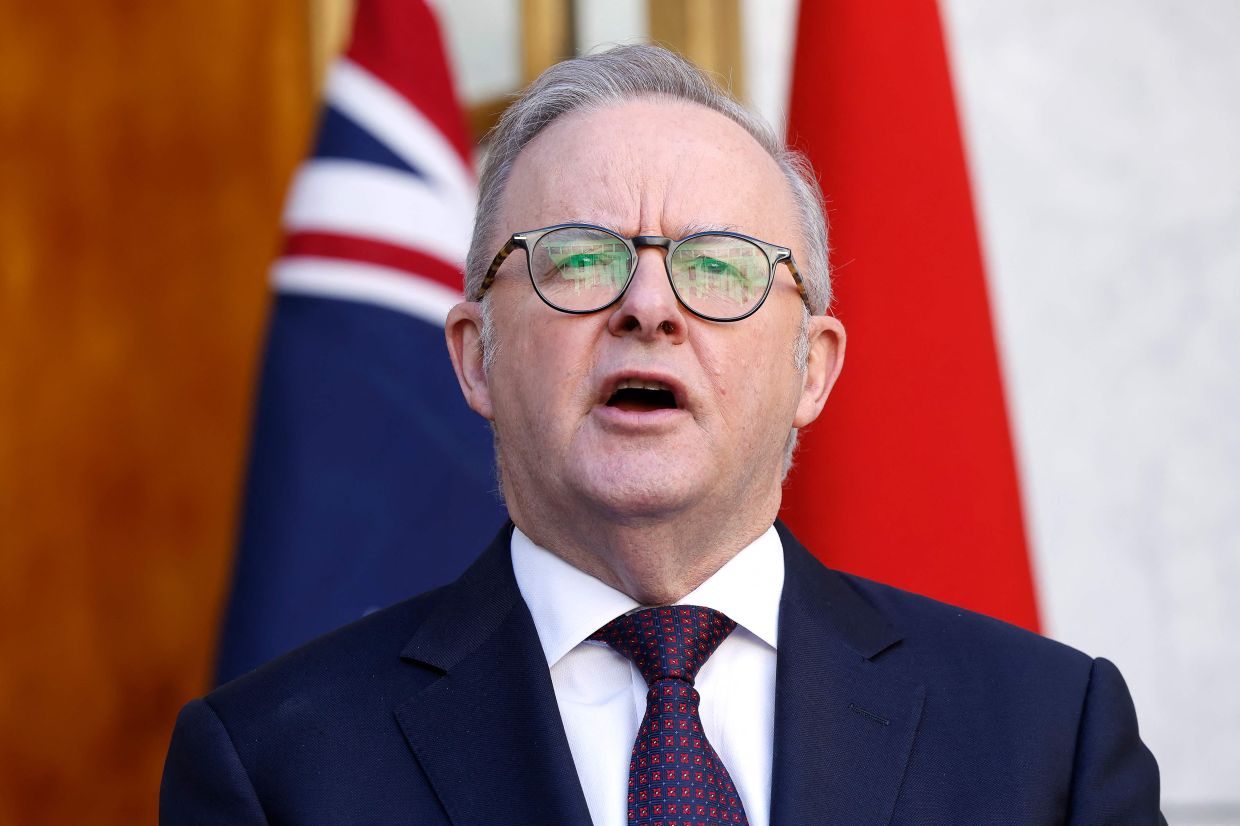
Australian Prime Minister Anthony Albanese has steadfastly refused to apologise for comments he made during a podcast interview that drew sharp criticism from the opposition and raised questions about diplomatic propriety. The controversy centres on remarks he made about a gift of premium Japanese melons presented by Japanese Prime Minister Sanae Takaichi during her official visit to Australia in May, comments that only surfaced publicly this week despite being recorded during an interview conducted last month.
The incident represents the second wave of backlash against Albanese for crude remarks made during the same interview with Bush Deep podcast host Nikki Osborne at his official Sydney residence. He had already issued an apology over separate comments in which he said he would "shag" Australian singer Kylie Minogue, acknowledging that his language had been inappropriate. The melon-related banter, however, appears to have struck a different chord, particularly given its involvement of a fellow head of government and the potential diplomatic ramifications.
During the podcast conversation, Albanese described the gift of Japanese royal melons as "strange," and when Osborne asked whether Takaichi had smuggled the fruit through Australian customs, Albanese responded with innuendo, saying "got a couple of melons." The host then replied with a reference comparing Takaichi's appearance to actress Pamela Anderson, a comment that transformed the exchange into something more pointed than casual banter. The entire exchange was conducted in a conspiratorial tone suggesting impropriety, though Albanese maintains that nothing untoward was intended.
The cultural context underlying the joke appears to have been lost on neither Albanese nor his critics. In Japan, premium melons occupy a rarefied position as luxury gift items commanding extraordinary prices. According to Japan's former ambassador to Australia, these specialty melons can retail for more than AUS$270, or roughly US$190, making them genuinely prestigious diplomatic gifts rather than throwaway presents. Takaichi's choice to present such melons underscores both the formality of the occasion and the significance she intended to convey through the gift.
When confronted about whether he would apologise for what the opposition termed "disrespectful behaviour" during parliament proceedings on Tuesday, Albanese moved immediately into defensive mode rather than offering any form of contrition. He flatly stated: "I reject the assertion in the question," a response that effectively closed off further discussion while simultaneously highlighting his unwillingness to engage meaningfully with the substantive criticism. This defiant posture contrasts sharply with his earlier apology over the Kylie Minogue remarks, suggesting a calculated decision about which controversies warrant contrition and which do not.
Albanese sought to anchor his defence in the substance of his relationship with Takaichi rather than addressing the nature of his comments themselves. He stressed that "Prime Minister Takaichi is a friend of Australia and a friend of mine," implying that the personal relationship should insulate him from accusations of disrespect. This rhetorical strategy attempts to redirect the conversation away from what was actually said towards the supposed authenticity of his diplomatic relationships. Whether this argument carries weight with voters and international observers remains uncertain.
Foreign Minister Penny Wong, speaking on behalf of the government, provided a more nuanced defence while ultimately doubling down on the prime minister's position. She asserted that Albanese "did not mean for those comments to be interpreted in the way they have been by those opposite," a formulation that shifts responsibility for the controversy onto opposition politicians and the media rather than acknowledging any genuine ambiguity in his remarks. Wong's framing suggests that the problem lies not with what was said but with how it was received and weaponised by political opponents.
For Malaysian and broader Southeast Asian observers, this episode carries particular significance given the region's emphasis on diplomatic propriety and hierarchical respect between governments. Australia maintains crucial security and trade relationships throughout the Indo-Pacific, and any perception of casual irreverence towards fellow leaders could complicate these arrangements. Japan, in particular, remains a cornerstone of Australia's strategic architecture in the region, and bilateral relations benefit from the perception of mutual respect at the highest levels.
The controversy also highlights the evolving scrutiny surrounding political figures' informal public statements. Podcast interviews conducted in ostensibly private settings increasingly find their way into the public domain, where comments intended for a sympathetic audience may be judged according to very different standards. This technological reality creates a minefield for politicians who have grown accustomed to compartmentalising their public and private personas. Albanese's experience suggests that the distinction has largely evaporated.
The opposition's pursuit of this matter reflects broader political calculations about how to damage Albanese's standing among voters concerned about standards in public office and Australia's international standing. By contrast, Albanese's refusal to apologise signals a deliberate choice to treat the matter as politically motivated attack rather than as a genuine diplomatic concern. Whether this gambit succeeds depends partly on whether the Japanese government formally expresses displeasure or accepts Wong's assurance that no disrespect was intended, thereby neutralising the controversy through official channels.

