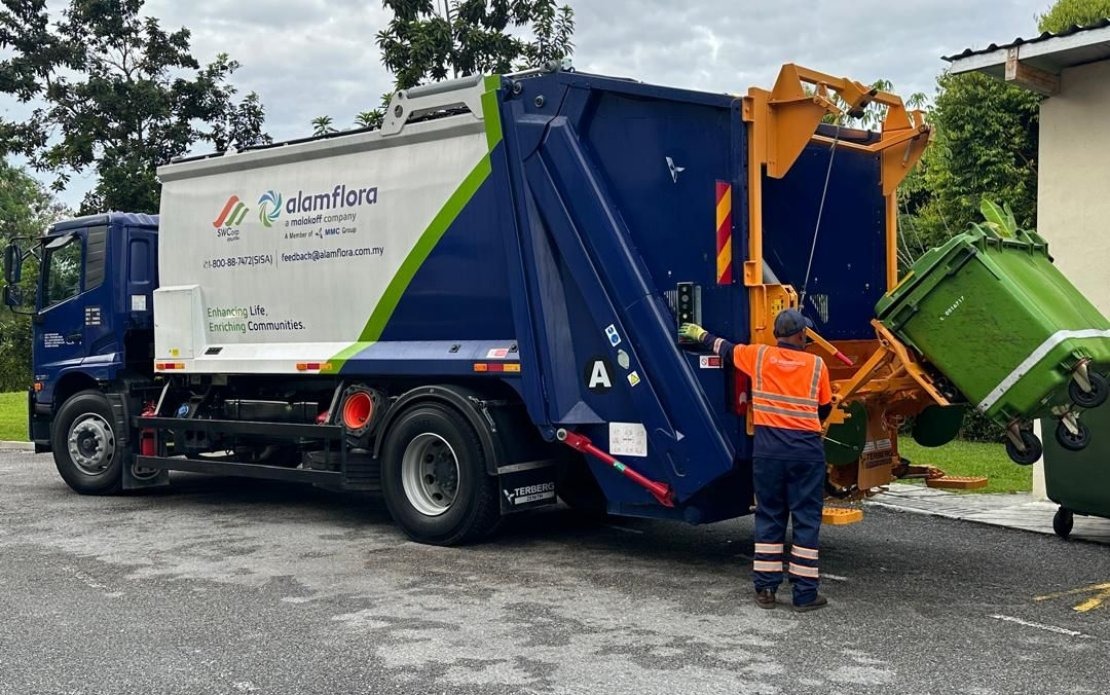
Alam Flora, the waste management company operating in the Klang Valley, has committed to providing complete cooperation with investigating authorities following a serious incident involving one of its compactor garbage lorries in the Pantai Hillpark residential area of Kuala Lumpur. The company issued a formal statement confirming its readiness to support the ongoing probe and to comply with all investigative requirements, signalling a corporate response aimed at addressing public concern over the safety implications of the crash.
The incident, which occurred in the early hours along Jalan Pantai Murni 1, involved a garbage lorry that reportedly experienced mechanical failure before veering out of control and colliding with the perimeter wall of a nearby condominium. The timing of the crash—during dawn hours when waste collection operations typically peak—underscores the operational risks faced by sanitation workers and residents in urban areas throughout Malaysia. The vehicle's loss of control and subsequent impact raised immediate questions about vehicle maintenance standards and the adequacy of safety protocols within the waste collection sector.
According to the company's statement, the garbage lorry will be submitted for comprehensive mechanical inspection at an accredited examination facility to establish the precise cause of the accident. This technical assessment forms a critical component of the investigative process, as it will either confirm or refute preliminary indications that brake system failure triggered the loss of control. The findings from this inspection will be instrumental in determining whether the incident stemmed from inadequate maintenance procedures, manufacturing defects, or operator-related factors.
The police investigation has already begun to rule out certain variables. Authorities administered a breathalyser test to the lorry driver immediately following the incident, with results confirming that he had not consumed alcohol prior to operating the vehicle. This finding eliminates impairment as a contributing factor and redirects investigative focus toward mechanical and operational elements. The driver subsequently filed a formal report with the Kuala Lumpur Traffic Police Station, initiating the official documentation necessary for the case to proceed.
The formal investigation is being conducted under Section 43(1) of the Road Transport Act 1987, a legislative provision that governs vehicle safety standards and operational compliance. This statutory framework ensures that the probe extends beyond immediate circumstance to encompass broader questions of regulatory adherence and corporate responsibility. The involvement of the Computerised Vehicle Inspection Centre, commonly known as Puspakom, represents the deployment of advanced diagnostic technology to examine the compactor lorry's mechanical systems in detail.
Alam Flora's statement emphasised that worker safety, contractor welfare, and public protection constitute the foundational pillars of its operational philosophy. By placing these considerations at the forefront of its response, the company has signalled recognition of its duty of care toward both its workforce and the communities in which it operates. The acknowledgement of the incident's impact on the affected residential community represents an attempt to demonstrate accountability and responsiveness to public anxiety generated by such an event.
The waste collection sector across Malaysia relies heavily on daily operations of compactor lorries navigating urban streets, often during off-peak hours to minimise traffic disruption. These vehicles carry significant weight when loaded and operate under demanding conditions, making mechanical reliability absolutely essential. An incident of this magnitude raises broader industry questions about vehicle inspection frequencies, maintenance budgets, and the age profile of operational fleets employed by contracted service providers.
For Malaysian residents in condominiums and apartment blocks throughout the Klang Valley and other major urban centres, such incidents highlight the proximity of operational hazards in residential environments. The crash into the condominium perimeter wall serves as a tangible reminder that infrastructure serving essential services can pose unpredictable risks when equipment fails. This spatial intersection between residential safety and service delivery operations warrants ongoing regulatory attention.
The company's commitment to implement necessary follow-up measures based on investigation findings suggests that broader operational reviews may follow the mechanical inspection. Such reviews could encompass fleet maintenance schedules, driver training protocols, vehicle acquisition and replacement timelines, and communication procedures during equipment malfunction. For a company contracted to provide essential waste management services across multiple municipalities, any operational adjustments would carry implications for service delivery and potentially consumer fees.
Alam Flora's cooperative stance with investigating authorities reflects growing expectations of corporate transparency and accountability in Malaysia's regulated industries. The willingness to subject company equipment and procedures to external scrutiny demonstrates recognition that public confidence in essential services depends upon demonstrated commitment to safety standards. As the investigation progresses and technical findings emerge from Puspakom, they will likely inform broader discussions about safety protocols within the waste management sector.
The incident also underscores the operational challenges faced by sanitation workers, whose occupational safety often receives insufficient public attention despite their exposure to machinery-related hazards on a daily basis. The early-morning timing of garbage collection operations means workers frequently operate vehicles under conditions of reduced visibility and lighter traffic flow, yet equipment failures pose identical risks regardless of the hour of operation. Ensuring that compactor lorries meet stringent safety standards ultimately protects the individuals operating them.
As authorities continue their investigation and the mechanical assessment proceeds at Puspakom, regulatory bodies and other waste management service providers will likely be monitoring the findings closely. The outcome of this probe could influence industry-wide standards for vehicle maintenance and inspection intervals, potentially affecting operational costs and service delivery schedules across the waste management sector throughout Malaysia. The commitment to full cooperation expressed by Alam Flora thus carries implications extending well beyond this single incident.

