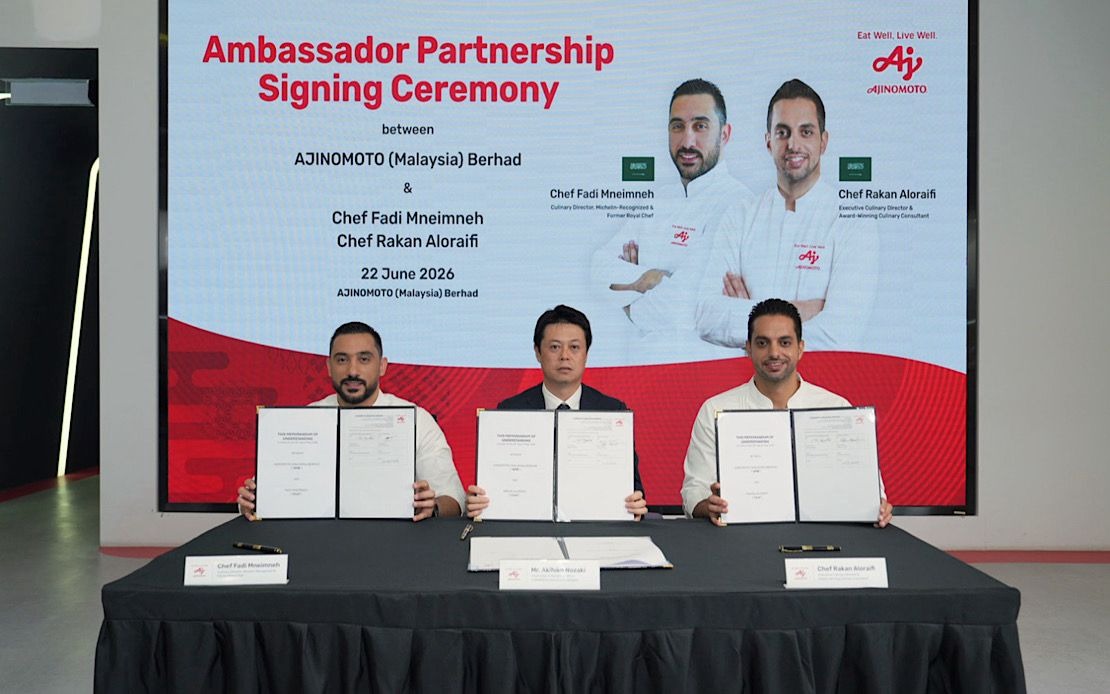
Ajinomoto (Malaysia) Berhad (AMB) is making a calculated move to strengthen its presence across the Middle East by partnering with two of Saudi Arabia's most respected culinary leaders, tapping into surging regional appetite for premium halal food solutions. The collaboration with Chef Fadi Mneimneh, a Michelin-starred culinary director and former royal chef, and Chef Rakan Aloraifi, an award-winning executive chef and consultant, represents AMB's strategy to leverage influential voices in order to penetrate deeper into one of the world's fastest-growing halal markets.
The partnership reflects a broader shift in how multinational food companies approach Middle Eastern expansion. Rather than relying solely on traditional distribution channels, AMB is investing in relationships with high-profile culinary figures whose endorsement carries substantial weight with restaurant owners, hotels, and procurement professionals across the hospitality sector. This approach acknowledges that in the region's competitive food market, credibility and cultural alignment matter as much as product quality. Both chefs bring extensive networks and trusted reputations that can accelerate AMB's market entry and establish consumer confidence among discerning diners.
The two Saudi chefs recently toured AMB's manufacturing facility in Bandar Enstek, Negeri Sembilan, where they experienced firsthand the company's halal certification protocols and production standards. During the facility visit, AMB conducted detailed sessions explaining the science and culinary applications of umami—the fifth taste dimension that has become increasingly important in contemporary cuisine. This educational component is crucial, as it positions AMB not merely as a seasoning supplier but as a partner in elevating modern Middle Eastern cooking through ingredient innovation.
What distinguishes this collaboration is its emphasis on cultural integration rather than product imposition. During their Malaysian visit, Chef Fadi and Chef Rakan led live culinary demonstrations showcasing how Ajinomoto products can enhance traditional Middle Eastern dishes while preserving their authenticity. By preparing familiar recipes with selected AMB ingredients, the chefs demonstrated a critical point: umami depth can be achieved without compromising regional culinary traditions or ingredient integrity. This messaging directly addresses potential hesitations among traditional cooks and restaurant establishments concerned that international products might dilute local authenticity.
The timing of this partnership aligns with measurable trends in the Middle Eastern halal food sector. Saudi Arabia, specifically, has emerged as a primary growth engine for global halal product demand, driven by rising middle-class consumption, hospitality industry expansion, and government initiatives promoting domestic food security and manufacturing. By establishing relationships with influential chefs now, AMB positions itself advantageously as the region's halal food market continues its upward trajectory. The involvement of AMB's Brunei distributor representative during the visit also signals the company's intent to build interconnected regional networks that can facilitate knowledge sharing and identify cross-border business opportunities.
AMB's strategy extends beyond immediate product sales. The company has committed to collaborating with both chefs at the Hotel, Restaurant and Café (HORECA) event scheduled for the first week of October 2026, with activities planned in both Riyadh and Jeddah. These professional trade events represent ideal platforms to reach decision-makers in hospitality purchasing, chefs managing large establishments, and food service operators evaluating supplier relationships. By securing the chefs as demonstration leaders, AMB effectively transforms HORECA participation from a passive booth presence into an active educational and experiential engagement that can influence procurement decisions.
For Malaysian companies competing in international markets, AMB's approach offers instructive lessons in strategic market development. Rather than pursuing volume-driven mass-market strategies, the company is investing in quality relationships with opinion leaders whose endorsement carries cultural weight within their communities. This reflects growing recognition that brand positioning in sophisticated food markets depends increasingly on narrative credibility and cultural authenticity—factors that extend beyond traditional advertising into partnership ecosystems that align the company's values and capabilities with local aspirations.
The emphasis on halal certification and transparency regarding manufacturing practices addresses a fundamental concern among Middle Eastern consumers and institutional buyers. Halal integrity represents non-negotiable compliance in the region, and AMB's willingness to host facility tours and showcase processes signals commitment to this standard. For Malaysian manufacturers, the company's experience demonstrates that halal certification should not be positioned defensively as a constraint but rather as a competitive advantage and badge of integrity.
The partnership also reflects broader market dynamics reshaping the global food ingredients industry. Companies like Ajinomoto face intensifying competition from both regional and international players, making differentiation through cultural partnerships increasingly important. By aligning with respected local voices rather than attempting to impose products from external positions of authority, AMB acknowledges the sophistication of Middle Eastern culinary professionals and their central role in shaping restaurant menus and food service standards. This collaborative approach respects expertise while creating mutual value through knowledge exchange.
Looking forward, the success of this Saudi initiative could establish a template for AMB's expansion across other Gulf Cooperation Council states and broader Middle Eastern markets. As the region's food service industry continues expanding alongside economic diversification efforts, demand for quality ingredients and culinary innovation will accelerate. Established relationships with influential chefs provide AMB with both immediate sales opportunities and valuable market intelligence regarding emerging trends and consumer preferences. The company's commitment to ongoing collaboration beyond the initial factory visit indicates confidence in the partnership's long-term potential and willingness to invest resources in sustaining these professional relationships.
For Malaysian stakeholders, AMB's Middle East expansion strategy reinforces Malaysia's position as a credible source of high-quality halal food products and demonstrates how domestic companies can successfully compete in sophisticated international markets through strategic partnerships and quality-focused positioning rather than competing solely on price. The initiative also highlights opportunities for Malaysian food manufacturers to develop similar collaborations with influential international culinary figures, leveraging Malaysia's established reputation for halal excellence and advanced manufacturing capabilities to create competitive advantages in premium market segments across Asia, the Middle East, and beyond.

