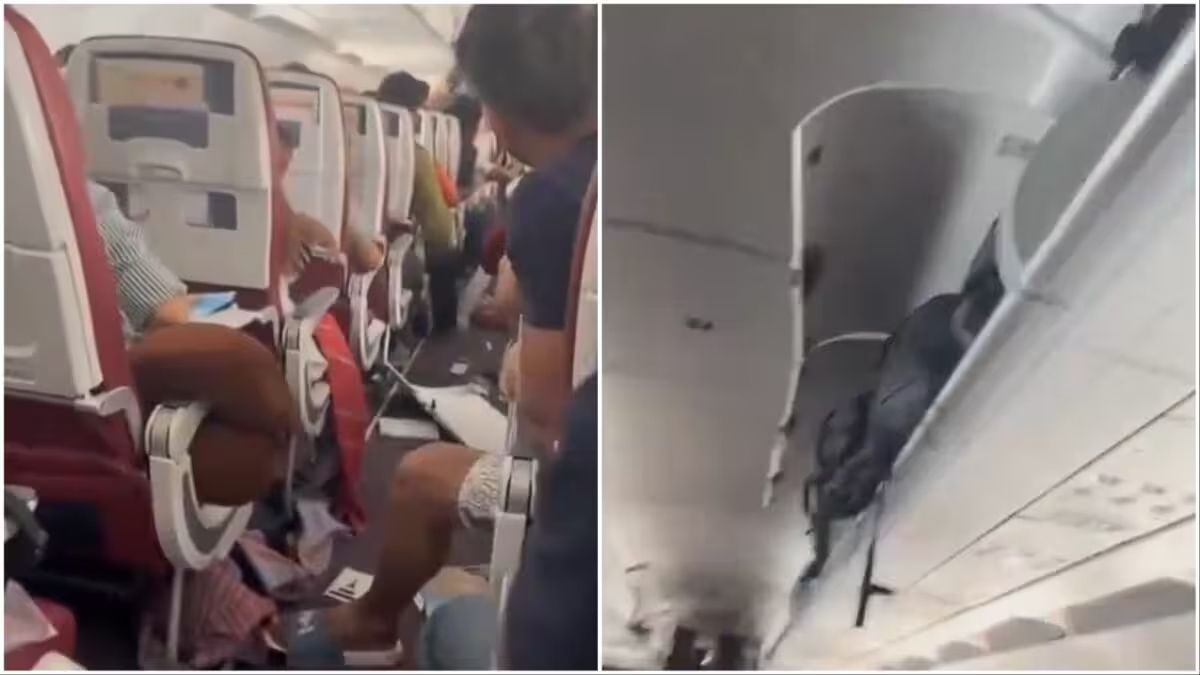
Airbus announced on Monday that it will dispatch a team of specialists to New Delhi on Tuesday to provide technical support to Indian investigators examining an Air India flight that experienced a dramatic mid-air descent, leaving 17 people injured during what passengers describe as a terrifying ordeal. The aircraft manufacturer's involvement marks a critical phase in understanding what caused the Airbus A320 to lose approximately 300 feet of altitude while en route from Phuket, Thailand to New Delhi on August 4. The incident has intensified scrutiny on both the airline and its operational procedures, coming at a particularly sensitive moment for India's aviation sector.
The A320, which was carrying 137 passengers alongside eight crew members, stabilised and landed safely in the Indian capital despite the sudden loss of altitude. According to Air India's official statement released following the landing, the aircraft had "experienced a sudden loss of altitude," though the airline stressed its complete cooperation with investigators and noted that Airbus had been informed immediately. The swift containment of the situation prevented what could have been a catastrophic outcome, yet the incident has raised urgent questions about the chain of events leading to the descent and the factors that contributed to the sudden altitudinal change.
India's civil aviation ministry has formally classified the occurrence as a Serious Incident, placing it under the purview of the Aircraft Accident Investigation Bureau (AAIB). This classification underscores the gravity with which Indian authorities are treating the event, triggering a comprehensive technical and procedural examination. Airbus confirmed it is providing "technical assistance" to the relevant investigating authorities, working collaboratively with Air India to ensure all available data and expertise contribute to understanding the incident's root causes.
Meanwhile, the investigation has taken on an additional dimension with the involvement of drug screening procedures. Indian authorities administered standard psychoactive substance screening tests to both pilots immediately after the aircraft landed in New Delhi. Results from the pilot-in-command's screening indicated findings that require further confirmatory testing, with samples having been dispatched for laboratory analysis. The final report from these toxicology tests has not yet been publicly released, though the aviation ministry has acknowledged the need for conclusive results before drawing any definitive conclusions about the pilots' condition during the flight.
Indian newspapers have reported widespread accounts of technical malfunctions occurring just moments before the altitude loss, though neither Air India, Indian regulatory authorities, nor Airbus have officially confirmed these technical details. This information gap has fuelled speculation among aviation experts and the public alike, with various theories circulating about potential system failures, autopilot anomalies, or other mechanical issues that may have precipitated the descent. The reluctance to release operational details reflects standard investigative protocols, which typically withhold specific findings until preliminary examinations are complete.
Both pilots involved in the incident have been removed from active flight duties pending the completion of investigative procedures. This precautionary measure, while routine in serious aviation incidents, carries significant operational implications for Air India's flight scheduling and crew deployment. The grounding of two experienced pilots from the roster underscores the seriousness of the inquiry and the authorities' determination to ensure no similar incidents occur while the investigation unfolds.
The incident adds another layer of complexity to Air India's already challenging operational landscape. The airline has endured considerable difficulties in executing its corporate turnaround strategy, facing multiple setbacks that have tested management's resilience and strategic direction. The current incident occurs against the backdrop of broader aviation industry disruptions stemming from regional geopolitical instability, particularly the ongoing Middle East crisis, which has created operational headaches and cost pressures across India's carrier network.
More significantly, Air India's reputation has suffered enormous damage from a previous catastrophe. In June 2025, Air India Flight 171, a Boeing 787 Dreamliner bound for London, crashed shortly after departure from Ahmedabad, resulting in the deaths of 241 passengers and crew members on board, plus an additional 19 people on the ground. Only a single passenger survived that tragedy, making it one of the deadliest aviation disasters in recent Indian aviation history. That crash sent shockwaves through the airline industry and prompted urgent reviews of Air India's safety protocols, maintenance procedures, and pilot training standards.
Given this recent tragic history, the August 4 incident carries heightened significance for Air India's credibility and public confidence in the airline's safety culture. While the Phuket-New Delhi flight ultimately landed safely with no fatalities, the incident reinforces concerns about whether systematic safety improvements have been genuinely implemented across the carrier's operations. Passengers and industry observers are watching closely to see how comprehensively the investigation addresses underlying causes and what remedial measures emerge.
In response to mounting operational and reputational challenges, Air India recently appointed Tewolde Gebremariam, former chief executive of Ethiopian Airlines, to lead the airline as its new chief executive. Gebremariam brings considerable international experience managing a major African carrier, though his appointment signals recognition within India's aviation establishment that substantial management change is necessary to restore Air India to operational stability and public confidence.
The Airbus investigation team's arrival in New Delhi will focus on examining the aircraft's systems, maintenance records, and flight data recordings to reconstruct the precise sequence of events. The technical specialists will collaborate with Indian investigators to determine whether mechanical factors, systems malfunctions, or procedural elements contributed to the altitude loss. This multi-stakeholder approach—combining Indian regulatory expertise, airline operational knowledge, and manufacturer technical capabilities—represents the internationally accepted standard for serious aviation incident investigations.
As the investigation proceeds, aviation safety experts across Southeast Asia are monitoring developments closely. The incident raises broader questions about pilot training, aircraft maintenance standards, and safety oversight across the region's commercial aviation sector. For Malaysian readers and aviation professionals, the investigation's findings may yield insights applicable to regional carriers and their own safety management systems, making the outcomes particularly relevant to the wider Southeast Asian aviation community's safety evolution and best practices.

