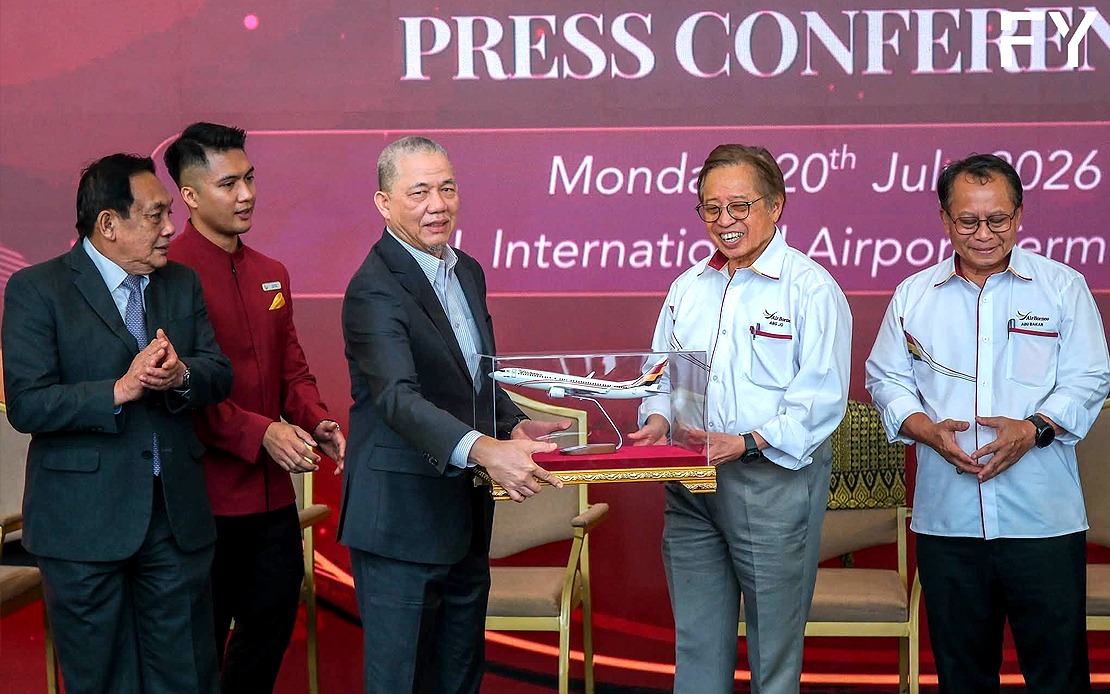
The inauguration of AirBorneo Airways marks a significant milestone for Sarawak as the state's government-backed carrier takes to the skies with its first commercial flight from Kuching to Kuala Lumpur International Airport. Deputy Prime Minister Datuk Seri Fadillah Yusof hailed the development as a watershed moment, framing the venture as a direct response to persistent complaints from residents about the prohibitive cost of air travel within and from the state. The maiden flight, which arrived at KLIA Terminal 1 carrying Sarawak Premier Tan Sri Abang Johari Tun Openg alongside state ministers and dignitaries, was strategically timed just two days before Sarawak Day on July 22, lending the occasion symbolic weight in the state's ongoing development narrative.
Fadillah articulated an ambitious vision for the new airline, emphasizing that AirBorneo would deliver more economical fares while maintaining transparent pricing structures and prioritizing passenger welfare without sacrificing operational standards. This commitment represents a calculated attempt to break what many Sarawakians have viewed as an accessibility barrier, where limited competition on key routes has historically allowed carriers to maintain elevated prices. The Deputy Prime Minister's endorsement underscores federal backing for the venture, signalling that the initiative enjoys support from the highest echelons of national leadership and sits comfortably within broader Malaysian aviation policy objectives.
The strategic rationale behind AirBorneo extends well beyond passenger affordability. Premier Abang Johari has positioned the airline as a cornerstone investment in Sarawak's economic architecture, with potential spillover benefits across multiple sectors. Enhanced air connectivity is expected to catalyze growth in tourism, facilitating easier access for both domestic and international visitors keen to explore the state's natural attractions and cultural heritage. Simultaneously, improved transportation links promise to strengthen commercial networks, making the state a more attractive destination for trade and investment activities. Regional development within Sarawak itself stands to benefit from increased accessibility, potentially reducing the historical geographic disadvantages faced by inland communities.
The establishment of AirBorneo also reflects a broader assertion of Sarawakian autonomy in managing critical infrastructure. By launching its own carrier, the state government sends a clear message about its capacity for self-determination and independent economic decision-making. This move aligns with historical conversations around the nature of Sarawak's relationship with the federal government and the extent to which the state should develop its own capabilities rather than relying entirely on national carriers or external solutions. The airline thus transcends its basic commercial function to become a symbol of Sarawak's determination to shape its own future and exercise greater control over economic fundamentals.
A particular emphasis within the government's framing concerns the maintenance of air services to remote and rural communities throughout Sarawak. These areas, often characterised by challenging terrain and limited road infrastructure, depend critically on aviation for connectivity to healthcare, education, and commercial opportunities. The previous reliance on limited carriers willing to service less lucrative routes created vulnerabilities, with pricing occasionally reflecting the captive nature of these markets. AirBorneo's establishment as a state-owned entity provides a mechanism through which the government can directly influence rural connectivity policy, potentially ensuring that profitability considerations do not completely override social access objectives.
The airline's launch arrives at a particularly propitious moment in Malaysia's aviation landscape. The domestic sector has experienced significant consolidation and rationalization over recent years, with several regional carriers ceasing operations and route networks being redrawn along lines determined primarily by commercial calculus. In this context, Sarawak's decision to establish its own carrier represents an unusual move toward decentralized aviation infrastructure development. The model deviates from the typical pattern of concentration around national flag carriers and larger commercial operators, instead devolving ownership and operational control to the state level.
For Malaysian travellers more broadly, particularly those from the northern states and from Sabah, AirBorneo's presence promises a potentially expanded competitive environment on certain key routes. Increased competition generally exerts downward pressure on fares across competing services, potentially benefiting passengers who hold flexibility regarding which carrier they utilize. The emergence of an additional player in the inter-city market segments Sarawak serves could accelerate fare reductions and service improvements across the industry, as established carriers respond to fresh competitive pressures.
The timing of the airline's launch also carries political significance beyond mere convenience. By coinciding with the Sarawak Day celebrations, the government effectively framed the initiative as part of a broader development program and achievement for the state. This positioning strengthens the narrative that the current administration delivers tangible improvements in residents' quality of life, translating political mandates into concrete, usable services. For a state government, the ability to point to new airline services represents a more visible and direct achievement than many infrastructure investments that often require extended development periods.
Operational sustainability presents the most critical challenge for AirBorneo in its formative years. Launching a new airline in an already competitive market demands careful route planning, efficient fleet utilization, and rigorous cost management. The carrier must simultaneously maintain its affordability mandate—a political commitment that will resist rapid fare increases—while generating sufficient revenue to maintain financial viability. Successfully navigating this balance will determine whether AirBorneo becomes a transformative force in Sarawak's aviation sector or another cautionary tale in the graveyard of regional airline ventures that have emerged around Asia over the past two decades.
The implications for Southeast Asia merit consideration as well. Sarawak's airline initiative sits within a broader trend of regional governments investing in aviation infrastructure and establishing carriers to enhance connectivity. The approach differs markedly from deregulation-focused strategies that emphasize competition and market forces, instead prioritizing state capacity and social objectives. How effectively AirBorneo executes its mission will influence whether other Malaysian states and regional governments view similar ventures as viable policy tools or costly indulgences. Success could catalyze a wave of state-level aviation investments; failure might reinforce conventional wisdom favoring concentration and consolidation in the sector.

