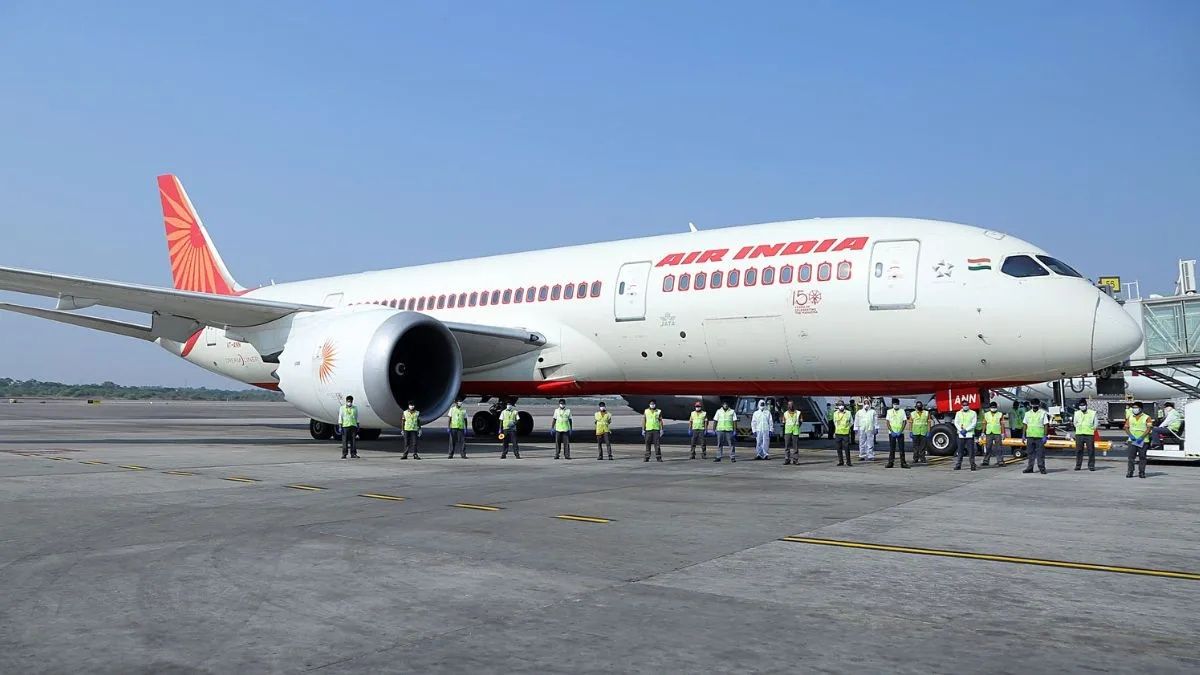
An Air India aircraft unintentionally breached Pakistani airspace early Monday evening following a technical malfunction in its navigation systems, authorities confirmed this week. The Airbus A321 operating as Flight AI-463 initially departed Delhi's Indira Gandhi International Airport at 9:18 pm on June 22, headed for Amritsar in Punjab. What should have been a routine short-haul flight of roughly one hour instead evolved into a complex incident involving two nations' air traffic management systems and resulted in the aircraft not reaching its final destination until nearly four hours behind schedule.
Soon after takeoff from the capital, the aircraft's onboard navigation system experienced a technical failure that caused its flight path to deviate significantly westward. This malfunction proved critical because the Delhi-Amritsar route runs close to the India-Pakistan International Border, leaving little margin for navigational error. Without proper course correction, the deviation naturally carried the aircraft across the border into Pakistani airspace. The breach occurred during evening operations when air traffic volumes are typically high and coordination between adjacent air traffic control authorities becomes especially vital.
The incident highlighted the importance of international air traffic management protocols and professional coordination between neighbouring nations. Pakistani Air Traffic Control detected the unauthorized entry into their airspace and immediately contacted the flight crew to alert them to the breach. Rather than treating the matter as a security incident, Pakistani authorities operated within established procedures for such technical emergencies, working directly with the pilots to resolve the situation. The Air India flight crew responded promptly to the alert, acknowledging the deviation and correcting their course to return to Indian airspace without further incident.
However, the technical crisis was merely the first of several complications that would extend the flight's journey considerably. By the time Flight AI-463 approached Sri Guru Ram Dass Jee International Airport in Amritsar around 10:30 pm, the airport was experiencing significant air traffic congestion that had consumed all available landing slots. This operational bottleneck, likely stemming from the evening peak traffic period, meant the aircraft could not be accommodated immediately. Rather than hold the aircraft in a holding pattern, air traffic controllers instructed the pilots to divert the flight back to Delhi, where landing facilities remained available.
The return flight to Delhi added another hour to the aircraft's journey, illustrating how a single technical failure can cascade into multiple operational complications for airlines and airports. Upon landing back at Indira Gandhi International Airport, the aircraft underwent mandatory technical inspections to address the navigation system failure and verify that the aircraft was safe for continued operations. These inspections are standard procedure following any anomalous flight condition and serve to ensure both passenger safety and regulatory compliance.
Once maintenance personnel completed the necessary technical checks and air traffic authorities granted the required operational clearances, the aircraft finally departed Delhi for Amritsar again. This second attempt proved successful, and Flight AI-463 touched down in Amritsar at approximately 2:20 am on June 23, nearly four hours behind its originally scheduled arrival time. The extended delay would have affected not only the aircraft's crew scheduling but also downstream flight operations and passenger connections throughout Air India's network.
Neither Air India nor India's aviation regulator, the Directorate General of Civil Aviation, has yet released detailed technical information regarding the specific nature of the navigation system malfunction. Such disclosures typically come after preliminary investigations are completed and the carrier has had opportunity to brief regulatory authorities. The silence reflects standard industry practice, where operators and regulators often refrain from detailed public commentary until technical investigations have progressed sufficiently to draw reliable conclusions.
Aviation authorities have launched a routine investigation to establish the precise circumstances surrounding the airspace deviation. These investigations typically examine multiple factors including aircraft maintenance records, crew training and procedures, weather conditions, and the technical performance of navigation systems during the flight. For a modern aircraft like the Airbus A321, multiple redundant navigation systems exist, and investigators will seek to understand why the primary system failed and whether backup systems functioned as designed.
This incident arrives within weeks of another cross-border aviation incident in the region, when a Pakistan International Airlines flight briefly entered Indian airspace during adverse weather conditions. That incident was similarly resolved through professional coordination between the two nations' air traffic authorities, with the aircraft safely guided back to its designated route. The back-to-back incidents underscore the inherent challenges of operating commercial aviation in a region where international borders run close to major air routes and where weather systems can develop unpredictably.
For Malaysian aviation professionals and operators, the incident offers instructive lessons about the critical importance of navigation system reliability and the value of well-established international protocols for managing airspace breaches. South-East Asian airlines operate across a region with numerous shared airspace boundaries and high traffic densities, making similar coordination mechanisms essential. The professional manner in which both Indian and Pakistani authorities handled the incident—treating it as a technical emergency rather than a security matter—demonstrates best practices that benefit the entire region's aviation community.