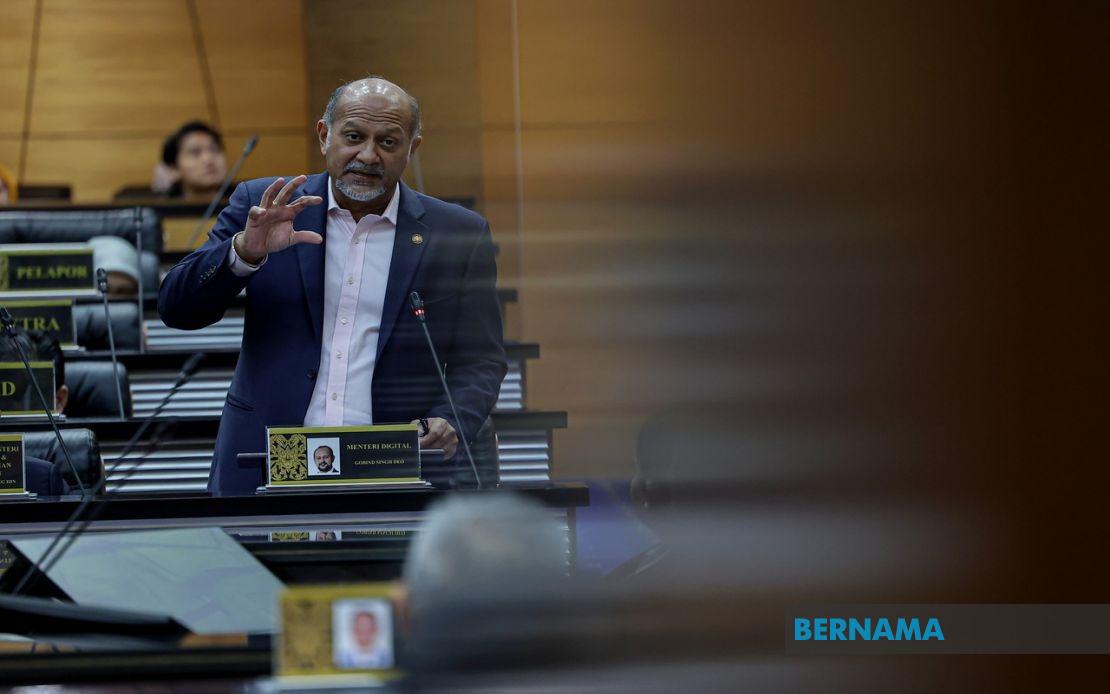
Malaysia's approach to regulating artificial intelligence will centre on holding people and institutions legally responsible for the technology's consequences, according to Digital Minister Gobind Singh Deo. Speaking during a parliamentary session on June 24, he clarified that the pending AI Governance Bill recognises a fundamental legal reality: machines cannot bear moral or legal accountability themselves. This principle shapes the entire legislative approach, placing the burden of responsibility squarely on human actors—whether developers, operators, service providers, or end-users of AI systems. The distinction matters profoundly as technology deployment accelerates across both government and commercial sectors throughout the region.
The minister's emphasis on accountability reflects a pragmatic understanding of AI's role in contemporary society. As artificial intelligence becomes embedded in healthcare decisions, financial services, law enforcement, and public administration, regulatory frameworks must identify the humans making critical choices. Gobind highlighted that this accountability principle represents the cornerstone of the bill's construction, precisely because AI deployment is becoming routine rather than exceptional. The government recognises that citizens increasingly encounter these systems in everyday transactions and administrative interactions, creating urgent need for legal clarity about who bears responsibility when something goes wrong.
The proposed legislation will examine AI systems across their entire operational lifecycle, from initial conception through eventual retirement or decommissioning. This comprehensive approach acknowledges a reality often overlooked in technological discussions: risks do not emerge uniformly at single moments but accumulate and transform throughout a system's existence. An AI application deemed safe during development might become problematic when modified, relocated to different operational contexts, integrated with other systems, or deployed among user groups for whom it was never originally designed. Malaysia's framework explicitly accounts for these dynamics, recognising that static safety assessments prove inadequate for technology that evolves continuously.
Gobind emphasised that the AI Governance Bill functions as a horizontal framework complementing rather than supplanting existing legal structures. This layered approach respects the jurisdiction of specialised regulators while establishing baseline AI governance standards. Should AI systems generate criminal activity, consumer fraud, intellectual property violations, or sectoral breaches, the relevant existing laws and enforcement agencies maintain their authority. The government deliberately avoids creating parallel regulatory bureaucracies that might confuse responsibilities or create enforcement gaps. This architecture proves particularly important for a developing jurisdiction seeking to encourage technological innovation while protecting citizen interests—a balance requiring institutional clarity.
The government explicitly rejects content regulation approaches, choosing instead to establish governance mechanisms preventing harms before they materialise. This distinction separates procedural oversight from output censorship, avoiding the slippery slope toward authoritarian information control that concerns many observers of emerging AI regulations globally. Instead, the ministry is exploring incident reporting systems enabling authorities to document when AI systems cause problems, investigate patterns, and implement preventative measures. Such transparency mechanisms allow regulators to learn from real-world failures rather than speculating about theoretical risks.
Among the mechanisms under active consideration is an AI regulatory sandbox—a controlled testing environment where developers, industry participants, and government agencies collaborate to evaluate systems before large-scale deployment. This approach balances innovation protection with risk mitigation, offering companies relatively low-stakes environments to identify problems and refine solutions. The sandbox concept has proven effective in fintech regulation across Southeast Asia and offers particular promise for AI governance where unintended consequences often emerge only during diverse real-world applications. Malaysia's willingness to explore such mechanisms suggests serious intent to support technological development rather than simply restricting it.
The Digital Minister's parliamentary response clarifies that Malaysia recognises accountability challenges that purely technological solutions cannot address. Responsibility cannot be delegated to algorithms, nor can legal liability attach to code itself. Rather, developers must account for foreseeable risks they fail to mitigate, organisations deploying AI must monitor for problems their systems cause, and operators must implement safeguards protecting vulnerable populations. This human-centred approach differs fundamentally from regulatory philosophies that treat technology as a neutral tool requiring minimal oversight.
For Malaysian and regional organisations deploying AI systems, the framework's emphasis on accountability carries immediate implications. Companies will need to document their risk assessments, maintain incident records, implement modification controls, and demonstrate appropriate oversight of system performance. Financial institutions, healthcare providers, and government agencies must develop internal governance showing how they ensure AI serves their mandates responsibly. The regulatory sandbox offers opportunities for early collaboration with authorities, potentially reducing later compliance burdens. Organisations that treat these requirements as bureaucratic obstacles rather than risk management essentials will likely face harsher scrutiny.
The bill's development reflects regional conversations about AI governance happening simultaneously across Southeast Asia, where rapid technology adoption has outpaced regulatory frameworks. Malaysia's emphasis on accountability and transparency aligns broadly with approaches emerging in Singapore and Thailand while maintaining distinctly Malaysian characteristics reflecting local institutional capacities and concerns. The horizontal framework structure offers a template potentially applicable throughout ASEAN, where coordinated approaches might eventually emerge.
Gobind stressed that the government will continue refining the bill to protect public interests, strengthen accountability throughout AI lifecycles, and support innovation simultaneously. This dual objective—protecting citizens while enabling development—represents the genuine challenge. Excessive regulation risks driving AI innovation and investment toward more permissive jurisdictions; insufficient oversight leaves citizens vulnerable to poorly-designed systems causing tangible harms. Malaysia's approach, emphasising accountability rather than prohibition, suggests confidence that transparent responsibility assignment can achieve both goals. The framework's success will depend substantially on implementation quality, enforcement consistency, and the government's willingness to hold powerful technology companies accountable alongside ordinary users.