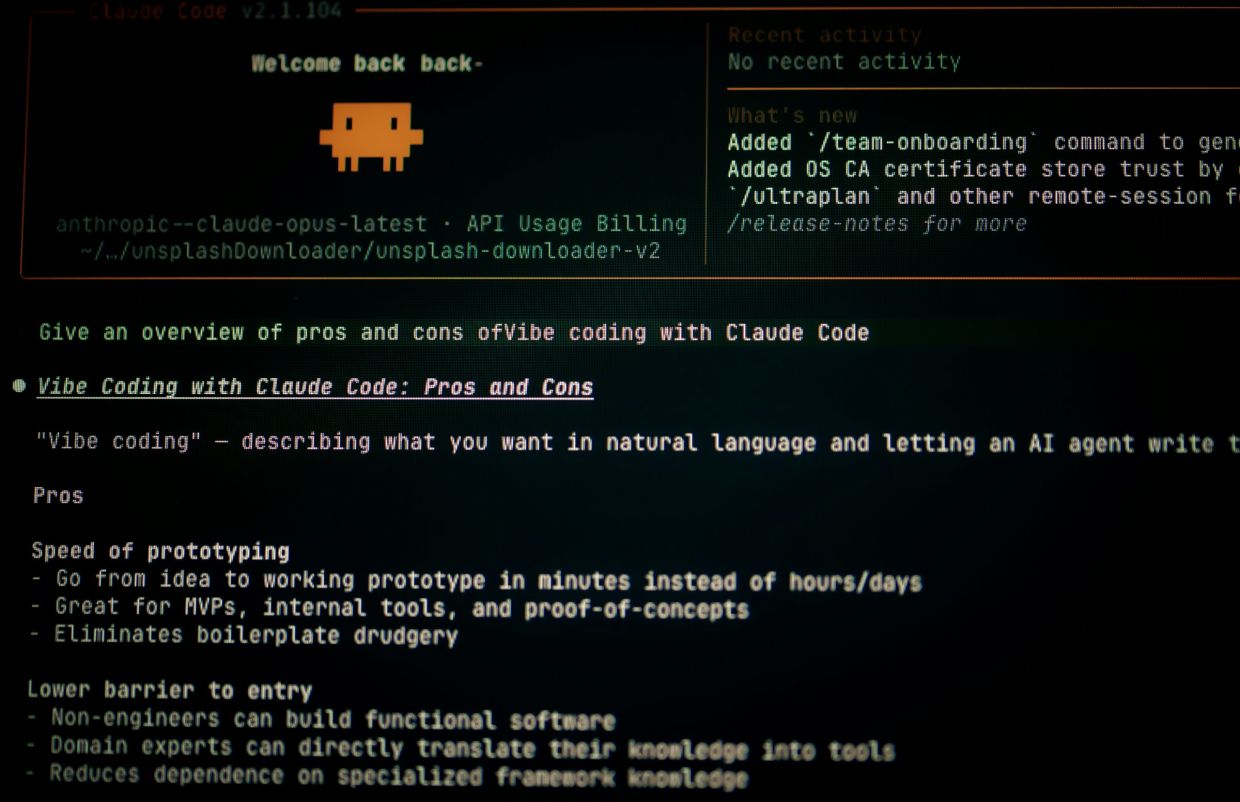
The technology industry is undergoing a fundamental transformation in how it builds software and recruits talent, driven by powerful AI coding assistants that are enabling skeleton crews to accomplish work once requiring significantly larger teams. This shift, while delivering substantial cost savings and operational agility to startups, is simultaneously eroding the entry-level positions that have historically served as a crucial on-ramp for young programmers entering the field. The tension between economic efficiency and workforce development is becoming increasingly pronounced as more companies adopt these tools, with far-reaching implications for the future pipeline of technical talent not just in Silicon Valley but across global tech hubs including Southeast Asia.
The new paradigm values experienced developers who have learned to work as multipliers rather than as line-by-line code writers. Giftory's leadership explicitly seeks what they term "architects" – mid-career professionals who possess deep knowledge of software workflows and can leverage AI coding tools like Anthropic's Claude Code and OpenAI's Codex to dramatically accelerate their output. The company's founder emphasised that candidates lacking foundational understanding of development workflows and organisational processes are substantially less desirable to employers pursuing this model. This preference signals a decisive pivot away from the traditional approach of hiring junior developers to gradually build expertise over years of hands-on experience.
The adoption rate among startups has been striking. A quarter of all companies in Y Combinator's Winter 2025 batch reported building products where 95 per cent or more of the code was generated by AI systems, according to Managing Partner Jared Friedman. This statistic alone underscores how rapidly the technology is reshaping development practices across the startup ecosystem. The transformation is not merely incremental – it represents a fundamental reconceptualisation of the programmer's role, shifting from craftspeople who meticulously construct software line-by-line to project managers who orchestrate AI systems through natural language prompts to write, test, and revise code at machine speed.
The financial mathematics driving this shift is straightforward and compelling for startup leadership. Giftory's team of approximately 30 people operates with premium AI tool subscriptions costing roughly US$200 monthly per developer – a trivial expense compared to the average developer salary of US$100,000 annually. This cost structure has fundamentally altered the economics of outsourcing and offshoring, making it more cost-effective to enhance local senior talent with AI capabilities than to maintain distributed junior development teams. Stems Labs has adopted a parallel strategy, leveraging its existing lean team of talented engineers and augmenting their capabilities through AI rather than expanding headcount. These approaches represent rational economic decisions that compound across the sector, creating powerful incentives for other companies to follow suit.
The efficiency dividend is substantial enough to reshape entire company budgets and hiring strategies. Espresa's customer success leadership reported that their team's AI implementation is generating millions of dollars in annual savings – savings that create gravitational pressure on other departments to justify new positions through demonstrable AI optimisation rather than simple business expansion. This shifting calculus suggests a future where hiring approvals become contingent on proving that AI capabilities have been exhausted before requesting additional human resources. The precedent being established in these early adopter companies will likely cascade through the tech industry as competitors seek equivalent efficiency gains to remain competitive.
Yet beneath these encouraging efficiency narratives lies concerning data about employment trends among early-career programmers. A Stanford Digital Economy Lab study analysing millions of worker records across the United States identified a nearly 20 per cent decline in employment among 22- to 25-year-olds in roles most exposed to artificial intelligence, including software development, measured from a late 2022 peak. Complementary research from Harvard examining resume databases and job postings across approximately 62 million American workers and 285,000 companies revealed that junior employment at firms adopting generative AI declined by roughly 9 per cent relative to non-adopting competitors within a six-quarter period, even as senior-level hiring continued expanding. These statistics suggest the displacement is not temporary or cyclical but reflects structural changes in labour demand.
Hiring practices themselves have become increasingly cautious, creating a compounding disadvantage for junior candidates. Cybersecurity startup leaders report widespread reluctance to commit to hiring decisions despite interviewing numerous candidates across multiple positions. Companies are conducting extensive recruitment processes while deferring final hiring commitments, behaviour suggesting uncertainty about whether junior roles will be necessary once AI tools are fully integrated. This hesitation effectively extends the timeline for new graduates and career switchers attempting to secure initial professional positions, potentially discouraging talented individuals from pursuing technology careers if entry points remain closed.
The concern about long-term consequences extends into industry leadership. Amazon Web Services CEO Matt Garman has publicly criticised the strategy of replacing junior developers with AI systems, characterising the approach as fundamentally mistaken. Garman's warning emphasises that the technology sector risks undermining its own future by denying emerging talent the mentorship relationships and practical experience necessary to develop into the next generation of technical leaders, architects, and innovators. His perspective reflects concern that optimising for short-term efficiency gains could hollow out the industry's capacity for long-term innovation and succession planning.
Significant evidence suggests the workforce implications are already materialising across educational institutions. Computer science enrolment has declined 6 per cent throughout the University of California system and has fallen at two-thirds of computing programmes nationwide, according to the Computing Research Association. These declining enrolment figures may reflect both reduced career prospects deterring new entrants and the industry's weakened demand for junior talent removing the traditional incentive for pursuing technical education. The feedback loop between reduced hiring and reduced enrolment could accelerate, potentially creating severe talent shortages even for the experienced developers that companies still prize.
For Malaysian and Southeast Asian technology sectors, these developments carry particular significance. The region has been developing its own software engineering capabilities and attracting both foreign investment and homegrown startups seeking to scale. If the AI-augmented development model becomes the global standard, the competitive advantage of lower-wage junior developers in developing economies could diminish substantially. Malaysian tech companies and policy makers should consider whether encouraging junior developer hiring now – before the global shift fully consolidates – represents a strategic advantage for building local technical capacity. The opportunity to develop domestic engineering talent before AI tools become universally adopted could prove valuable for long-term economic competitiveness and technological sovereignty.
The economic logic propelling startups toward leaner, AI-augmented teams shows no evidence of moderating. Company leaders continue framing the choice between productivity gains and headcount expansion as favouring technological leverage over human hiring. The tension between creating immediate shareholder value and maintaining healthy industry-wide talent pipelines remains unresolved, with market incentives clearly favouring the former. Without deliberate intervention from education systems, established companies, or policymakers, the structural shift toward fewer junior positions will likely persist, fundamentally reshaping how the next generation of programmers enters and develops within the technology profession.

