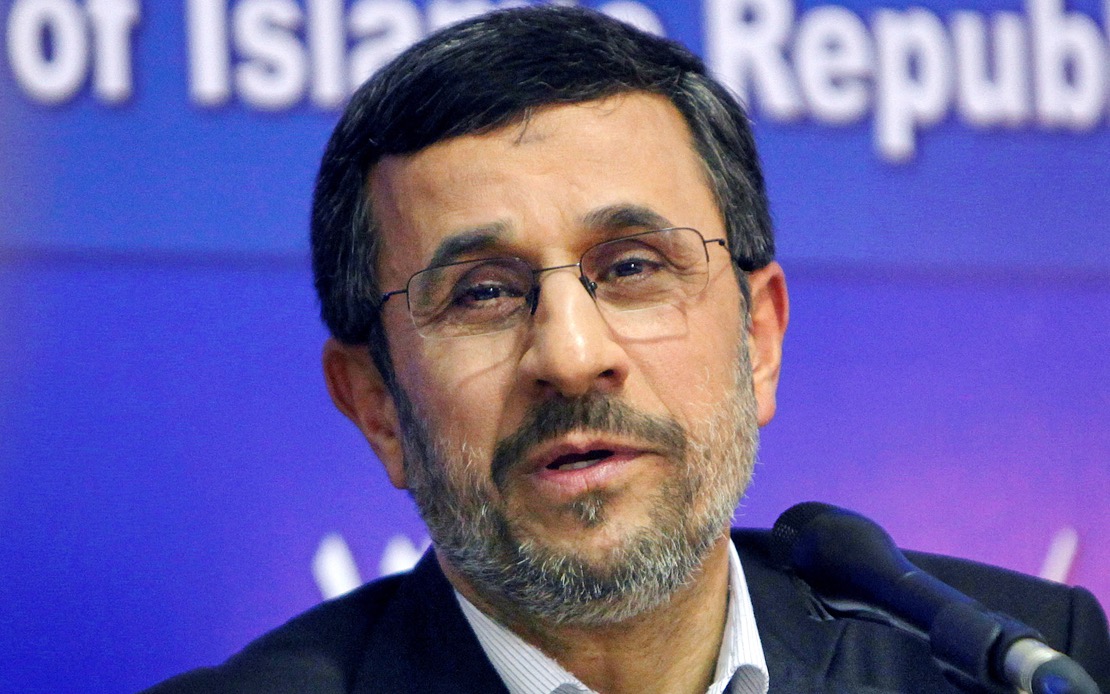
Former Iranian President Mahmoud Ahmadinejad has categorically denied allegations published by The New York Times that Israel's Mossad intelligence service attempted to recruit him and currently holds him under house arrest. His office issued a statement on Tuesday characterizing the claims as wholly unfounded, accusing the American newspaper of deliberately spreading misinformation designed to sow discord within Iran and manipulate international public opinion.
The controversial report, published on Monday, claimed that Israeli intelligence operatives had conducted a multi-year effort to enlist Ahmadinejad's cooperation with Tel Aviv, viewing him as a potential alternative leader for Iran. According to the New York Times account, this recruitment drive formed part of a wider Israeli strategy aimed at destabilizing Iran's government and facilitating regime change following initial military operations against senior Iranian officials. Ahmadinejad's representatives have rejected every element of this narrative, insisting that the newspaper has fabricated its central allegations while attempting to lend credibility to what they termed "absurd" claims.
The Times' reporting alleged that Israeli intelligence provided substantial financial support to Ahmadinejad over recent years, covering his housing and travel expenses, with operatives allegedly meeting him multiple times during trips abroad, including in Budapest. The narrative described a supposed climax to these efforts in late February, during the early stages of American-Israeli military operations against Iran, when Israeli intelligence purportedly attempted to extract Ahmadinejad from Tehran as part of a broader plan to overthrow the Iranian government and install him as its replacement leader.
According to the newspaper's account, an Israeli airstrike on February 28 targeted a compound associated with Ahmadinejad, striking structures housing his security personnel and damaging his armored vehicle. The report then cited four unnamed senior Iranian officials who claimed that a black Peugeot vehicle arrived at the scene following the strike, collected the former president, and transported him to a concealed safe location within Iranian territory. The Times further alleged, citing American and Iranian government sources, that Mossad operatives personally drove this vehicle.
Ahmadinejad's office has unequivocally rejected these specific allegations, particularly the claim of house arrest. The former leader, who served as Iran's president from 2005 until 2013, made a notable public appearance last week attending the funeral ceremonies of Iran's Supreme Leader Ali Khamenei, marking his first significant public engagement since the commencement of American-Israeli military operations against Iran. This attendance at such a high-profile state event directly contradicts the house arrest allegations, effectively serving as the most visible rebuttal to The New York Times claims.
The timing of Ahmadinejad's public appearance carries considerable political significance within Iran's internal dynamics. His emergence at the funeral of Ali Khamenei, whom he clashed with frequently during and after his presidency, signals that the former president maintains sufficient standing within Iran's political establishment to participate in state ceremonies honoring the Supreme Leader. Such involvement would be virtually impossible for someone actually confined to house arrest, thereby undercutting a cornerstone of the Times' narrative.
From a regional perspective, these allegations and their denial highlight ongoing tensions regarding Israel's alleged intelligence operations within Iran and the broader question of potential foreign support for Iranian opposition figures or alternative power structures. The claim that Mossad attempted to cultivate Ahmadinejad as a potential replacement leader reflects broader strategic concerns about regime stability in Tehran, a matter of intense interest throughout the Middle East and beyond. For Southeast Asian observers, the episode underscores how international intelligence agencies operate across borders and the challenges governments face in controlling narratives about internal political dynamics.
Ahmadinejad's categorical rejection of the Times' reporting also reflects the broader pattern of mutual accusations between Iran and Israel regarding intelligence operations, espionage activities, and efforts to destabilize each other's governments. Both nations regularly deny allegations from international media outlets, and such denials often prove difficult to verify independently. The credibility of competing claims typically depends on readers' assessment of the publications involved and the corroborating evidence presented, factors that vary significantly across different audiences and regions.
The former president's office characterized The New York Times as engaging in deliberate journalistic misconduct, accusing it of publishing false information specifically designed to damage Iran's international standing and create internal friction within the country. This accusation itself reflects a common rhetorical strategy employed by officials responding to unwelcome international reporting, placing emphasis on the newspaper's alleged bias and malicious intent rather than systematically addressing each factual claim. Such defensive posturing typically signals that officials view the allegations as potentially damaging to their political standing or to their nation's interests.
For Malaysian readers and Southeast Asian observers, this incident demonstrates the complexity of assessing claims and counter-claims in international geopolitics, particularly when reputable news organizations publish investigative reporting on sensitive security matters that parties involved vigorously dispute. The episode also illustrates how allegations of intelligence operations, foreign interference, and regime change efforts remain central to contemporary regional and global power struggles. Understanding these dynamics becomes increasingly important as Southeast Asian nations navigate geopolitical tensions involving major powers and their various strategic interests across the broader Middle East and Asia-Pacific region.

