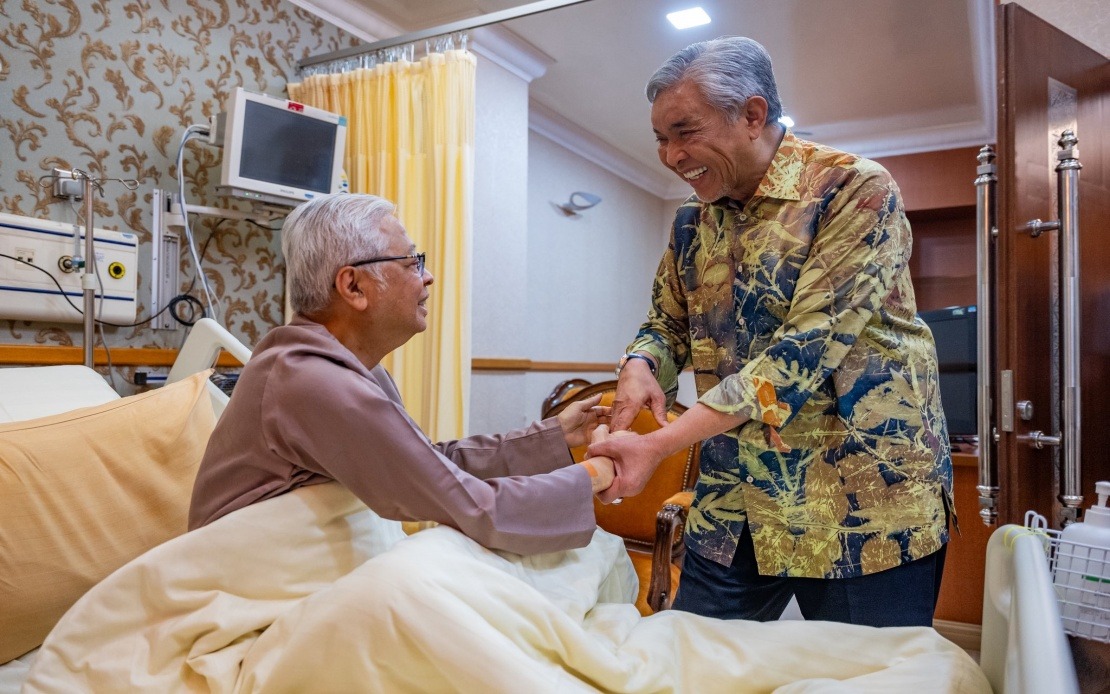
Deputy Prime Minister Datuk Seri Dr Ahmad Zahid Hamidi made a personal visit to the National Heart Institute in Kuala Lumpur to see former Prime Minister Datuk Seri Ismail Sabri Yaakob, who is currently undergoing medical treatment at the facility. The visit underscores the ongoing solidarity within Malaysia's political establishment during a time when one of the nation's recent leaders faces health challenges. Ahmad Zahid's presence at the institute, announced through a social media post, represents a gesture of support and good wishes for the recovery of the Bera Member of Parliament.
In his public statement marking the visit, Ahmad Zahid expressed his hopes for Ismail Sabri's full recovery and swift return to normal daily functions. He conveyed prayers that the former prime minister would regain his strength and be able to resume his parliamentary responsibilities and routine activities without further complications. Such gestures, while common among political colleagues, carry particular significance given the demanding nature of parliamentary service and the importance of maintaining continuity in representation.
Ismail Sabri's health episode occurred during an official proceeding at the Malaysian Anti-Corruption Commission offices on August 6, when he was attending a scheduled statement-recording session. The sudden onset of his condition necessitated emergency transfer to the National Heart Institute, where medical specialists determined that he required intervention to address an irregular heartbeat. The timing of the incident, coinciding with his engagement with the anti-corruption agency, drew considerable public attention and prompted expressions of concern from across the political spectrum.
Following his admission to the institute, Ismail Sabri underwent a procedure to implant a wireless pacemaker, a medical device designed to regulate abnormal heart rhythms. This minimally invasive intervention represents a standard treatment option for patients experiencing arrhythmia or related cardiac conditions. The successful completion of the implantation procedure marked an important milestone in his treatment pathway and provided reassurance to supporters and colleagues alike regarding his medical outlook.
The incident highlights the health vulnerabilities that can affect even high-ranking government officials, regardless of their access to medical resources. While Malaysia's healthcare infrastructure, particularly private facilities like IJN, offers world-class cardiac care, the unpredictability of acute medical events remains a reality for citizens across all walks of life. Ismail Sabri's experience serves as a reminder of the importance of regular health monitoring and the need for robust emergency medical services capable of responding swiftly to life-threatening situations.
From a political perspective, the former prime minister's health challenge occurs during a period when he continues to maintain an active role in parliamentary proceedings as the Bera MP. His absence from legislative duties during recovery creates a gap in representation for his constituency, though such absences are generally accommodated within parliamentary procedure. The recovery timeline for pacemaker implant patients typically extends over several weeks, during which graduated resumption of normal activities is recommended under medical supervision.
The visibility of Ahmad Zahid's visit and his public prayers for Ismail Sabri's recovery demonstrates the personal dimension often underlying Malaysia's political relationships, even among figures who may have competing interests or responsibilities in their formal roles. Such cross-party and intra-party shows of solidarity during health crises reflect the human element of governance and the recognition that political disagreements exist within a broader context of shared national purpose.
Ismail Sabri's tenure as Prime Minister from August 2021 to October 2022 was succeeded by the current administration, yet his continued presence in parliament keeps him engaged in the legislative process. His status as a former chief executive makes his health situation a matter of interest not only to his immediate constituents but to the broader Malaysian political establishment and public. The medical challenges he faces resonate with broader questions about health security and medical accessibility for senior citizens in Malaysia.
The National Heart Institute, where Ismail Sabri received treatment, stands as one of Malaysia's premier cardiac healthcare facilities. Its expertise in managing complex heart conditions and implanting advanced medical devices like wireless pacemakers positions it as a centre of excellence for cardiac care in the region. The institute's involvement in treating a former prime minister underscores the critical role such specialised medical facilities play in the country's overall health infrastructure.
Looking ahead, Ismail Sabri's recovery process will likely involve follow-up appointments, cardiac rehabilitation, and adjustments to his daily routine to accommodate his new medical status. Most pacemaker patients return to near-normal lifestyles following successful implantation, though certain precautions and activity modifications may be permanently necessary. His gradual return to full parliamentary duties will depend on his medical team's assessment and his personal progress throughout the recovery phase.

