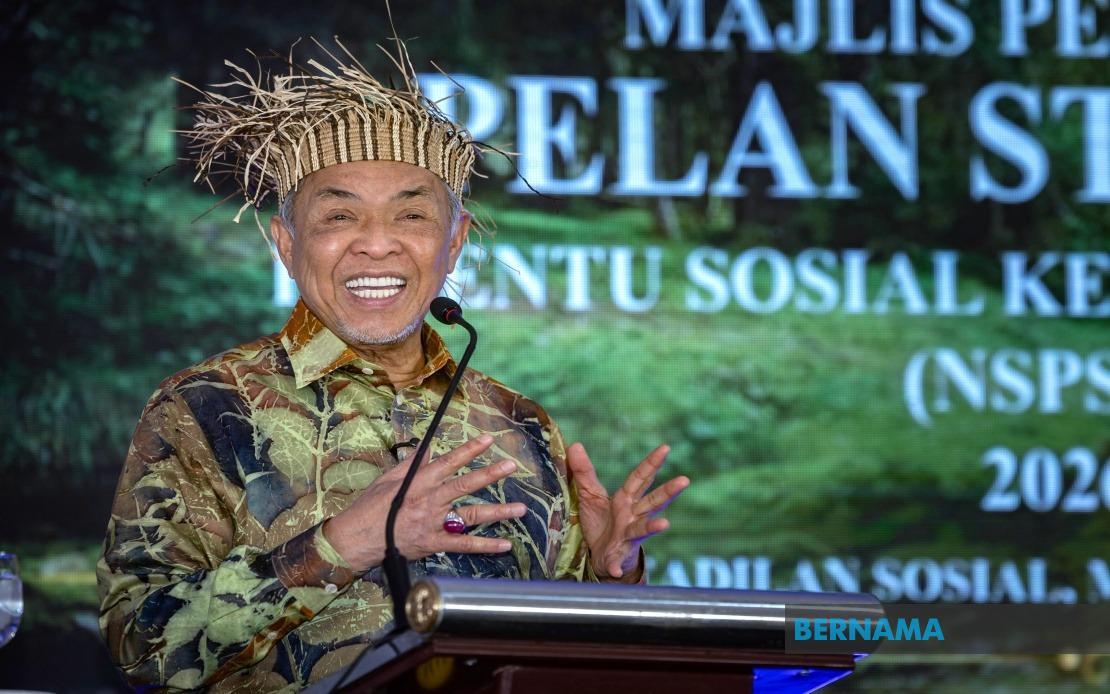
Deputy Prime Minister Datuk Seri Dr Ahmad Zahid Hamidi has appealed to the Malaysian public to unite in prayer for the swift recovery of Prime Minister Datuk Seri Anwar Ibrahim following his recent medical procedure. Speaking in Gerik after inaugurating a healthcare initiative for the Orang Asli community, Ahmad Zahid expressed confidence that the Prime Minister would require only a brief recuperation period before returning to his full administrative responsibilities.
According to Ahmad Zahid, Anwar had notified him of the upcoming surgical intervention on Tuesday, August 4, conveying his assurance that the downtime needed would be minimal. The Deputy Prime Minister's public statement underscores the collaborative nature of Malaysia's top two political leaders and reflects established protocols within the administration for managing transitions during temporary absences of the head of government. Ahmad Zahid stated: "Let's pray together that his recovery will provide him with the comfort and strength to continue serving the country and the people as a whole."
During the event at Kampung Air Banun, Ahmad Zahid acknowledged the medical reality underlying the situation, noting that even routine surgical procedures require a recovery window. He indicated that the Prime Minister needed "at least two days of downtime," emphasising that the procedure, whilst classified as minor, still demanded appropriate rest and recuperation. This measured assessment suggests the government remains transparent with the public regarding leadership continuity matters whilst maintaining discretion about health particulars.
To ensure governmental operations continued uninterrupted, Anwar had requested that Ahmad Zahid assume responsibility for chairing Cabinet meetings during his period of absence. This delegation reflects the structured succession of executive functions within Malaysia's Cabinet system and demonstrates preparedness for medical contingencies affecting senior leadership. The arrangement ensures that critical policy decisions and administrative oversight remain on schedule without disruption to the nation's governance framework.
The Prime Minister's Medical Team, headed by Datuk Dr Asri Ranga Abdullah Ramaiah, released a detailed clinical update confirming the successful completion of the procedure on the day in question. Anwar underwent an elective laparoscopic surgical intervention targeting a para-umbilical hernia, a relatively common abdominal condition that frequently requires surgical correction. The medical team highlighted that the minimally invasive laparoscopic approach, compared to traditional open surgery, typically allows for faster recovery and reduced post-operative complications.
The surgical team, described as comprising multiple medical specialists, executed the procedure without complications, according to the official statement. This collaborative approach involving several specialists reflects contemporary best practices in medical care, particularly for individuals in positions requiring rapid return to demanding schedules. The choice of elective timing, rather than emergency intervention, suggests the condition had been identified and scheduled in advance, allowing for optimal preparation and resource allocation.
Following the successful procedure, Anwar transitioned into the physiotherapy phase of his recovery protocol. The medical team confirmed he was undergoing supervised rehabilitation to restore strength and mobility whilst remaining under continuous observation from his specialist medical team. Physiotherapy represents a critical component of post-operative care, particularly for abdominal procedures, as it assists in preventing complications, restoring normal function, and expediting the patient's return to regular activities.
The transparency demonstrated by both the political leadership and medical team in communicating details of the Prime Minister's condition reflects international standards for governmental accountability regarding the health status of sitting heads of state. In regional and global contexts, maintaining public confidence in leadership continuity depends substantially on clear, timely communication about medical situations affecting executive function. Malaysia's handling of this incident appears calibrated to balance legitimate public interest in leadership health with appropriate medical privacy.
For Malaysian observers and international observers of Southeast Asian politics, the incident underscores the importance of succession planning and established protocols within government structures. The seamless delegation of Cabinet responsibilities to Ahmad Zahid demonstrates that Malaysia's institutional frameworks can accommodate temporary leadership transitions without operational disruption. This stability is significant in regional contexts where governance challenges occasionally accompany transitions in executive authority.
The incident also highlights the realities of medical care for aging political leaders in Southeast Asia. As leaders across the region advance in years, medical procedures become increasingly routine aspects of governance rather than exceptional circumstances. How governments communicate and manage these situations shapes public perception of institutional strength and continuity. Malaysia's approach, characterised by factual disclosure and clear delegation protocols, reflects mature institutional practices.
Looking forward, Anwar's anticipated swift return to full duties suggests minimal long-term implications for governance continuity or policy implementation. The hernia correction, once fully healed, should resolve the underlying medical issue, eliminating the risk of future emergency complications. For the Prime Minister's schedule and the nation's administrative operations, the brief interruption appears manageable within normal governmental rhythms.

