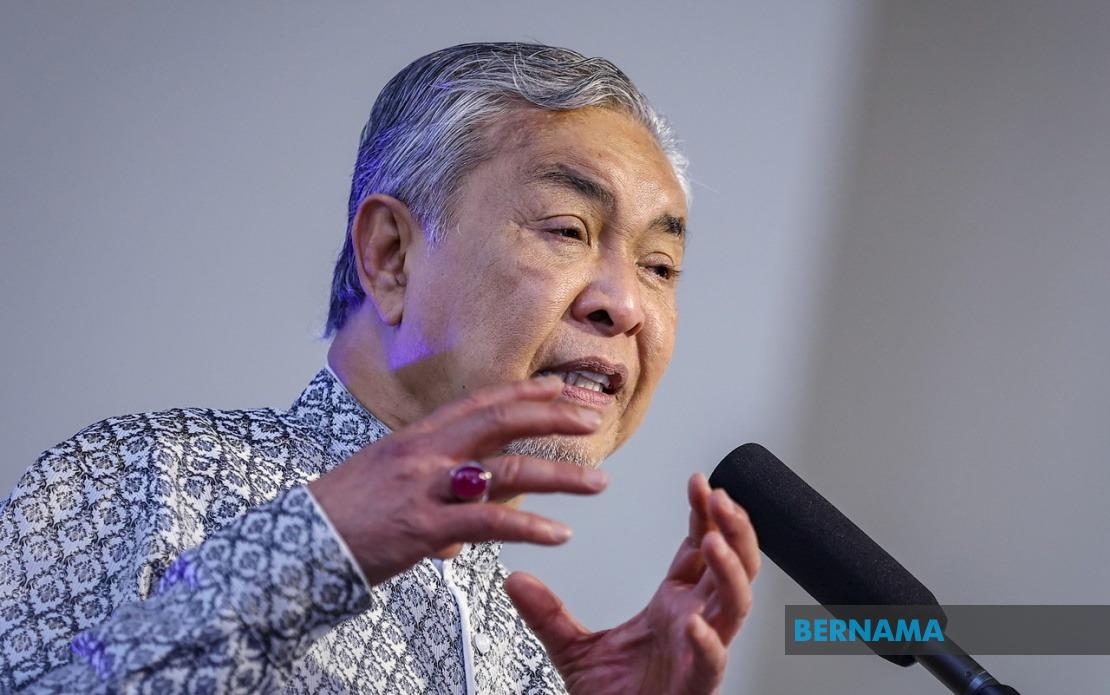
Barisan Nasional chairman Datuk Seri Dr Ahmad Zahid Hamidi has urged all participating parties in the Johor state election to move beyond divisive historical disputes and concentrate instead on substantive policy platforms and candidate quality during the campaign period. Speaking after a community event in the Kempas state constituency, the Deputy Prime Minister emphasised the need for political maturity and respect throughout the contest, especially given the working relationships between coalition partners at the federal government level.
Ahmad Zahid's call reflects a growing tension in Malaysian electoral politics where federal and state-level partnerships sometimes strain under campaign pressures. He explicitly acknowledged that certain individuals and groups have launched attacks on UMNO and BN using longstanding grievances, but argued such tactics undermine the collaborative governance arrangements currently in place. His message carries particular weight given that several parties contesting the Johor election currently serve as coalition partners in Kuala Lumpur, creating an inherent contradiction between campaign rivalry and ministerial cooperation.
The BN chairman stressed that the campaign should instead spotlight what candidates can deliver to Johor residents and the specific policy commitments made by each party. This reframing attempts to shift discourse away from personality-driven or historically rooted attacks toward a forward-looking, issues-based competition. Such an approach, if adopted across all contesting parties, could theoretically elevate the tone of political engagement and provide voters with clearer information about competing visions for the state's future.
Ahmad Zahid also sought to counter perceptions of complacency within BN, describing the coalition as an underdog given Johor's shifting political dynamics. He noted that BN captured 40 seats in the previous state election and must substantially improve that performance to retain control. This acknowledgment suggests BN strategists recognise genuine electoral vulnerabilities, particularly given demographic changes in the state's voter composition.
The Barisan Nasional manifesto places considerable emphasis on youth-oriented policies, reflecting awareness that younger voters constitute more than half of Johor's electorate. The party's platform, led by Menteri Besar Datuk Onn Hafiz Ghazi, prioritizes job creation and skills development opportunities targeted at school-leavers and early-career workers. Ahmad Zahid highlighted technical and vocational education and training as central pillars of BN's youth engagement strategy, positioning such programmes as pathways to sustainable employment.
Current labour market data appears to support BN's broader economic narrative. The unemployment rate has declined to 2.9 per cent, a figure Ahmad Zahid presented as evidence of improving economic conditions. However, he recognised that raw unemployment statistics alone do not capture the quality-of-employment challenge facing young Malaysians, many of whom struggle to access positions offering adequate wages and career progression prospects. This nuance—distinguishing between job availability and job quality—reflects sophisticated understanding of youth economic anxieties.
The emphasis on premium-wage employment through skills development addresses a legitimate concern among younger voters who have entered the workforce during periods of economic uncertainty. Technical and vocational pathways offer alternatives to traditional university education and can lead to more stable, better-compensated positions in growing sectors such as manufacturing, construction, and digital industries. For Malaysian readers, this focus resonates with ongoing national conversations about education outcomes and graduate employment.
BN's decision to contest all 56 seats in the 16th Johor state election represents a full commitment to reclaiming control. The party faced significant challenges in recent electoral cycles, particularly following the 2022 general election results, which weakened its position in several states. Johor's election thus carries symbolic importance for BN's broader trajectory and federal coalition stability. A strong performance could rebuild momentum ahead of the subsequent round of state elections elsewhere in Malaysia.
The electoral timeline—with early voting scheduled for July 7 and polling day on July 11—provides a relatively compact campaign period. For candidates and parties, this compressed schedule places premium on message discipline and effective communication. Ahmad Zahid's appeal to avoid old controversies may be partly motivated by recognition that prolonged campaign exposure could allow accumulated grievances to resurface, potentially benefiting opposition parties that have invested in narratives about past governance failures.
Young voters in Johor represent a constituency that possesses distinct political characteristics. This demographic tends to exhibit lower voting turnout rates compared to older cohorts, creates more volatile electoral patterns, and prioritises economic opportunity and meritocratic advancement in policy evaluation. Parties targeting this group must therefore address concrete employment challenges rather than rely primarily on brand loyalty or historical identity politics. BN's youth-focused manifesto appears designed to capture this more pragmatic voting orientation.
For Southeast Asian observers, Johor's election illustrates broader regional tensions between coalition governance at the national level and electoral competition at subnational levels. Malaysia's federal system occasionally generates these contradictions where partners in Kuala Lumpur campaign vigorously against each other in state contests, potentially eroding the comity necessary for effective joint administration. Ahmad Zahid's intervention suggests BN leadership recognises these institutional strains and seeks to establish norms that preserve federal working relationships despite state-level rivalry.
The upcoming Johor election will test whether Malaysian political parties can genuinely separate state election contests from federal governance partnerships. Success in doing so could establish a precedent for more mature, policy-focused campaigns across the region. Conversely, if historical grievances dominate discourse despite leadership appeals for restraint, it would signal that electoral competition remains fundamentally rooted in identity and historical narratives rather than policy differentiation—a pattern that shapes electoral politics across Southeast Asia.

