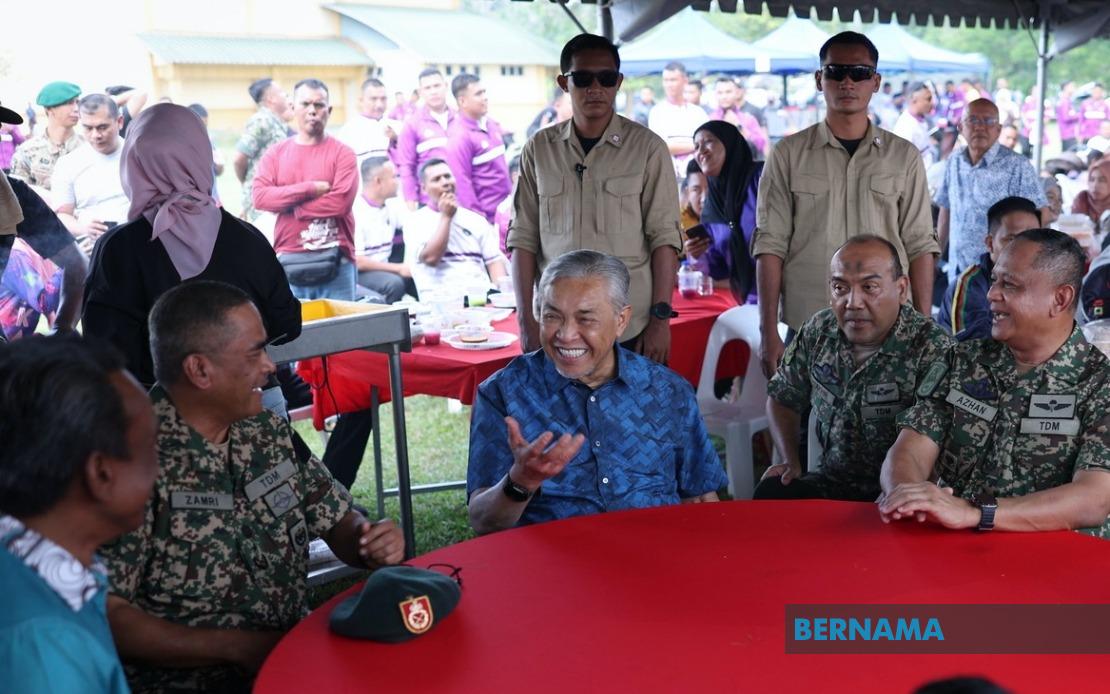
Deputy Prime Minister Datuk Seri Dr Ahmad Zahid Hamidi has drawn a clear line on accountability, insisting that transparency in the Royal Commission of Inquiry findings on Lembaga Tabung Haji will not shield anyone from legal consequences, regardless of their standing. Speaking at a military family day event in Gemas, Tampin, the Barisan Nasional chairman and UMNO president emphasised that the findings must be disclosed openly and that any evidence of misconduct will be pursued through established legal channels rather than overlooked for political convenience.
The emphatic stance comes at a delicate moment for the ruling coalition, with the Negeri Sembilan state election looming and public expectations mounting for the release of a report that has been under wraps for some time. Ahmad Zahid's comments reflect an attempt to demonstrate that the government prioritises institutional integrity and rule of law over electoral calculations, even when the timing could prove embarrassing for certain political figures. His assertion that appropriate investigative and prosecutorial processes will be activated if the RCI uncovers abuse of power, irregularities, or criminal breach of trust signals an intention to distance the administration from perceptions of selective accountability.
The Road to transparency has been longer than many anticipated. Prime Minister Datuk Seri Anwar Ibrahim, who also holds the Finance Ministry portfolio, previously explained that delays in publicising the RCI outcomes stemmed from concerns about undermining confidence in Tabung Haji itself. The hajj savings institution had faced considerable scrutiny, and authorities worried that releasing damaging findings prematurely could destabilise the organisation and panic depositors. This cautious approach, while administratively prudent, bred speculation and criticism from those demanding accountability and openness about how the pilgrim fund had been managed.
Circumstances have shifted considerably, according to Anwar's recent comments. The institutional rejuvenation of Tabung Haji—including governance reforms and enhanced oversight mechanisms—has restored credibility sufficiently that leadership now feels confident disclosing the RCI report without triggering panic or eroding depositor trust. Furthermore, the pilgrim fund has achieved international recognition for its operational improvements, providing a buffer of legitimacy that may cushion any negative revelations in the commission's findings. This evolution suggests a calculated reassessment rather than a sudden shift in principle, though it does create space for the transparency that critics have long demanded.
The timing, however, remains politically fraught. Early voting in the Negeri Sembilan state election is scheduled for the coming Tuesday, with polling day set for August 1. Should the RCI report contain unflattering details about figures associated with the state or the broader Barisan coalition, the disclosure could swing voter sentiment at a crucial juncture. Ahmad Zahid sought to preempt such concerns by arguing that Negeri Sembilan voters are sufficiently mature and discerning to separate concerns about institutional accountability from their electoral judgement. His confidence in voter sophistication—whether justified or overly optimistic—reflects a gamble that transparency will ultimately serve the government better than continued secrecy.
The institutional dynamics at play illustrate broader challenges facing the Malaysian political system. Royal Commissions of Inquiry represent a formal mechanism for investigating systemic failures and misconduct, yet their effectiveness depends heavily on political will to act upon findings and public trust that recommendations will be implemented fairly. When reports remain classified or delayed, they accumulate symbolic weight as repositories of uncomfortable truths, fuelling scepticism about whether powerful individuals can be held accountable. Conversely, releasing findings without credible enforcement mechanisms or selective prosecution can equally undermine institutional credibility, suggesting that the rule of law operates differentially depending on one's connections.
The specificity of Ahmad Zahid's language matters in this context. By naming potential legal categories—abuse of power, irregularity, criminal breach of trust, and commercial crimes—he has signalled that the RCI investigation likely uncovered evidence falling within recognisable legal domains rather than mere administrative missteps. This framing prepares the public to expect substantive findings rather than benign conclusions, while simultaneously indicating that mechanisms exist to pursue accountability. It also implicitly commits the government to action, making it harder to shelve the report or downplay its conclusions without facing immediate political backlash.
For Malaysian observers and Southeast Asian regional watchers, the handling of the Tabung Haji case carries implications beyond the immediate administrative and electoral contexts. It touches on fundamental questions about whether institutions like sovereign wealth funds and pilgrim savings schemes can be insulated from political interference and whether public figures enjoy genuine accountability or merely theatre of accountability. Neighbouring countries with similar structures—particularly those managing collective assets for religious or national purposes—will monitor how Malaysia navigates this test.
The prospect of the RCI report's release also reflects subtle shifts within the ruling coalition. An earlier government might have buried or minimised damaging findings to protect party interests, but the current administration's emphasis on accountability, however imperfect in practice, suggests evolving norms around institutional governance. This does not mean Malaysia has achieved exemplary standards, but rather that the public conversation and political cost of ignoring institutional findings have shifted. Ahmad Zahid's public assertion that no one stands above the law must now be tested through concrete enforcement when the findings are unveiled.
What remains uncertain is the scope and severity of the RCI's conclusions. If the report identifies minor irregularities or isolated instances of misconduct by mid-level officials, the government's accountability rhetoric can be validated relatively easily. However, should the commission document systemic corruption, abuse by senior figures, or significant asset mismanagement, the pressure to pursue vigorous prosecutions—including against powerful individuals—will intensify. The sincerity of Ahmad Zahid's commitment will ultimately be measured not by his words at a military carnival, but by the actions that follow once the report becomes public and difficult choices about prosecutions and consequences must be made.

