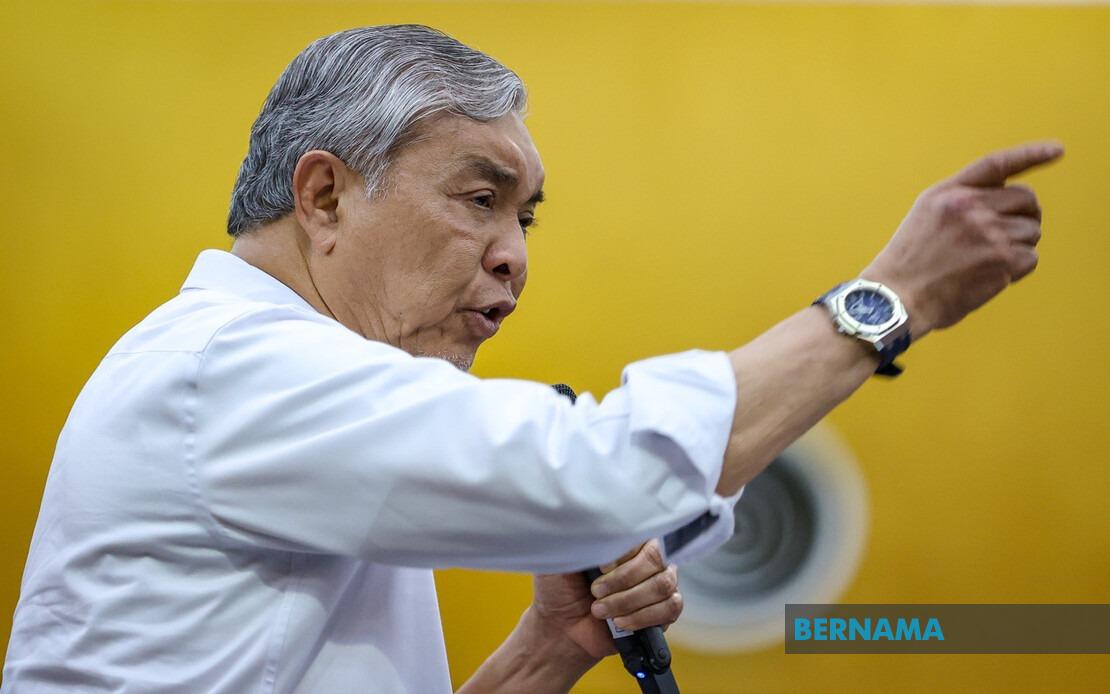
Deputy Prime Minister Datuk Seri Dr Ahmad Zahid Hamidi has put forward a proposal to equip student leaders at universities across Malaysia with structured courses on leadership and political engagement. Speaking in Johor Bahru on July 9, the senior minister and Barisan Nasional chairman emphasised that Student Representative Councils (MPP) would benefit from deeper exposure to the country's political systems and democratic processes. His intervention reflects growing government attention to how campus leaders are being prepared for their roles in student governance and future national participation.
The proposal centres on creating specialist training programmes designed to mature the political understanding of young campus leaders at a formative stage in their careers. Ahmad Zahid stressed that such exposure would help cultivate a more thoughtful generation of youth leaders capable of grasping the nuances of national challenges and policy issues. Rather than treating campus politics as an isolated student activity, the deputy prime minister positions it as a pipeline for developing informed citizens who can eventually contribute meaningfully to Malaysia's broader political discourse. The timing of this initiative suggests recognition that student leaders today will occupy influential positions in society within the coming decade.
Financial support represents a key element of Ahmad Zahid's vision. The government has signalled willingness to fund these courses if requested by MPP units nationwide, contingent upon approval from Higher Education Minister Datuk Seri Dr Zambry Abd Kadir. This commitment to subsidise the programme reflects official conviction that the investment in political education for campus leaders yields returns in terms of civic engagement and democratic participation. By removing cost barriers, the proposal aims to ensure that even student councils with limited budgets can access quality training on navigating Malaysia's political landscape.
Ahmad Zahid's framing of the initiative reveals an interesting tension in official thinking about youth and politics. He was careful to note that young people need not necessarily become active participants in party politics to benefit from political education. Rather, the threshold being set is lower: informed citizenship. His personal journey—having been politically active as a student leader at Universiti Malaya—provides him with credibility when speaking to campus audiences, yet he used this example not to prescribe political activism but to illustrate that engagement remains an available choice for those interested. This distinction matters because it allows the government to position political literacy as universal while respecting youth autonomy regarding involvement levels.
The substantive case for political education among student leaders rests on the premise that informed decision-making strengthens democratic participation. Ahmad Zahid emphasised that 18-year-old first-time voters and young citizens should understand the mechanics and implications of political choices, even if they elect to remain outside formal political structures. The underlying concern seems to be that without basic political literacy, young voters might make electoral decisions based on incomplete information or susceptibility to misinformation. By targeting student leaders specifically, the government hopes to create multiplier effects, with campus figures serving as informed voices within their peer networks.
The deputy prime minister articulated a vision where voting is treated as a responsibility rather than merely a right. He stressed that every ballot cast plays a role in determining not just leadership positions but the ideological direction of political parties and, by extension, state and national governance. This emphasis on the weight of individual votes seeks to counter potential youth disengagement or cynicism about whether their participation matters. Campus leaders, given their influence over peer opinion, become strategic audiences for messaging about electoral responsibility and civic duty.
Geographically, Ahmad Zahid's remarks came against the backdrop of Johor preparing for a state election on Saturday, with 56 state seats contested. The timing is unlikely coincidental. Campus-based student councils, particularly in Johor-based universities, would form part of the electorate making decisions in this poll. By proposing enhanced political education at this juncture, the government signals confidence in engaging young voters through substantive policy rather than relying solely on campaign messaging or party machinery. The Johor election provided an immediate testing ground for the initiative's relevance to current electoral cycles.
For Malaysian higher education institutions, the proposal raises questions about curriculum integration and institutional autonomy. Universities have traditionally guarded independence in student affairs, viewing campus politics as a space where young people learn democratic self-governance with minimal external interference. Government-funded courses administered by campus authorities could be perceived as either valuable professional development or as an attempt to shape student leadership along government-preferred lines. The success of Ahmad Zahid's proposal will partly depend on how universities interpret and implement such programmes while maintaining their institutional credibility with students.
The broader context involves Malaysia's ongoing dialogue about civic engagement and demographic change. As the electorate continues to skew younger, with increased voter participation from age 18, political leadership has greater incentive to engage with campus populations. Ahmad Zahid's focus on student councils rather than broader student populations represents a targeted approach: reach the formal leaders, and they shape discourse within their institutional environments. This reflects sophisticated understanding of how youth opinion networks function on university campuses, where representative structures still carry weight despite competing social media influences.
From a Southeast Asian perspective, Malaysia's investment in political literacy for young leaders aligns with regional trends toward strengthening democratic institutions and youth engagement. Countries across the region face similar challenges around youth electoral participation and ensuring that younger generations develop stake in democratic processes. Ahmad Zahid's proposal, if implemented successfully, could provide a model for how governments can work with educational institutions to enhance civic understanding without overstepping institutional boundaries or appearing to politicise campuses. The emphasis on political literacy rather than partisan recruitment distinguishes this from more heavy-handed youth engagement strategies.
The proposal also reflects acknowledgement that Malaysia's political landscape has become increasingly complex and contested. Multiple political coalitions, shifting alliances, and competing policy visions require citizens equipped to parse differences and make deliberate choices. Student leaders occupy visible positions where they encounter questions from peers about political events and implications. Training these individuals to discuss politics with greater depth and nuance potentially elevates the overall quality of campus political discourse. Whether this translates to higher quality decision-making among young voters will depend on implementation and how closely the training connects to actual political realities students observe around them.

