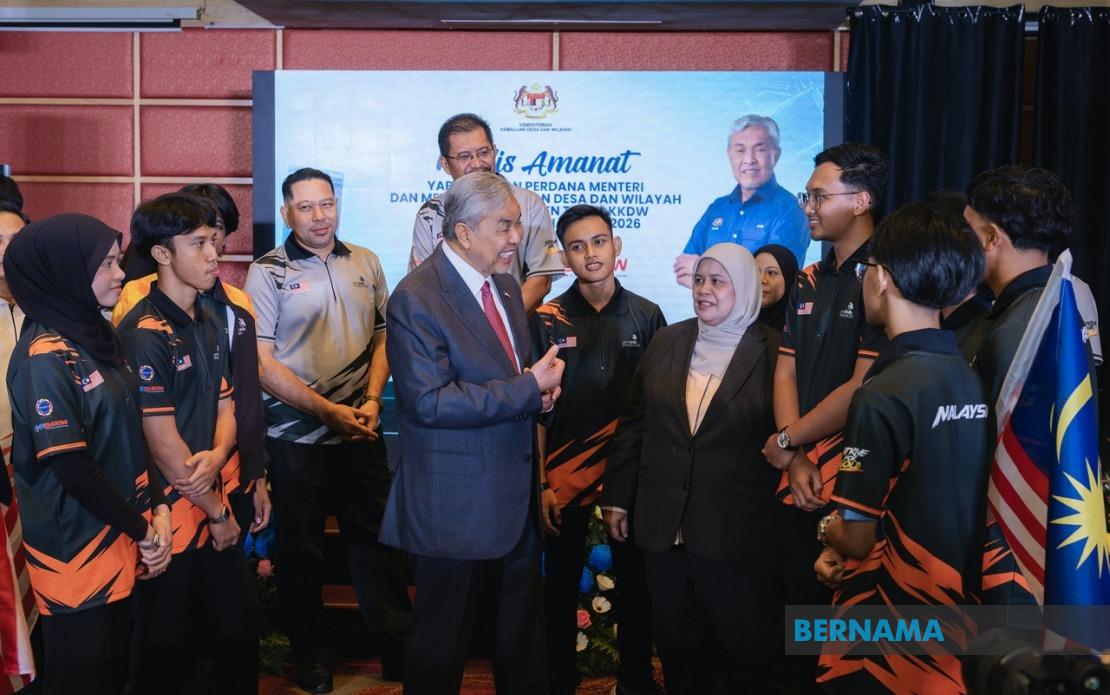
Deputy Prime Minister Datuk Seri Dr Ahmad Zahid Hamidi has announced an ambitious incentive scheme designed to motivate Malaysia's technical vocational representatives competing at the WorldSkills Competition 2026 in Shanghai, pledging to personally fund umrah pilgrimages for any gold medallists from the country's TVET sector. The commitment, revealed during an address to the TVET@KKDW contingent here on July 13, represents an unconventional approach to recognising excellence in skills competition, extending the reward to include the families of successful competitors.
The initiative stems from Ahmad Zahid's portfolio as Rural and Regional Development Minister, under which the Ministry of Rural and Regional Development (KKDW) oversees technical and vocational education programmes. In his address, he emphasised that the financial support would come entirely from his personal resources, framing the gesture as recognition of the dedication and discipline required to achieve gold-standard performance at a global platform. The minister stated unequivocally that should all nine Malaysian competitors secure gold medals at the Shanghai event scheduled for September 22 to 27, he would sponsor umrah journeys not only for the participants themselves but also for their parents—a pledge that could see up to 27 individuals undertaking the pilgrimage at his expense.
Malaysia's nine-member contingent will compete across an equivalent number of skill categories, representing diverse technical fields that underscore the breadth of vocational excellence the nation aims to project internationally. The roster includes Nadratulliyana Ab Malek in Fashion Technology, Haziq Syahmi Nazri in Automobile Painting, and Amirul Sharif Sharifudin in Electronics, joined by Mohammad Ezaly Iman Ramli competing in Cyber Security and Wan Hamiz Ozai Wan Hamidzi in Rail Vehicle Technology. Complementing this lineup are Khairul Idham Bahari in Cabinetmaking, Muhamad Nashrul Zulkifli in Digital Construction, Muhammad Haziq Lailla Zamri in Electrical Installations, and Muhammad Huzairy Mohamad Thes in Mechanical Engineering CAD.
WorldSkills competitions represent some of the most prestigious international forums for showcasing technical prowess, attracting competitors from dozens of nations and drawing recognition from industry bodies and educational institutions worldwide. For Malaysia, participation at such events carries particular significance given the government's ongoing emphasis on developing a skilled workforce capable of supporting advanced manufacturing, digital transformation, and infrastructure projects across Southeast Asia. Success at WorldSkills elevates not only individual competitors but also enhances the country's standing within the global vocational education ecosystem.
Ahmad Zahid's incentive scheme reflects broader policy discussions within Malaysian government circles regarding how to incentivise high performance in technical education. The approach differs markedly from conventional scholarship or cash prizes, instead linking tangible recognition to a spiritual journey—umrah being a significant aspiration for many Muslim Malaysians. This framing suggests an understanding that motivational drivers extend beyond purely financial considerations, encompassing cultural and religious dimensions that resonate with participants and their families.
The presence of Deputy Rural and Regional Development Minister Datuk Rubiah Wang at the announcement underscores ministerial commitment to the initiative, signalling institutional backing beyond Ahmad Zahid's personal pledge. This administrative presence indicates that the scheme has been formally considered within government structures, though the primary funding mechanism remains the minister's personal resources. The distinction between personal and official funding may carry legal and precedential implications worth monitoring as the competition unfolds.
For Malaysian TVET institutions and their students, such high-profile political support carries dual implications. On one hand, it demonstrates senior government recognition of the sector's importance and the achievements of its practitioners. On the other hand, it elevates expectations and public attention surrounding the competitors' performances, potentially adding psychological pressure to already challenging international competition environments. The nine participants will now compete not merely for personal glory or national representation, but also as vessels through which a senior political figure's commitment will be measured and evaluated.
WorldSkills 2026 arrives at a critical juncture for Malaysia's skills development agenda. The nation has increasingly emphasised TVET pathways as alternatives and complements to traditional university education, particularly as labour market demands shift toward technical specialisation. International performance metrics like WorldSkills serve as benchmarks through which Malaysian policymakers assess the effectiveness of vocational education investments and identify areas requiring curriculum enhancement or institutional support.
The umrah pledge also reflects a broader pattern within Southeast Asian political leadership of leveraging religious and cultural symbolism to reinforce policy messages. By connecting vocational excellence to spiritual reward, Ahmad Zahid positions technical skills development within a framework that extends beyond purely economic considerations, appealing to holistic notions of human development and achievement. This approach may prove influential if it encourages other government leaders or private sector actors to establish similarly culturally-grounded incentive schemes supporting technical education.
Looking ahead to September's competition, the nine Malaysian representatives carry expectations that extend beyond their individual skill categories. Their performances will be interpreted within multiple contexts: as reflections of TVET system quality, as demonstrations of Malaysian technical competence to international audiences, and as determining factors in whether Ahmad Zahid's unprecedented pledge will be activated. Should significant gold medal success materialise, the umrah sponsorship scheme will likely receive heightened public attention and potentially inspire replication by other political figures or government ministries. Conversely, limited medal success would not diminish the significance of the participants' presence at a world-class competition, though it might shift public narrative focus away from the incentive scheme itself.
The initiative ultimately illustrates how technical education, political strategy, and cultural values intersect within Malaysian governance frameworks. As the country continues developing its human capital in increasingly specialised technical domains, such incentive schemes may become more commonplace, reflecting recognition that motivation in competitive fields operates across multiple dimensions beyond purely financial reward.

