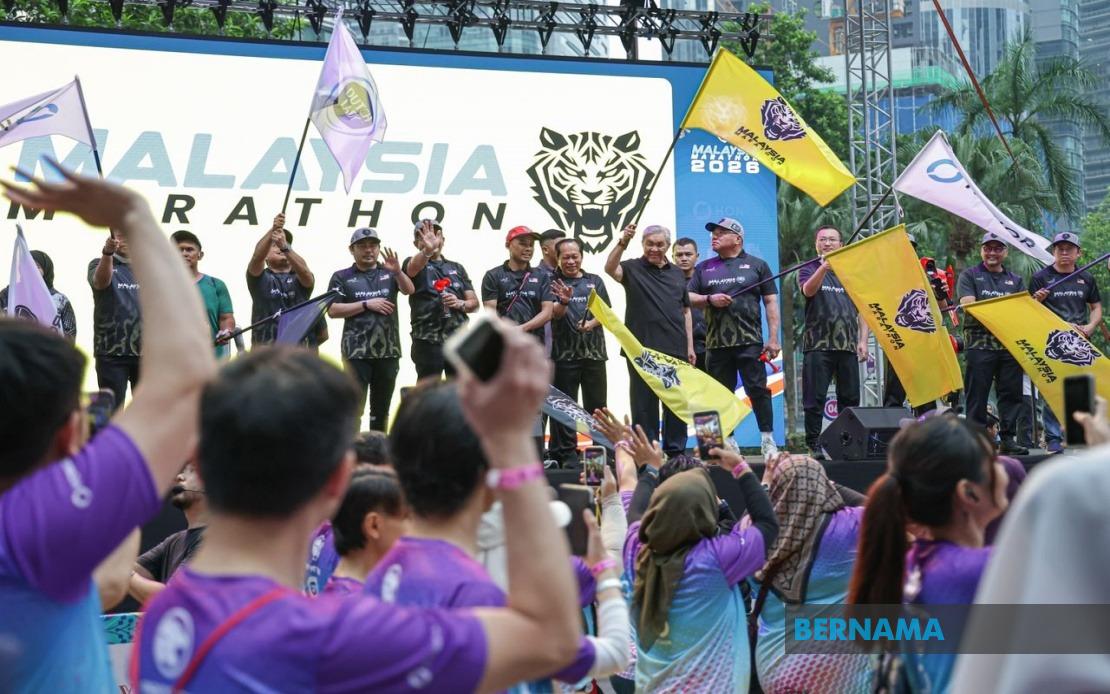
Deputy Prime Minister Datuk Seri Dr Ahmad Zahid Hamidi officially launched the Malaysia Marathon 2026 on Friday, sending off 10,000 enthusiastic participants in a 5-kilometre fun run at the Kuala Lumpur City Centre grounds. The event marked a significant milestone in Malaysia's sporting calendar, weaving together national pride and competitive athletics as part of the broader 2026 National Day celebrations scheduled for later in the year.
The festivities commenced with ceremonial traditions, beginning with the national anthem 'Negaraku' before the Malaysian Armed Forces band delivered an opening performance that set the patriotic tone for the morning. Ahmad Zahid's presence at the event underscored the government's commitment to promoting wellness and active living among Malaysians across all age groups and fitness levels. Joining the Deputy PM were Tourism, Arts and Culture Minister Datuk Seri Tiong King Sing and Deputy Works Minister Datuk Seri Ahmad Maslan, reflecting the multi-agency coordination required for such a large-scale national sporting endeavour.
The atmosphere at KLCC was further energised by a distinctive one-kilometre parade featuring the Malaysian flag, with 1,000 students from Kolej Poly-tech MARA (KPTM) Bangi participating in this symbolic procession. This component of the programme served not merely as entertainment but as a platform for younger Malaysians to actively engage with national identity and sporting participation, bridging educational institutions with community wellness initiatives.
The Malaysia Marathon 2026 represented the inaugural edition of what organisers intend to establish as a premier regional sporting fixture. The event received official recognition from World Athletics, the international governing body for track and field athletics, lending it credibility and positioning Malaysia as a serious contender in the global distance-running calendar. This accreditation carried particular significance for Southeast Asian sporting ambitions, as World Athletics recognition typically requires stringent organisation standards and adherence to international competitive guidelines.
The marathon's scale proved impressive, attracting a combined 25,000 participants—both Malaysian residents and international runners—across four distinct race categories catering to different fitness levels and competitive ambitions. This inclusive structure democratised marathon participation, ensuring that recreational joggers could compete alongside serious distance athletes without diluting the event's competitive integrity. The tiered approach reflected modern marathon philosophy, which recognises that mass-participation events serve dual purposes: fostering community health engagement while maintaining elite sporting standards.
The day's racing commenced with Tourism Minister Tiong flagging off the elite 42-kilometre full marathon at Pavilion Kuala Lumpur, initiating the marathon's traditional longest distance category. Following this, the 21-kilometre and 10-kilometre categories began their respective routes earlier in the morning, creating a staggered start system that optimised course management and ensured safety protocols could be properly maintained across all participant levels. Ahmad Zahid's involvement in the fun run segment specifically targeted the broader community participation angle, recognising the promotional value of government leaders visibly engaging in grassroots sporting activities.
A notable operational change distinguished this edition from established Malaysian marathon practices: the KLCC grounds served as the unified finish line for all race categories, replacing the traditionally-used Dataran Merdeka venue. This shift represented both a logistical evolution and a subtle repositioning of Malaysia's sporting geography. KLCC's modern facilities and central location offered enhanced crowd management capabilities and elevated the event's profile through association with one of Kuala Lumpur's most recognisable landmarks. The decision also reflected evolving urban planning considerations, as organisers balanced accessibility, infrastructure capacity, and the symbolic importance of Malaysia's premier public spaces in national sporting events.
The recognition by World Athletics positioned Malaysia within the global distance-running community at a time when Southeast Asian nations increasingly invested in large-scale sporting events to boost tourism, international profile, and health awareness. The marathon's inaugural status meant organisers had opportunity to establish protocols and traditions that would shape future editions, potentially establishing Malaysia Marathon 2026 as a fixture comparable to other regional marathons that attract significant international participation and media attention.
For Malaysian sports administration, hosting such a comprehensively-structured inaugural event demonstrated logistical capability and institutional readiness to manage large-scale international sporting competitions. The involvement of multiple government portfolios—tourism, works, and defence (through the MAF band performance)—illustrated the whole-of-government approach increasingly necessary for major national events. This coordination model possessed relevance beyond the marathon itself, as it suggested how Malaysia might approach future regional and international sporting events seeking to maximise national benefits while ensuring competitive standards meet international expectations.

