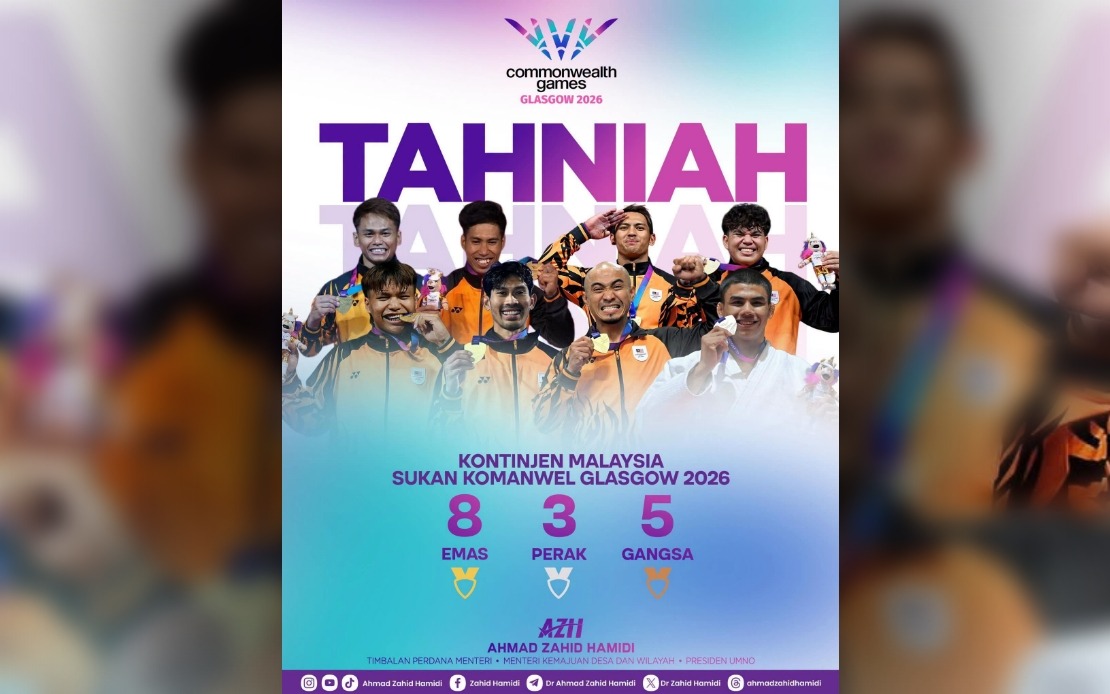
Deputy Prime Minister Datuk Seri Dr Ahmad Zahid Hamidi has extended his congratulations to Malaysia's 2026 Commonwealth Games contingent following an impressive performance at the recently concluded Glasgow Games in Scotland. The team, comprising 59 athletes with 22 competing in the para sports categories, delivered a medal haul that surpassed initial targets and marked the nation's strongest showing in more than a decade.
The Malaysian contingent brought home eight gold medals, three silver, and five bronze medals from Glasgow, totalling 16 medals and securing a 10th-place finish in the overall medal standings. This achievement represents a significant boost for Malaysia's international sporting reputation and underscores the growing depth of talent across multiple disciplines within the country's athletic pipeline.
Ahmid Zahid's public recognition of the team's accomplishments extends beyond medal-winning athletes. In a Facebook post, he emphasised that the success reflected the collective effort of coaches, officials, support staff, and administrators whose behind-the-scenes work proved instrumental in preparing the contingent. This acknowledgment highlights the often-overlooked infrastructure and professional expertise required to sustain competitive performance on the global stage.
The 2026 Commonwealth Games result stands as Malaysia's best outcome since the 2010 Games held in Delhi, India, when the nation achieved greater medal success. The gap between these two peaks demonstrates both the challenges and opportunities within Malaysian sports development over the past 16 years. The Glasgow performance suggests that recent investments in athlete development programmes, coaching quality, and sports science support may be yielding tangible dividends.
Ahmad Zahid's messaging strategy deliberately included non-medalists within his congratulations, stating that "whether you won a medal or not, all Malaysians are proud of every sacrifice and effort displayed." This inclusive approach recognises that national sporting success depends on broader participation and that the experience gained by competitors who narrowly missed the podium remains valuable for future campaigns. Such rhetoric can help build public support for sustained funding of grassroots and developmental sports initiatives.
The presence of 22 para athletes within the 59-strong contingent reflects Malaysia's growing commitment to inclusive sports programming. The performance of disabled athletes at major Games provides crucial visibility and can drive interest in para sports domestically, potentially expanding the talent pool and attracting greater investment from sponsors and government bodies alike. This participation level suggests that Malaysia's disability sports ecosystem has matured considerably.
The Deputy Prime Minister characterised the team's achievement as validation of Malaysia's capacity to compete effectively on the international sporting stage when proper preparation, unified team dynamics, and sustained commitment converge. His framing positions this Glasgow result not merely as a discrete accomplishment but as evidence of systemic capability—an important psychological and political message for a nation seeking to maintain sporting relevance among Commonwealth nations and regional competitors.
Looking forward, the Glasgow performance establishes both momentum and expectations for Malaysia's participation in future major Games. International sporting success increasingly serves as a soft power tool for developing nations, enhancing global standing and fostering national pride. For Malaysia, maintaining or improving upon the Glasgow result will require continued investment in high-performance infrastructure, athlete identification programmes, and elite coaching expertise across multiple sports disciplines.
The significance of this achievement becomes more apparent when contextualised within Southeast Asia's broader competitive landscape. Regional rivals including Thailand, Vietnam, and the Philippines maintain active Commonwealth Games participation strategies. Malaysia's 10th-place finish and 16-medal haul position the nation competitively within this regional context, though some neighbouring countries continue to outperform Malaysia at certain Games.
The timing of Ahmad Zahid's public commendation carries political weight as well. Demonstrating government support for sporting achievement helps reinforce the administration's commitment to national development beyond economic and political spheres. For athletes returning home, such high-level recognition can facilitate sponsorship opportunities, media engagement, and pathways toward sustained athletic careers or coaching roles that benefit the broader system.

