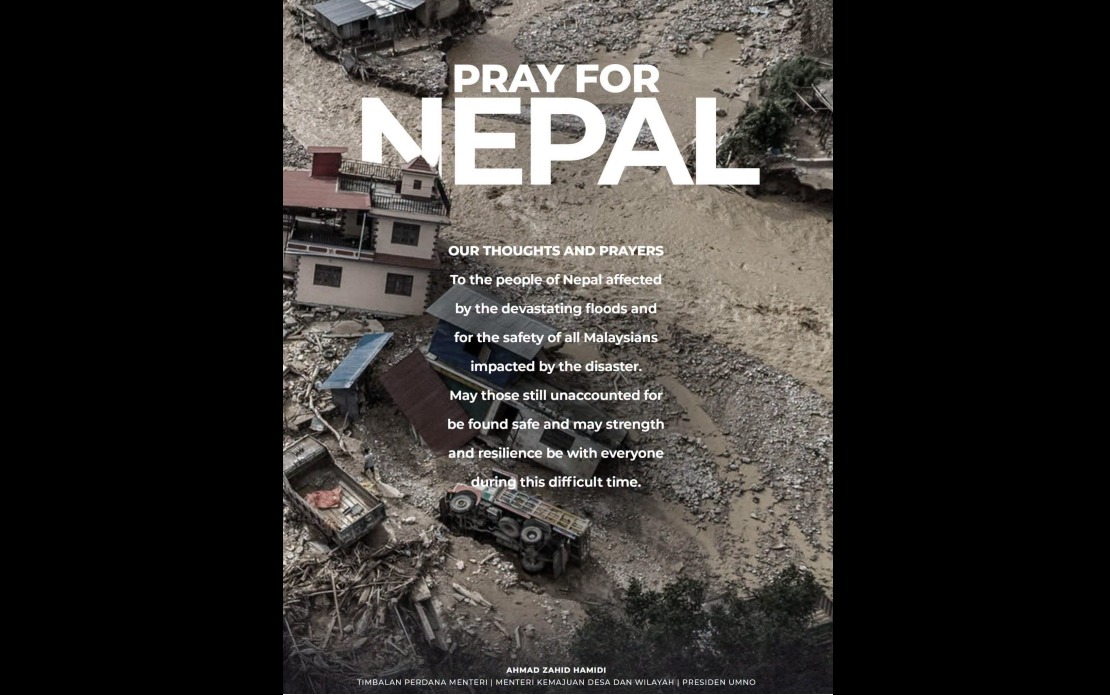
Deputy Prime Minister Datuk Seri Dr Ahmad Zahid Hamidi has voiced significant concern regarding the safety and wellbeing of Malaysian citizens who have been caught up in the catastrophic flooding that has ravaged parts of Nepal. In a statement released through social media on Tuesday, the senior government official expressed hope that those among the missing will ultimately be located safely and given the opportunity to reunite with their families back home.
The scale of the humanitarian crisis unfolding across Nepal has prompted high-level responses from Malaysian political leadership. Ahmad Zahid extended formal condolences to the families of those who have perished in the flooding, while simultaneously pledging Malaysia's solidarity with the Nepali population as they grapple with one of their most severe natural disasters in recent memory. The expression of sympathy reflects Malaysia's diplomatic relations with Nepal and underscores the human dimensions of cross-border calamities that affect citizens living or working abroad.
In his statement, Ahmad Zahid articulated the gravity of the situation, noting the cascading impacts of the flash floods including loss of life, displacement of entire communities, and extensive infrastructure damage across multiple regions. He emphasised that his thoughts and prayers extend particularly to those who have lost family members and to households whose relatives remain unaccounted for as search and rescue teams continue their operations. The deputy premier's personal expression of emotion highlights the Malaysian government's recognition of the personal tragedy affecting both affected families and the broader communities impacted by the disaster.
The ongoing rescue and recovery operations in Nepal have become a focal point of international humanitarian concern. Ahmad Zahid specifically prayed for divine intervention to facilitate and accelerate the search and rescue endeavours, calling for the expedited removal of those still in immediate danger from flood zones. Such prayers for operational success reflect the challenges faced by rescue teams navigating difficult terrain and unstable conditions typical of post-flood environments across mountainous regions like Nepal.
The deputy premier concluded his statement with a message of compassionate solidarity, invoking blessings for affected families to find fortitude and resilience during the challenging period ahead. This formulation acknowledges that recovery from such disasters extends far beyond the immediate rescue phase into the longer-term psychological, economic, and social reconstruction that communities must undertake. His recognition of this extended timeline demonstrates governmental understanding of disaster impacts that persist well after floodwaters recede.
As of Thursday evening at 5:30 pm local Nepali time, which corresponds to 7:45 pm Malaysian Standard Time, the death toll from the devastating floods had reached 359 individuals according to figures compiled by Nepal's tourism board. This substantial loss of life places the current flooding among the more serious natural disasters to strike the South Asian nation in recent years. The involvement of the tourism board in maintaining casualty figures suggests that international visitors may be among those affected, underscoring the global dimensions of the crisis.
The occurrence of flash floods in Nepal during monsoon seasons is not unprecedented, but the severity of the current situation has prompted heightened international attention. Malaysian citizens working in tourism, education, business, and humanitarian sectors in Nepal may be among those affected by the floods. The Malaysian government's prompt response through its deputy prime minister signals active engagement in monitoring the situation and coordinating potential assistance or evacuation efforts if necessary.
Nepal's geographic location in the Himalayan region makes it particularly susceptible to flooding during heavy monsoon rains, as water cascades from elevated terrain into valleys and populated areas with limited drainage capacity. The infrastructure in many Nepali communities, though improving, remains vulnerable to such natural forces. The international response to such disasters has evolved to include coordinated efforts among nations to provide humanitarian assistance, technical expertise in rescue operations, and support for reconstruction efforts.
For Malaysian citizens and their families awaiting news from Nepal, the situation remains fraught with uncertainty during the immediate aftermath phase. Government agencies typically establish emergency hotlines and coordinate with international partners to verify the status of nationals and facilitate communication between stranded individuals and their families. The deputy prime minister's public statement serves both to acknowledge official concern and to assure Malaysians that their government is monitoring developments closely.
The broader implications of such transnational disasters highlight the interconnectedness of modern societies, where citizens regularly live and work across international borders. Natural disasters affecting one nation inevitably touch the lives of citizens from many countries. Malaysia's response through high-level government statements demonstrates the importance placed on protecting Malaysian interests abroad while maintaining diplomatic relationships with affected nations. As Nepal continues its rescue and recovery operations, the international community, including Malaysia, stands ready to provide whatever support is both needed and welcomed.

