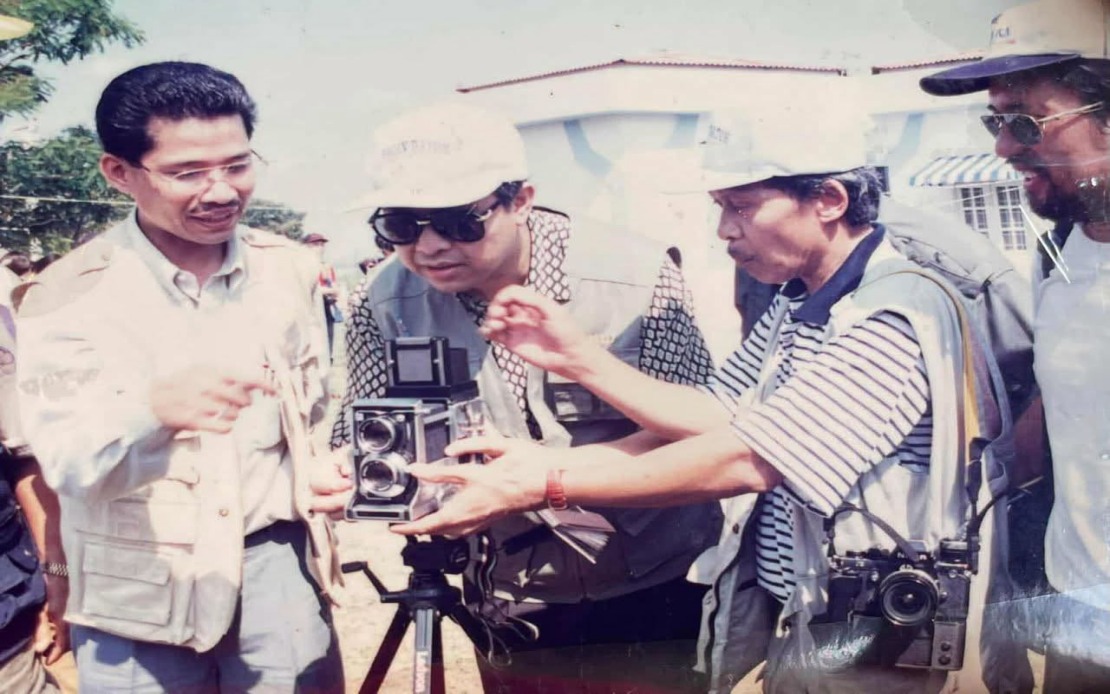
Deputy Prime Minister Datuk Seri Dr Ahmad Zahid Hamidi has publicly recognized the invaluable contributions of photographers on World Photography Day 2026, underscoring the significance of visual documentation in contemporary society. His acknowledgment encompasses the entire spectrum of photographic practice, from seasoned professionals to casual practitioners who document life's pivotal moments within their personal circles. This broad recognition reflects the democratization of photography in the digital age, where technological accessibility has expanded the creative medium beyond traditional industry boundaries.
Ahmad Zahid's tribute specifically extended to professional photographers whose work shapes public discourse and commercial narratives, media photographers who document newsworthy events shaping contemporary history, and event photographers who specialize in capturing significant personal milestones. Equally important in his remarks were family photographers—those informal documentarians who preserve intimate moments during gatherings and celebrations. This inclusive perspective acknowledges that photographic practice exists across a spectrum of expertise and context, with each practitioner contributing meaningfully to the visual record of human experience.
The deputy premier emphasized the multifaceted nature of photographic preservation, distinguishing between photographs valued as personal mementos, those displayed as decorative art within homes and offices, and images that transcend their original context to become archival material and historical reference points. This categorization highlights how photography functions simultaneously as intimate, aesthetic, and scholarly endeavor. Malaysian society, with its rich cultural diversity and significant historical trajectory, benefits substantially from this multi-layered approach to visual documentation. Photographs documenting Malaysia's development, cultural practices, and social evolution serve educational and national identity purposes beyond individual sentiment.
Central to Ahmad Zahid's message is the recognition of the photographer's methodology—the deliberate observational practice preceding image capture. Photography, he noted, demands patience, timing, and intentional decision-making. The moment between observation and shutter release, though potentially instantaneous, determines whether a moment becomes permanently preserved or passes undocumented. This technical and conceptual dimension of photography often remains invisible to viewers who encounter finished images, yet it represents the core skill differentiating effective visual storytelling from random documentation.
The temporal dimension Ahmad Zahid highlighted carries particular resonance for contemporary society. Photographs created today, ostensibly documenting present circumstances, inevitably become historical artifacts within relatively brief timeframes. Documentation of current events, social conditions, and cultural practices assumes archival significance as these moments recede into history. For Malaysia specifically, contemporary photography of urban development, multiethnic gatherings, and cultural celebrations will constitute invaluable historical resources for future generations seeking to understand early twenty-first-century Malaysian life.
World Photography Day, observed annually on August 19, commemorates the invention of the daguerreotype photographic process. This historical moment marked humanity's capacity to mechanically capture and preserve visual reality with unprecedented fidelity. The annual observance invites contemporary reflection on how photography continues evolving technologically while maintaining its fundamental purpose—creating enduring visual records. In Malaysia's context, where rapid modernization continues reshaping urban and rural landscapes, photography preserves documentation of these transformative processes.
The digital revolution has fundamentally altered photographic practice and accessibility. Smartphones equipped with sophisticated cameras have positioned millions of Malaysians as potential photographers, regardless of formal training or professional equipment. This democratization has implications for historical documentation, as grassroots perspectives increasingly complement professional journalism and official records. Social media platforms enable rapid dissemination of photographs capturing significant moments, though they simultaneously raise questions regarding image authenticity, context, and archival permanence.
Ahmad Zahid's public tribute, issued through social media, itself exemplifies how political leadership engages with contemporary cultural observances and professional communities. By publicly honoring photographers, government representatives acknowledge creative sectors contributing to national cultural production and historical memory-keeping. Such gestures, though symbolic, affirm the social value of artistic and documentary professions sometimes overlooked in policy discussions prioritizing economic productivity metrics.
The relationship between photography and collective memory operates at both personal and national scales. Family photograph albums constitute intimate archives preserving genealogical connections and personal history. Simultaneously, photojournalistic work documents significant events shaping public understanding and historical records. Professional photography within cultural institutions, museums, and heritage organizations ensures that Malaysia's architectural heritage, archaeological sites, and artistic traditions receive visual documentation for preservation and scholarly access. Press photography continues documenting political processes, civic activities, and social developments fundamental to informed democratic participation.
Looking forward, photographers in Malaysia and Southeast Asia face evolving challenges and opportunities. Climate change documentation through environmental photography raises awareness regarding ecological transformations affecting the region. Migration and urbanization continue generating photographic subjects reflecting social change. Digital tools enable innovative storytelling techniques combining traditional and emerging visual media. Simultaneously, questions regarding digital archival sustainability, copyright protection, and image manipulation in an era of artificial intelligence require ongoing professional and policy attention.
Ahmad Zahid's recognition of photographers affirms their continued relevance despite technological disruption transforming image production and distribution. Whether documenting major historical events, capturing commercial subjects, or preserving family moments, photographers perform irreplaceable functions in contemporary information ecosystems. The invitation to "keep capturing every moment, because today's photographs will become tomorrow's memories" encapsulates this fundamental truth—that present documentation enables future understanding. For Malaysia, where diverse communities and rapid development create rich photographic subjects, this message underscores the importance of sustained visual documentation across professional and amateur spheres.

