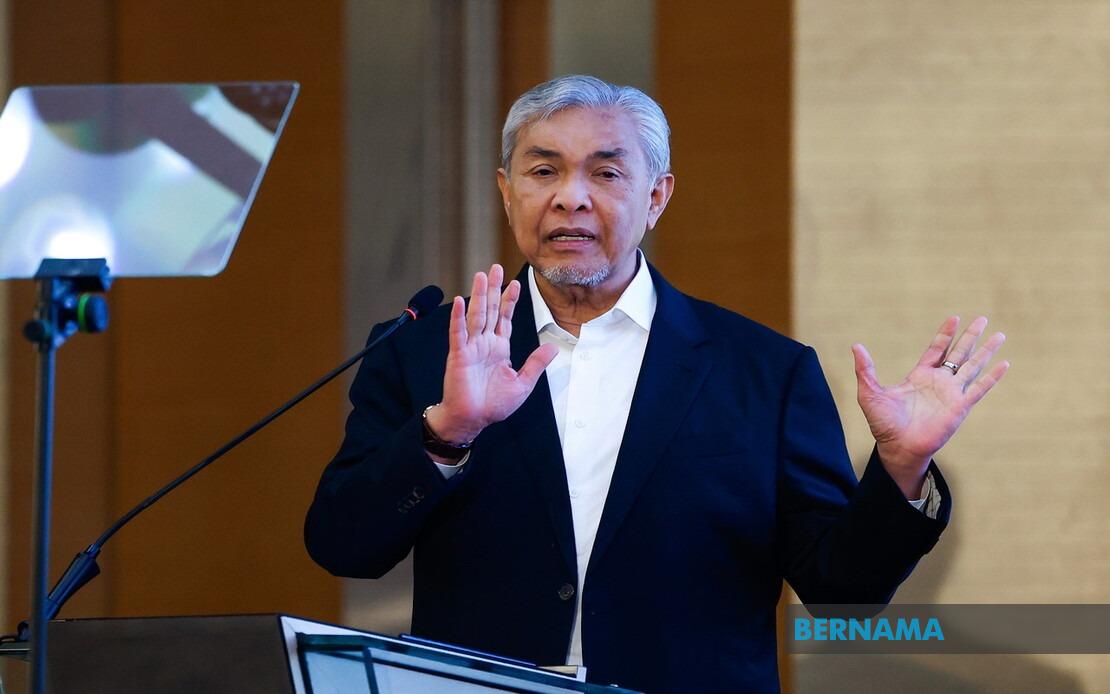
Deputy Prime Minister Datuk Seri Dr Ahmad Zahid Hamidi has called on all political parties participating in the Negeri Sembilan state election to maintain respect for the institution of the monarchy and steer clear of contentious matters relating to race, religion and royalty throughout their campaign periods. His statement came in response to a directive issued by the Negeri Sembilan Palace, which explicitly advised contesting political coalitions to avoid invoking the royal institution in their ceramah and campaign activities.
Addressing journalists in Seremban on July 27, Ahmad Zahid emphasised that the palace's guidance deserved careful consideration and compliance from all participants in the electoral process. He underscored that the Barisan Nasional coalition had consistently maintained a principled stance by declining to weaponise such sensitive matters for political advantage, positioning this approach as a hallmark of the coalition's campaign conduct across multiple election cycles. The Deputy Prime Minister's remarks reflected broader concerns within Malaysia's political establishment about maintaining boundaries around institutions considered fundamental to the country's constitutional framework.
The institutional protection of Malaysia's Malay Rulers represents a cornerstone of the nation's federal structure, and Ahmad Zahid articulated an uncompromising commitment to defending this principle. He specifically noted that in the Negeri Sembilan context, the position of the Undang Yang Empat—the local ruler—warranted similar safeguarding and respect. By framing the issue in terms of institutional integrity rather than partisan advantage, Ahmad Zahid sought to elevate the discussion beyond mere tactical electoral considerations to questions of constitutional propriety and national cohesion.
The reminder carries particular significance given Malaysia's history of contentious electoral campaigns in which sensitive communal and religious issues have occasionally surfaced. The Negeri Sembilan Palace's proactive intervention suggests palace authorities recognised potential risks within this specific state contest and deemed it necessary to issue preventative guidance. Such palace interventions, while relatively uncommon in explicit campaign-related matters, reflect the constitutional role of Malaysia's rulers as custodians of Islam in their respective states and symbols of national unity transcending partisan divisions.
Ahmad Zahid's reinforcement of this message indicates that federal leadership views compliance with palace directives as non-negotiable for all electoral participants. By publicly restating the Barisan Nasional's historical avoidance of 3R campaign material, he created an implicit challenge to opposition parties, suggesting that any deviation from this standard would represent a departure from established norms of political conduct. This framing positions BN as the custodian of constitutional propriety and suggests that maintaining such boundaries constitutes part of the coalition's broader political identity.
The Deputy Prime Minister was speaking after attending the Negeri Sembilan Entrepreneurs Gathering Programme, an event bringing together business leaders from the state. His comments were witnessed by Deputy Rural and Regional Development Minister Datuk Rubiah Wang and Majlis Amanah Rakyat chairman Datuk Dr Asyraf Wajdi Dusuki, lending official weight to the pronouncement. The venue and attendees underscored that this message extended beyond the immediate political class to encompass business and community stakeholders with interests in maintaining electoral stability.
In a separate development addressed during the same media interaction, Ahmad Zahid dismissed suggestions of friction between Barisan Nasional and Perikatan Nasional that might have prevented collaborative arrangements between Malaysia's two major opposition-facing coalitions. As BN chairman, he characterised the relationship between the two coalitions as stable and grounded in mutual comprehension, explicitly denying that any significant disagreement had impeded potential cooperation initiatives. This assertion came amid broader speculation within Malaysian political circles about the nature of relationships between various coalition structures following multiple state-level electoral contests.
The denial of BN-PN tensions carries implications for how electoral contests may unfold across different Malaysian states. Coalition stability or friction can significantly influence candidate nomination processes, seat distribution negotiations, and ultimately campaign messaging. Ahmad Zahid's insistence on harmonious inter-coalition relations, regardless of its factual basis, signals intent to project unity and stability to voters and stakeholders. For the Negeri Sembilan contest specifically, such reassurances about coalition relationships might indicate expectations of particular electoral outcomes or arrangements among major political groupings.
For Malaysian voters and observers, these statements encapsulate recurring tensions within the country's electoral environment—the balance between robust democratic competition and respect for constitutional institutions and communal sensitivities. The Negeri Sembilan Palace's intervention and Ahmad Zahid's reinforcement demonstrate that Malaysia's political leadership, regardless of coalition affiliation, acknowledges boundaries around certain matters deemed fundamental to national cohesion. Whether opposition parties will voluntarily adhere to such guidance without formal enforcement mechanisms remains an open question, though the explicit palace statement and senior government reiteration create powerful political and institutional pressure toward compliance.
The emphasis on institutional respect also reflects considerations about Malaysia's regional standing and international image. In an era when democratic credentials come under scrutiny globally, maintaining orderly, constitutionally-grounded electoral processes enhances Malaysia's positioning as a functioning democratic system respecting both competitive politics and institutional frameworks. The Negeri Sembilan campaign therefore becomes a test case for whether Malaysia's diverse political actors can conduct vigorous electoral competition while respecting established constitutional norms, a challenge that extends beyond this single state contest to encompass questions about the sustainability of Malaysia's democratic model.

