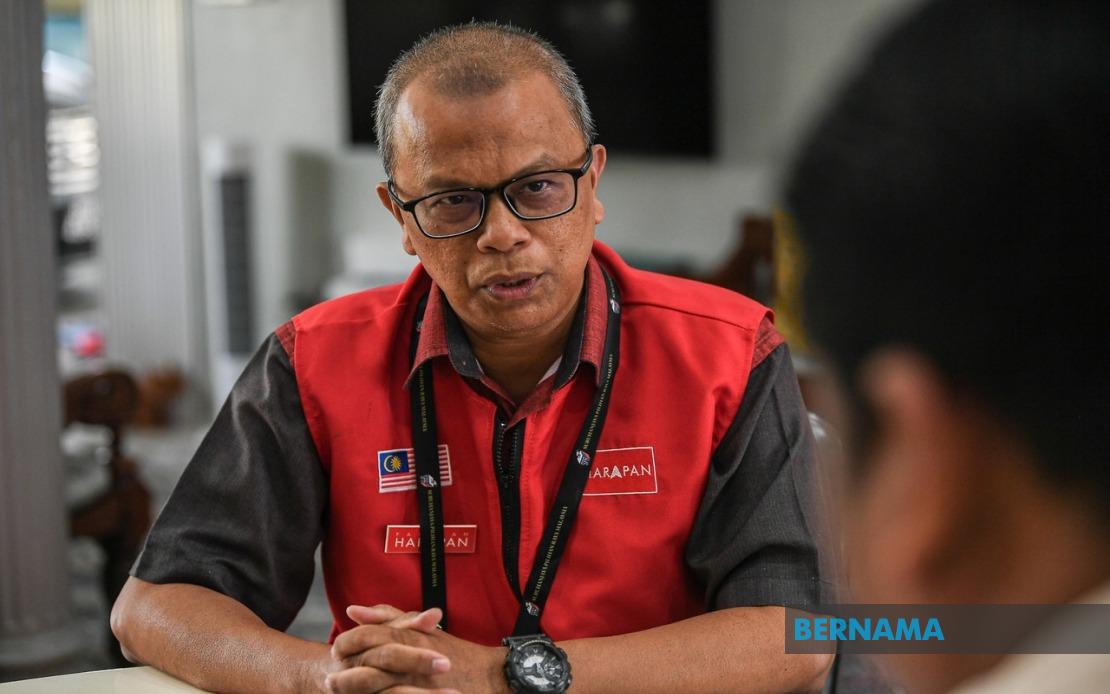
Ahmad Daniel Sharudin, the Pakatan Harapan candidate for the Panti state seat, is positioning eco-tourism development as the cornerstone of his vision for revitalising the constituency ahead of Saturday's Johor state election. The 54-year-old civil engineer, who previously served on the Kota Tinggi District Council, believes that transforming the area's natural assets—particularly the rapids at Kampung Temenin—into a destination of regional significance could unlock sustainable economic growth while preserving the landscape's ecological integrity.
The contrast between Panti and neighbouring areas in Kota Tinggi district underscores Ahmad Daniel's strategic thinking. While the wider district has leveraged its waterfalls into established tourism circuits, Panti's rapid systems remain largely dormant, representing what he describes as untapped potential awaiting proper infrastructure and repositioning. His proposal centres on upgrading these natural features without degrading the original ecosystem, creating recreational facilities that would appeal simultaneously to domestic tourists and international visitors seeking authentic nature-based experiences away from overcrowded attractions.
Beyond the immediate tourism appeal, Ahmad Daniel argues that developing this sector addresses a deeper structural problem affecting the constituency's younger demographic. Youth unemployment and underemployment have driven many residents to seek livelihoods beyond district boundaries, with some crossing into neighbouring Singapore where wage differentials and employment stability prove more attractive. This outmigration represents a loss of human capital and consumer spending power that the district can ill afford, making job creation through tourism-related industries a pressing concern.
The multiplier effect of tourism development forms a crucial part of his economic argument. Ahmad Daniel contends that as visitor numbers increase, ancillary businesses—homestays, restaurants, tour guides, transport services, and retail outlets—would naturally flourish, creating diverse employment pathways for youth without requiring industrial development that might conflict with Panti's natural character. This approach potentially appeals to voters concerned about balancing economic development with environmental preservation, a tension increasingly salient in Malaysian state-level politics.
His broader manifesto extends beyond tourism, encompassing three additional priorities: affordable housing provision, industrial sector employment creation, and public infrastructure modernisation. These pledges address conventional development concerns that resonate across constituencies nationwide. Ahmad Daniel has positioned these commitments as realistic and achievable, citing his alignment with the current federal Pakatan Harapan government as a structural advantage in accessing funding mechanisms and bureaucratic support necessary for implementation—a significant advantage in Malaysian politics where state-federal coordination often determines project viability.
As Tenggara Amanah division chief and the state Amanah party's Syariah and Dakwah Bureau director, Ahmad Daniel brings established party machinery and religious-community networks to his campaign. However, the Panti constituency's sprawling geography presents logistical constraints that neither organisational structure nor goodwill can entirely overcome. With four days remaining before polling, his team has conducted face-to-face outreach across approximately 80 percent of the constituency, leaving significant portions unreached through direct engagement.
Acknowledging these limitations, Ahmad Daniel has pivoted toward digital strategy to compress the remaining distance. Social media platforms offer cost-effective reach across age demographics and geographical dispersal, compensating partially for the impossibility of household-level canvassing in a constituency of Panti's scale. This tactical adjustment reflects broader campaign realities in contemporary Malaysian electoral politics, where digital infrastructure increasingly substitutes for traditional ground organisation, particularly in rural constituencies where population density makes conventional doorstop campaigning inefficient.
The three-way contest involving Barisan Nasional's Dr Muhammad Naqib Md Ghazali and Perikatan Nasional's Alias Rasman introduces competitive complexity that Ahmad Daniel must navigate. BN enters with institutional advantages and decades of electoral organisation, while PN's presence fragments the opposition vote. Ahmad Daniel's eco-tourism vision must differentiate Pakatan Harapan's development paradigm from both rivals while demonstrating superiority to whatever alternative visions they present.
The broader Johor election context amplifies significance for individual contests like Panti. With 56 state seats and 2.7 million eligible voters participating, the state election functions as a barometer of peninsular voter sentiment and potentially carries implications for federal coalition dynamics. How rural constituencies like Panti respond to development-oriented candidates from major opposition coalitions may influence subsequent federal-level positioning and resource allocation, making individual campaign narratives part of larger political narratives.
Ahmad Daniel's emphasis on environmental stewardship alongside economic development reflects evolving voter priorities, particularly among younger constituencies conscious of sustainability concerns. His positioning of eco-tourism as inherently aligned with conservation—rather than exploitative extraction—attempts to capture support from voters sceptical of conventional industrial development models. Whether this message resonates sufficiently to overcome BN's organisational advantages and PN's protest appeal remains the outstanding question as polling approaches.

