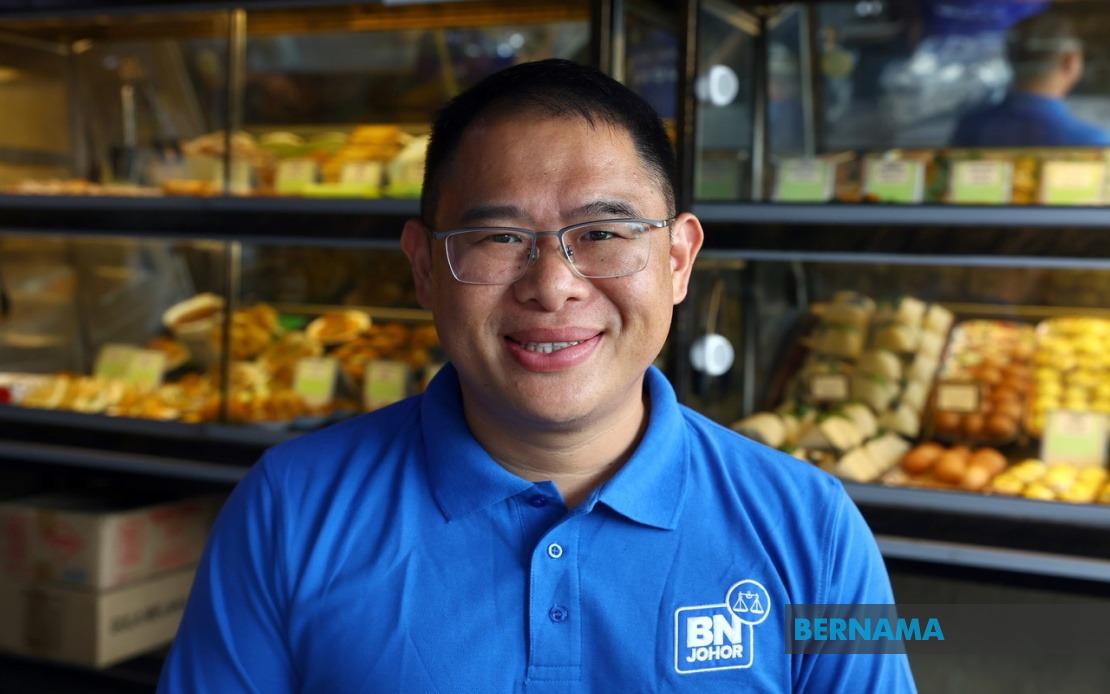
Ling Tian Soon, affectionately known as Ah Soon to Yong Peng residents, is entering the Johor state election with a tangible achievement that encapsulates his governance philosophy: a once-notorious stretch of road that locals mockingly dubbed 'Jalan Koyok' for its severely deteriorated state has been transformed into a modern thoroughfare. This infrastructural overhaul, spanning from Ayer Hitam to the Segamat border and consuming approximately RM23 million over three years, has become the centrepiece of the 42-year-old assemblyman's campaign to retain his seat against Pakatan Harapan candidate Yong Hui Yi in the upcoming Johor elections.
The significance of this infrastructure project extends beyond mere road repair. When Ling was first elected in 2022, he identified long-delayed basic development as his priority, recognizing that roads function as the circulatory system of economic activity. His strategic approach reflects a fundamental understanding of regional development dynamics: invest in connectivity to unlock investor confidence and generate cascading economic opportunities. This philosophy, rooted in a Chinese business adage that economic growth follows quality infrastructure, has proven prescient for Yong Peng's trajectory.
The town, positioned approximately 100 kilometres from Johor Bahru's city centre and strategically situated just an hour's journey from the Port of Tanjung Pelepas, possesses inherent advantages that Ling's infrastructure investment has activated. Major logistics and courier operators have begun establishing operational bases in Yong Peng, drawn by improved accessibility and the town's central location within Johor. These companies view the constituency not as a peripheral location but as a logistical nexus with immediate access to Malaysia's most modern port facility and the broader regional manufacturing heartland.
Most significantly, a prominent e-commerce platform has announced plans to construct its largest distribution hub in Yong Peng, a development that promises substantial employment generation for the local youth population. This project exemplifies how foundational infrastructure improvements catalyse investment attraction and economic transformation. For a constituency that traditionally struggled with youth retention, this employment expansion represents meaningful structural change rather than cosmetic development.
Yong Peng is experiencing a broader metamorphosis from agricultural and small-trading economies toward industrial and logistics-based operations. Ling's administration has observed accelerating land acquisition for industrial development, suggesting that investor interest has moved beyond initial announcements into concrete capital deployment. This trajectory positions the town at an inflection point where continued infrastructure investment and policy support could sustain momentum toward genuine industrial town status, comparable to other logistics hubs that have reshaped their regional economies.
Ling's re-election manifesto, launching in the coming week, consolidates this infrastructure-first approach into three substantive pillars: sustained infrastructure strengthening, enhanced social safety nets, and tourism-sector economic development. This tripartite framework acknowledges that while roads and logistics facilities drive investment, communities require supportive services and diversified economic activities. Notably, the manifesto incorporates specific provisions for senior citizens, young families, and newly married couples—demographic groups whose retention in smaller towns has become challenging as urbanization continues.
The assemblyman's confidence in his re-election bid rests substantially on his demonstrated grassroots engagement pattern, which predates his 2022 election victory. For sixteen years, commencing through parliamentary affairs duties under Ayer Hitam MP and MCA president Datuk Seri Dr Wee Ka Siong, Ling maintained continuous community presence. This extended tenure has generated what he characterizes as family-level relationships rather than transactional electoral connections, a distinction that shapes voter perceptions of political accessibility and responsiveness.
This grassroots engagement style has earned Ling the moniker 'YB Kedai Kopi'—a reference to his almost daily visits to coffee shops, market stalls, and mamak restaurants where informal political conversation occurs organically. In Malaysian political culture, such unscheduled community interaction carries disproportionate weight compared to formal campaign events. Voters interpret regular coffee-shop presence as evidence of genuine interest in constituency concerns rather than seasonal electoral attention. For Ling, this approach has transformed the representative-constituent relationship into something resembling kinship networks, which Malaysian voters traditionally value as indicators of political sincerity.
His performance record spans the quantifiable—RM23 million in road infrastructure, logistics company relocations, and e-commerce hub development—and the relational, built through consistent personal engagement. Ling's strategic presentation positions himself neither as a transformative political figure nor a transactional service provider, but rather as a steady custodian of community interests whose consistent availability and infrastructure focus have begun reorienting the town's economic trajectory. Whether such achievements and relationships prove sufficient to overcome any consolidation of opposition support remains the central electoral question.
The contest between Ling and opposition candidate Yong Hui Yi thus represents more than a routine constituency contest. It reflects competing visions for Yong Peng's future: one emphasizing infrastructure-driven industrial transformation managed through incremental grassroots engagement, and another presumably offering alternative development pathways. For Malaysian voters in secondary towns, such elections often determine whether their constituencies experience genuine economic reorientation or continue demographic stagnation. Ling's campaign positioning suggests that in Yong Peng's case, foundational infrastructure investment has created tangible momentum worthy of electoral continuation, though the voters' assessment of his broader performance—rather than his assessment of himself—will ultimately decide whether his report card earns continuation or revision.

