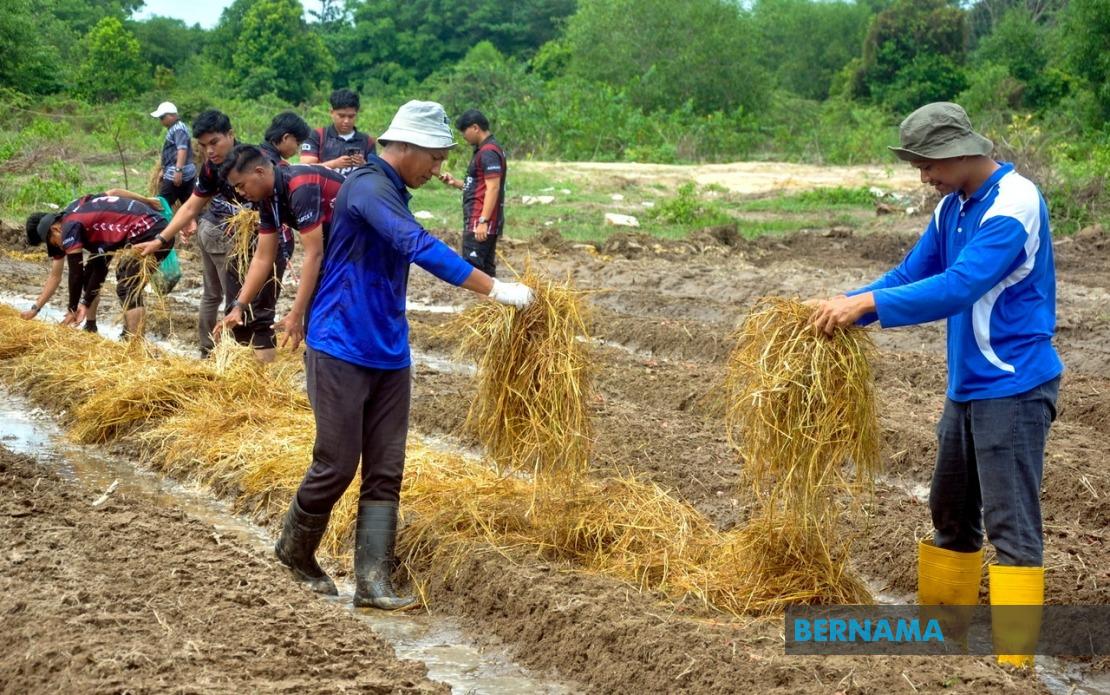
Malaysia's push to strengthen its agricultural workforce through vocational training has yielded incremental progress, with employment rates among technical and vocational education graduates in the farming sector climbing to 76 per cent in 2024, up substantially from 61 per cent six years earlier. Yet this improvement masks a persistent gap between agricultural TVET outcomes and the broader vocational sector, which achieves a 95 per cent employment rate nationally, signalling that the agricultural pathway continues to struggle with competitiveness and appeal despite concerted government efforts.
The findings emerge from the Graduate Outcomes of Agricultural TVET in Malaysia report, unveiled during a stakeholder engagement session in Putrajaya this week. Developed jointly by the Ministry of Agriculture and Food Security (KPKM) and the PNB Research Institute, the comprehensive study analysed graduate trajectories, income patterns, and entrepreneurial participation spanning several years of ministry data. The research represents a coordinated attempt to diagnose why agricultural vocational training, despite national policy emphasis, has not achieved outcomes matching other sectors.
One striking discovery centres on income competitiveness. Graduates who pursue careers within agriculture earn approximately RM100 more monthly than peers working outside the sector, a differential that challenges the narrative of agricultural careers as low-wage employment. More impressively, those founding agro-businesses report substantially higher incomes than agricultural TVET graduates employed in traditional wage roles, and significantly outpace entrepreneurs operating outside agriculture. This suggests that value-added agricultural enterprise and agribusiness represent genuine wealth-creation pathways, yet these opportunities remain underexplored and undermarketed to potential entrants.
The demographic reality underpinning the sector's recruitment crisis is sobering. Agriculture now confronts a workforce where one in two farm workers exceeds 40 years of age, reflecting decades of youth migration toward urban employment and service industries. Youth participation in farming has contracted markedly over the past ten years, creating a structural vulnerability as experienced farmers approach retirement without sufficient younger cohorts entering the sector. This generational imbalance threatens food production stability and rural economic viability, making TVET workforce development not merely an economic concern but a matter of strategic national resilience.
Geographic concentration poses an additional structural problem. Fifteen per cent of agricultural TVET graduate participation clusters in Sabah, trailed by Kedah at 14 per cent and Sarawak at 13 per cent. By contrast, major agricultural states including Johor, Pahang, and Perak—traditionally significant farming regions with extensive plantation and cultivation activity—remain substantially underrepresented in the graduate pipeline. This spatial mismatch suggests that TVET programme expansion and marketing have not aligned with agricultural production geography, potentially leaving regional talent pools untapped and failing to address localised skill shortages where farming infrastructure and employment capacity actually concentrate.
To address these interconnected challenges, KPKM has outlined six strategic policy directions informed by the research. The first involves tailoring programme expansion to reflect state-specific agricultural priorities rather than imposing uniform national curricula. Success metrics must shift away from enrolment numbers toward agriculture-relevant outcomes, ensuring that measurement aligns with sector realities. The third lever targets entrepreneurial risk reduction through targeted support mechanisms, recognising that agribusiness ventures carry particular uncertainties. Simultaneously, all TVET agricultural programmes require embedding entrepreneurial and market-oriented skills rather than treating these as supplementary components.
Two additional directions address systemic visibility and integration. Enhanced exposure to the entire agricultural value chain—from primary production through processing, distribution, and retail—can broaden graduate understanding of career pathways and wealth-generation opportunities beyond traditional farm labour. Strengthening industry collaboration, the final pillar, seeks to align curricula with employer needs, ensure placement pathways remain viable, and build employer confidence in graduate capabilities. These directions collectively recognise that agricultural TVET failure stems not from vocational training quality alone but from misalignment between education outputs and sectoral employment realities.
The timing of this initiative aligns with broader Malaysian policy architecture. Deputy Prime Minister Datuk Seri Dr Ahmad Zahid Hamidi received the study findings at a National Technical and Vocational Education and Training Council meeting on June 4, positioning agricultural TVET development within the national TVET reform agenda. This positioning reflects integration with the National Food Security Policy 2030 and the National Agro-Food Policy 2021-2030, indicating that workforce development now explicitly supports food system resilience.
For Malaysian readers and policymakers, the report's implications extend beyond employment statistics. Southeast Asia faces mounting food security pressures amid climate volatility, growing populations, and regional supply chain disruptions. Malaysia's dependence on food imports renders domestic agricultural capacity strategically significant. TVET graduate underperformance in agriculture, therefore, represents not merely a sectoral challenge but a potential constraint on national food independence. Conversely, successfully repositioning agricultural vocational training as a pathway to competitive incomes and entrepreneurial opportunity could unlock demographic dividends, particularly among youth populations facing saturated urban labour markets.
The 15-percentage-point employment gap between agricultural TVET and the national average warrants continued scrutiny. Whether this gap reflects graduate preferences, employer discrimination against TVET-trained agricultural workers, curriculum misalignment, or structural agricultural underperformance remains incompletely diagnosed. Future research should examine why the 24 per cent of agricultural TVET graduates remain unemployed in their field and whether they transition to non-agricultural sectors by choice or necessity. Clarifying these dynamics would enable more precisely targeted interventions.
The income evidence suggesting agricultural careers match or exceed non-agricultural alternatives presents a communication opportunity. Current TVET recruitment messaging appears insufficiently emphasising the financial case for agricultural careers, potentially allowing outdated perceptions of farming as impoverished labour to persist unchallenged. Strategic reframing of agricultural vocational pathways as routes to middle-class stability and entrepreneurial wealth could reshape youth perceptions, particularly if coupled with genuine employer demand signals and visible graduate success stories. The ministry's six-point policy framework provides implementation scaffolding; translating these directions into measurable outcomes over the next two years will test whether Malaysia can reverse the decade-long youth exodus from agriculture.

