The African Union's Peace and Security Council has made clear its opposition to external meddling in Sudan's affairs and the creation of rival governmental bodies that could fragment the country's institutional cohesion, according to a statement issued following high-level consultations in Khartoum on Sunday. The stance emerged during talks between Sudan's Sovereignty Council Chairman Abdel Fattah al-Burhan and a delegation from the AU body, headed by Algerian diplomat Mohamed Khaled, at the presidential palace in the capital.
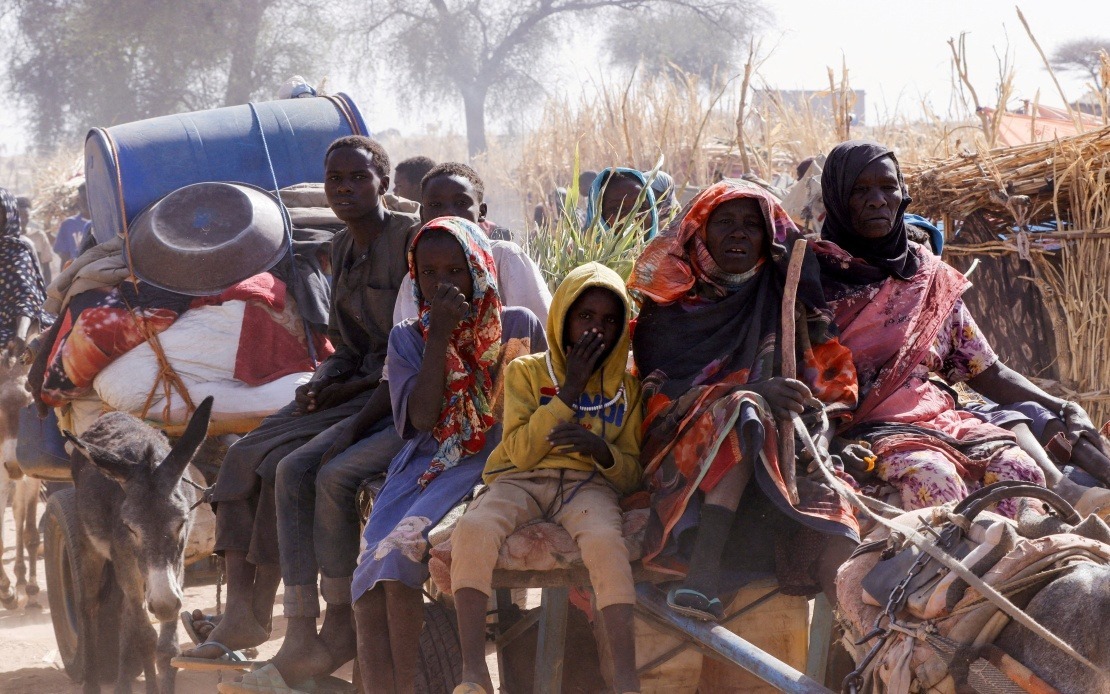
The timing of this intervention reflects growing continental concern about the trajectory of Sudan's devastating conflict, which has unfolded across eighteen months of intense fighting. Since April 2023, the Sudanese Armed Forces and the paramilitary Rapid Support Forces have engaged in a prolonged struggle initially rooted in disagreements over the integration of the RSF into formal military structures. What began as an institutional dispute has evolved into a nationwide catastrophe of staggering proportions, leaving tens of thousands dead and displacing roughly 13 million people according to United Nations assessments—a humanitarian toll that ranks among Africa's worst contemporary crises.
Mohamed Khaled, serving as the council's rotating chair, characterised his engagement with al-Burhan as productive, underscoring the AU's commitment to Sudan's territorial integrity and the principle of non-interference. His characterisation of the meeting as "fruitful" suggests that the continental body sought to reinforce its backing for the existing Khartoum administration whilst simultaneously pressuring external powers to refrain from exploiting Sudan's vulnerability. The diplomat explicitly condemned international involvement, arguing that such interference actively perpetuates the violence rather than contributing toward solutions.
The AU's rejection of parallel governmental entities carries particular significance in Sudan's context, where fragmenting state authority could precipitate state collapse. Such warnings hint at underlying anxieties within continental leadership that some external actors might be tempted to work around the Khartoum government by establishing rival administrations in contested territories. For Malaysian observers, this concern mirrors challenges faced across Southeast Asia regarding sovereignty and the vulnerability of developing nations to external pressure during internal upheaval.
Khaled articulated the AU's vision for Sudan's future, emphasising that sustainable peace must emerge through inclusive national dialogue, reconciliation processes, and political settlements reflecting Sudanese aspirations. His call for a comprehensive political framework—rather than military solutions alone—suggests the continental body recognises that no amount of military victory will resolve the underlying tensions that ignited the conflict. This approach aligns with regional precedents where genuine stability requires addressing root causes rather than imposing externally mediated settlements.
A particularly noteworthy element of the AU's position concerns the government's recent relocation operations back to Khartoum and efforts to restore state institutional functioning. The council framed this development as strategically important, recognising that state capacity and service delivery are prerequisites for legitimacy and public confidence. This emphasis on institutional restoration over military dominance suggests the AU is attempting to steer Khartoum toward a state-building orientation that could eventually transcend the current conflict dynamic.
Sudanese Prime Minister Kamil Idris used the same occasion to signal that internally-driven dialogue would commence imminently, providing at least rhetorical commitment to the AU's preferred pathway. However, the credibility of such pledges remains uncertain given the RSF's competing territorial ambitions and the fractured nature of Sudan's political landscape. For regional stakeholders in Southeast Asia familiar with protracted conflicts and negotiation challenges, Sudan's trajectory offers instructive lessons about the difficulties of achieving breakthrough moments when multiple armed factions hold significant territory and resources.
The AU's emphasis on establishing an inclusive transitional framework and advancing toward constitutional governance through free elections represents an aspiration rather than an imminent reality. Creating mechanisms that bring together the army, RSF, civilian political groups, and regional powers around a shared constitutional agenda faces enormous obstacles, particularly when military calculations suggest continued fighting might yield better territorial or political outcomes. The council's call for political forces to pursue consensus and narrower transitional structures acknowledges these difficulties whilst nonetheless pushing for diplomatic movement.
For observers in Malaysia and the broader Southeast Asian region, Sudan's predicament illustrates how internal institutional disputes can metastasise into prolonged civil conflict with continental implications. The AU's intervention—emphasising territorial integrity, non-interference, and inclusive governance—parallels ASEAN's cherished principles of non-intervention and respect for sovereignty, yet also exposes the limitations of such frameworks when powerful actors operate across borders. Sudan's experience suggests that regional organisations require credible enforcement mechanisms and strategic leverage to translate principles into outcomes that actually reduce violence and protect civilian populations.

