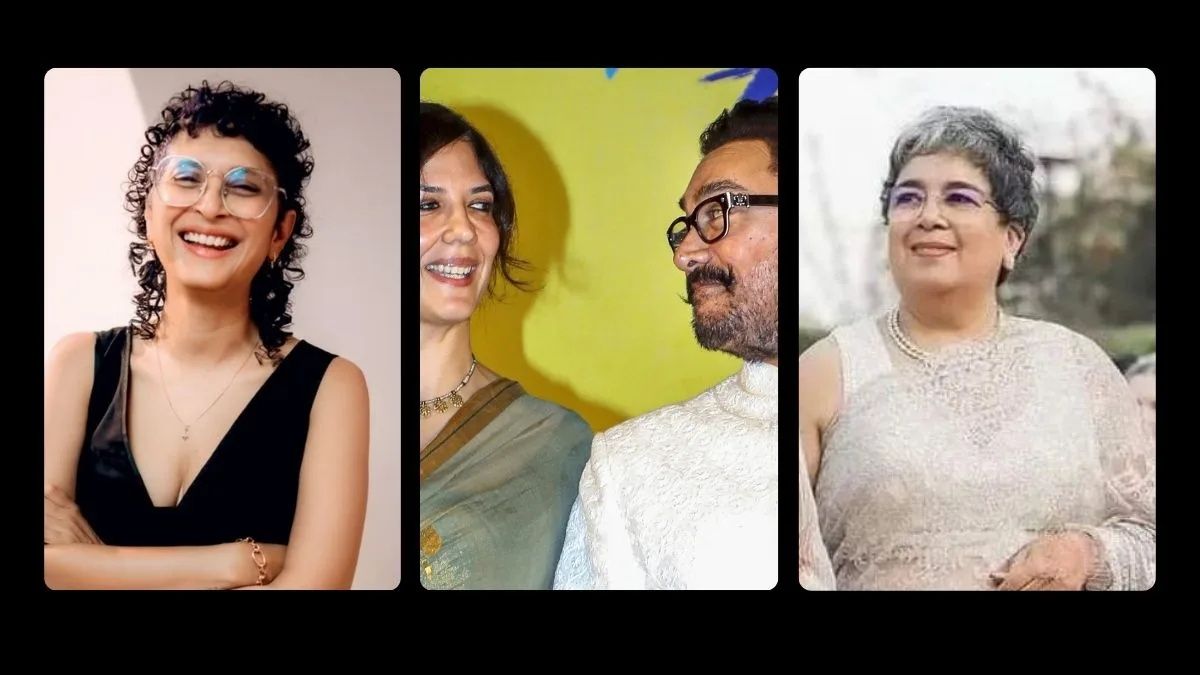
Bollywood's Aamir Khan has broken his silence on contentious allegations emerging after his marriage to Gauri Spratt, robustly rejecting suggestions that he represents what critics term 'love jihad'. The 60-year-old actor used a recent media interview to contextualize his personal relationships within a broader family narrative of religious pluralism, pushing back against what he characterised as an increasingly absurd public discourse.
The actor's defence centres on a straightforward claim: across three marriages spanning nearly four decades, none of his wives underwent religious conversion. This biographical detail, Khan emphasises, reflects not an anomaly but rather a consistent family ethos that predates his own marital choices. In articulating this position, he sought to reframe the conversation away from accusations targeting him specifically and towards a demonstration of institutional family values around interfaith acceptance.
Khan elaborated extensively on his family's composition to substantiate his argument. His two sisters married Hindu men, while his daughter also wed a Hindu partner—none involving conversion. Further afield, his cousin filmmaker Mansoor Khan married a Christian woman. These examples, Khan suggested, illustrate a pattern wherein religious difference posed no impediment to family integration or the sanctity of matrimonial bonds. The cumulative weight of these instances, he implied, undermines narratives casting him as an outlier promoting religious conversion through marriage.
Regarding his own matrimonial history, Khan clarified that Reena Dutta, his first wife whom he married in 1986 before divorcing in 2002, remained within her original faith. Similarly, filmmaker Kiran Rao, whom he married in 2005 and separated from in 2021, underwent no religious conversion. His current wife Gauri Spratt, identified as Christian, has likewise maintained her religious identity without active practice. Critically, Khan noted that all three marriages were solemnised as civil ceremonies, not religious rites, further divorcing them from conversion narratives.
The timing of Khan's remarks carries particular resonance in India's contemporary political landscape. 'Love jihad' arguments have gained traction among certain ideological factions, typically framing interfaith relationships between Muslim men and women of other faiths as part of a coordinated religious strategy. By publicising his family's history and his wives' religious constancy, Khan positioned himself against such characterisations, effectively arguing that his marriages represent individual choice rather than theological agenda.
Khan's introduction of Gauri Spratt to the public occurred during his 60th birthday celebrations in March of the previous year, though their formal wedding took place on July 5 at his Mumbai residence. The couple's relationship trajectory—nearly 25 years of prior acquaintance, reconnection in Bengaluru through his cousin Nuzhat Khan roughly two years before marriage, and a subsequent two-year courtship—speaks to a relationship developed gradually over extended periods rather than hastily arranged.
For Malaysian audiences familiar with interfaith marriage complexities within their own context, Khan's situation illuminates broader regional sensitivities. While Malaysia's constitutional framework acknowledges religious freedom, interfaith unions, particularly those involving conversion within Muslim communities, remain legally and socially contested terrain. Khan's emphatic assertion that his marriages involved no conversion resonates as a defensive posture against a specific framing of interfaith relationships, suggesting the global reach of 'love jihad' discourse and its capacity to politicise personal decisions.
The actor's frustration with escalating public scrutiny, expressed through his observation that life becomes 'more comical as time passes', reflects growing exasperation among public figures confronting ideologically-motivated allegations. His decision to engage directly rather than maintain silence suggests recognition that such narratives, once established, require active rebuttal to prevent their hardening into accepted fact. This defensive engagement itself indicates the potency these allegations carry within Indian public discourse.
Khan's reliance on family precedent rather than personal principle deserves scrutiny. By framing his marriages within historical family context, he implicitly suggests that individual marital choices derive legitimacy from accumulated family practice. This rhetorical strategy, while effective in demonstrating consistency, somewhat sidesteps the philosophical argument that interfaith marriage requires no religious conversion as a fundamental matter of human rights and personal autonomy, irrespective of family history.
Looking forward, Khan's public statement may influence how Indian media and civil society navigate interfaith marriage narratives. By methodically dismantling the specific allegation—that his wives converted—he has established a factual record against which future claims must contend. Nevertheless, the necessity of such clarification underscores how 'love jihad' framing has permeated public discourse, transforming private matrimonial decisions into matters requiring public defence and historical contextualisation. For observers across South and Southeast Asia grappling with similar tensions between religious identity and individual choice, Khan's intervention exemplifies both the stakes involved and the defensive postures increasingly required of public figures navigating these contested waters.

