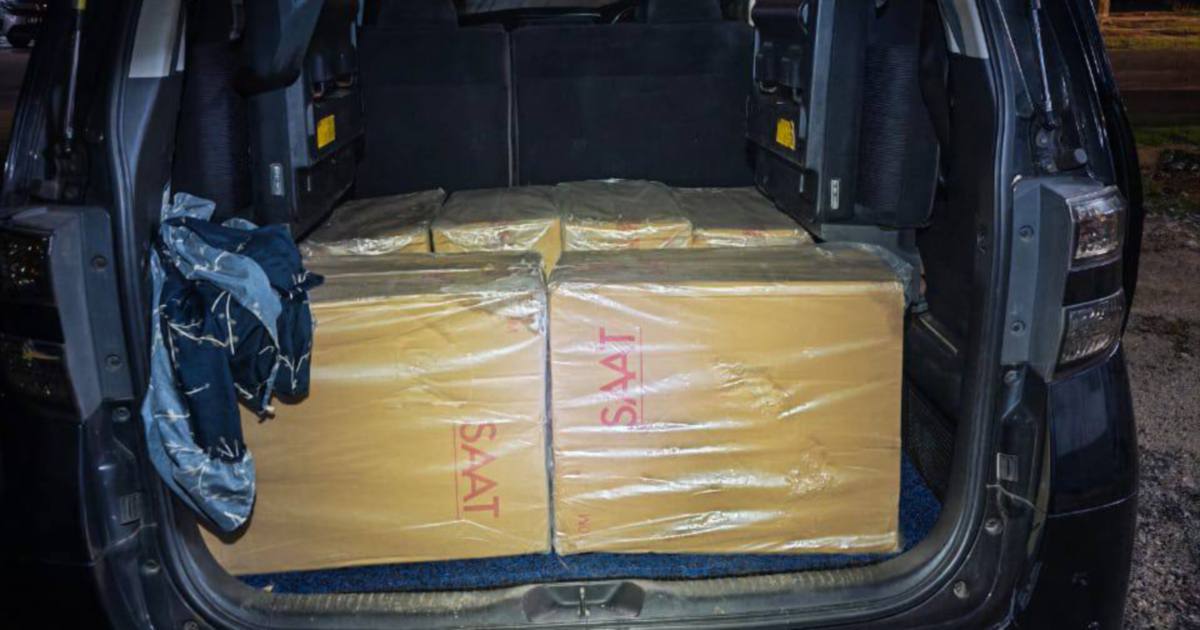
Authorities in Kota Baru have dismantled another significant cigarette smuggling operation, with the General Operations Force intercepting a Toyota Vellfire carrying 60,000 contraband cigarettes on the Pasir Tumboh Bridge in the early hours of today. The seized merchandise, suspected to have evaded customs duties, carries an estimated street value of RM112,200. A 37-year-old driver was arrested at the scene and taken into custody for questioning.
The operation represents the latest in a series of successful enforcement actions targeting the illegal cigarette trade across Kelantan and the broader northern corridor. These interdiction efforts are critical components of Malaysia's broader customs and excise strategy, which has intensified over recent years as authorities grapple with the persistent challenge of duty-unpaid tobacco products entering the domestic market through various smuggling routes. The seizure demonstrates the continued vigilance required to combat organised trafficking networks that remain active despite previous enforcement successes.
The Pasir Tumboh Bridge location, strategically situated in the Kota Baru district, has historically served as a transit point for contraband goods moving through the region. The early morning timing of the interception aligns with known smuggling patterns, as perpetrators frequently attempt to move illicit merchandise during hours when surveillance and enforcement presence may be reduced. The GOF's ability to intercept vehicles at this location underscores the importance of maintaining strategic checkpoint operations along major transportation corridors.
Duty-unpaid cigarettes represent a significant revenue loss for the Malaysian government and fuel unfair competition within the legitimate tobacco retail sector. When contraband products enter the market at artificially depressed prices, they undercut licensed retailers who comply with applicable taxes and regulations. This dynamic has created substantial challenges for legitimate businesses operating under the stringent regulatory framework imposed by customs authorities and the Ministry of Finance. The proliferation of cheaper illicit alternatives has reportedly driven declining sales among legitimate retailers, particularly in northern states like Kelantan where smuggling networks have maintained established distribution channels.
The financial impact of cigarette smuggling extends beyond immediate revenue forgone by the government. Enforcement operations, border surveillance, intelligence gathering, and prosecutorial resources consume considerable state capacity that could otherwise be directed toward other public priorities. The RM112,200 valuation attached to today's seizure reflects the scale at which individual smuggling attempts operate, suggesting that aggregate losses across multiple interdictions accumulate into substantial sums annually throughout Malaysia.
Criminal networks involved in the cigarette trade have demonstrated considerable adaptability, frequently adjusting routes, vehicles, and tactics in response to enforcement pressure. The use of family vehicles like the Toyota Vellfire—a popular multipurpose transport vehicle—indicates an effort to avoid drawing attention from authorities who might scrutinise specialised freight vehicles. This operational flexibility underscores the ongoing cat-and-mouse dynamic between enforcement agencies and smuggling operations, requiring authorities to continuously refine detection methodologies and intelligence analysis.
The arrested driver now faces investigation under relevant customs and excise legislation, with potential penalties including substantial fines and imprisonment depending on the specific charges filed and judicial determination of his role within any larger trafficking organisation. Prosecutorial outcomes in smuggling cases often provide valuable intelligence regarding supply chain configurations, funding mechanisms, and distribution networks that inform broader enforcement strategy. Information derived from individual prosecutions frequently assists authorities in identifying higher-level operatives and dismantling criminal infrastructure rather than simply processing lower-level participants.
Kelantan's geographic proximity to Thailand and its position along established smuggling corridors make it a persistent focal point for contraband operations. Cross-border trafficking networks have maintained deep operational roots in the region for decades, creating entrenched logistical advantages that facilitate ongoing contraband movement despite sustained enforcement efforts. The state's porous borders and complex terrain present inherent challenges for comprehensive enforcement, though the GOF continues dedicating substantial resources toward monitoring key transit routes and maintaining interdiction capacity.
This seizure reinforces official commitments to combat the illegal cigarette trade, though stakeholders acknowledge the multifaceted nature of the challenge. Success requires sustained enforcement, sophisticated intelligence analysis, community engagement, and international cooperation with neighbouring jurisdictions where smuggling networks frequently maintain operational bases. Malaysian authorities have increasingly recognised that addressing supply-side factors—particularly production and export from source countries—requires diplomatic and technical cooperation beyond domestic enforcement capacity alone.
The General Operations Force has not released additional details regarding ongoing investigations into the driver's associations or connections to larger criminal enterprises. The arrested individual's identity remains undisclosed pending formal charges. Investigations will likely examine vehicle ownership records, communication data, financial transactions, and prior criminal history to establish involvement levels and identify potential co-conspirators or organisational affiliations.

