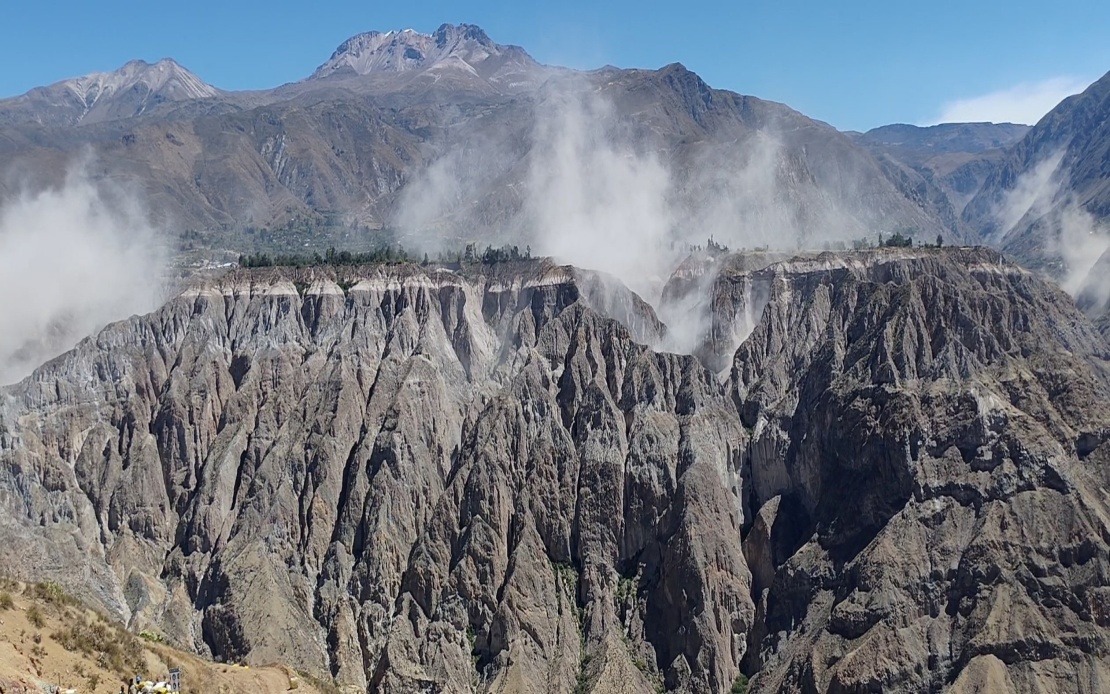
A substantial earthquake measuring 6.7 magnitude struck southern Peru on Thursday afternoon, triggering widespread seismic alerts and drawing attention to the nation's vulnerability along one of the world's most tectonically active zones. The United States Geological Survey and Peru's Geophysical Institute reported the event, which originated in the Ayacucho department's Parinacochas province, approximately 35 kilometres north of the town of Coracora. The tremor registered at an intermediate depth of 108 kilometres, a factor that significantly influenced how the ground-shaking dispersed across the affected regions.
The Geophysical Institute of Peru's National Seismological Centre documented the event at 1 pm local time with a recorded magnitude of 7.2, providing slightly higher readings than initial international assessments. This discrepancy between different measurement systems underscores the complexities of seismic monitoring when earthquakes occur at intermediate depths rather than near the surface. The distinction matters for residents and emergency planners, as depth fundamentally alters how energy propagates through rock layers and ultimately affects what people experience at ground level.
The considerable depth of the epicentre—more than 100 kilometres underground—acted as a natural buffer, absorbing substantial seismic energy before it reached populated areas. Seismologists noted that the intensity at the epicentre corresponded to a Mercalli rating of III-IV, classified as light to moderate shaking rather than severe. This meant that although residents felt the earthquake distinctly, the ground motion remained insufficient to cause widespread structural failure or trigger cascading building collapses that characterise more catastrophic seismic events.
Remarkably, Peru's disaster management authorities and regional officials reported no immediate fatalities or significant structural damage in the hours following the earthquake. This positive outcome reflected both the protective effect of depth and the effectiveness of modern building codes implemented in Peru's urban centres following earlier catastrophic events. Emergency response teams mobilised across affected provinces nonetheless, conducting rapid damage assessments and establishing communication channels with remote communities where reports can take longer to reach centralised authorities.
The earthquake was distinctly felt throughout southern and central Peru, with residents in the capital city of Lima, located hundreds of kilometres away, reporting palpable shaking. This widespread perception demonstrates how intermediate-depth earthquakes can affect territories far exceeding what surface-level ruptures typically influence. Citizens across Lima, Arequipa, and intermediate regions described the sensation as noticeable but not alarming, consistent with the measured intensity ratings that geophysicists calculated.
This seismic episode arrives within a broader context of elevated earthquake activity across Peru's northern and southern regions during recent months. The country sits directly upon the Pacific Ring of Fire, one of Earth's most geologically dynamic zones where the convergence of tectonic plates generates continuous seismic stress. Peru's position along the subduction zone where the Nazca Plate descends beneath the South American Plate makes powerful earthquakes an inherent feature of the nation's geological environment rather than exceptional anomalies.
Historical precedent reinforces why such events warrant serious attention. The 2007 earthquake that devastated the Ica region registered 7.9 magnitude and resulted in nearly 600 deaths, illustrating how larger-magnitude or shallower events can produce catastrophic human consequences. That disaster prompted comprehensive improvements to Peru's seismic monitoring infrastructure and emergency protocols, investments that demonstrably contributed to the favourable outcome of Thursday's earthquake.
In response to the recent tremor, Peru's Geophysical Institute issued public advisories urging residents to maintain vigilance regarding earthquake preparedness. The institute specifically recommended that households review and practice evacuation protocols, ensuring that family members understand where to move during severe shaking and how to navigate to safety zones outside buildings. Equally important, authorities encouraged citizens to maintain emergency supply kits containing water, non-perishable food, first aid materials, and essential medications, resources that prove invaluable when infrastructure disruptions accompany significant seismic events.
For Malaysian and Southeast Asian observers, Peru's earthquake experience offers instructive lessons about disaster preparedness in tectonically active regions. While Malaysia itself sits outside major subduction zones and experiences infrequent seismic activity, neighbouring regions including Sumatra, the Philippines, and Indonesia face geological risks comparable to Peru's environment. The visible consequences of Peru's investment in monitoring technology, building code enforcement, and public education demonstrate how technical capabilities combined with institutional commitment can substantially reduce earthquake-related casualties and destruction.
The broader implications extend beyond immediate safety considerations into discussions about long-term urban planning and infrastructure resilience. As population densities increase in earthquake-prone regions globally, the challenge of ensuring that growing numbers of people live and work in buildings capable of withstanding significant ground motion intensifies. Peru's experience illustrates both the promise of modern seismic engineering—where Thursday's 6.7 magnitude event caused minimal damage—and the ongoing vulnerability of older structures and informal settlements that lack adequate reinforcement.
Looking forward, Peru's scientific community and civil protection authorities will continue analysing Thursday's earthquake for insights into subsurface conditions and stress accumulation patterns. Such data contributes to increasingly sophisticated probabilistic forecasting models that help governments allocate preparedness resources strategically and communicate realistic hazard levels to populations. The episode reinforces that in seismically active nations, earthquake awareness and preparation constitute not optional luxuries but essential components of public health and safety infrastructure.
As authorities maintain heightened vigilance in the coming weeks, monitoring networks will track whether Thursday's mainshock triggers significant aftershock sequences or whether seismic activity returns to background levels. Either outcome will provide valuable information for understanding stress conditions throughout Peru's subduction zone. For residents and officials alike, the event serves as a potent reminder that living in earthquake country requires constant attention to preparedness measures and respect for geological forces that operate on timescales and magnitudes far exceeding human control.

