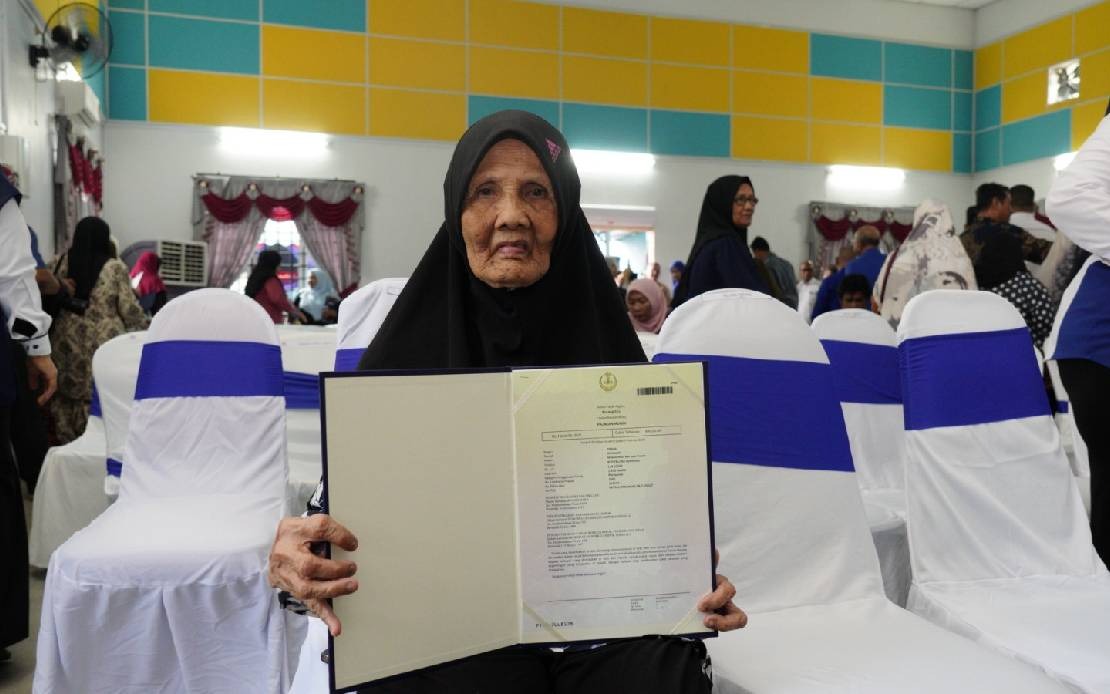
A significant step forward in Perak's rural development agenda was marked on July 14 when 47 participants of the FELCRA Berhad Seri Gala Area Village Rearrangement Programme received official land ownership grants during a ceremony in Ipoh. The handover ceremony, which also inaugurated the Felcra Berhad Seri Gala PPSK Grand Hall, underscores the government's commitment to transforming previously marginalised agricultural communities into economically viable stakeholders with secure property rights.
Perak Menteri Besar Datuk Seri Saarani Mohamad characterised the FELCRA Consolidation and Rehabilitation (P&P) Programme as a cornerstone achievement in regional rural development strategy, distinguishing it from conventional approaches that focus solely on infrastructure investment. The programme's distinction lies in its holistic methodology: it revitalises underutilised land holdings, stimulates local entrepreneurship through systematic land consolidation, generates employment opportunities for rural residents, and crucially, restores community confidence in agricultural viability as an economic pathway.
The significance of these land grants extends beyond mere administrative transfer of property documents. According to Saarani, the initiative represents a deliberate effort to restore dignity and economic agency to rural populations through legitimate asset ownership. By formalising land titles, the scheme provides participating families with collateral for financial services, inheritance security, and a tangible foundation for intergenerational wealth building—factors that have historically constrained rural prosperity across Malaysia.
The FELCRA P&P model demonstrates efficiency through a methodical approach to land management that delivers sustained returns to participants over time. Rather than one-off development injections typical of earlier rural schemes, this framework creates enduring economic structures. Previously idle or inefficiently managed land becomes a reliable income source, while participants develop stronger attachment to their holdings when ownership is formally recognised. This psychological shift often catalyses further local investment and agricultural innovation.
Perak's prominence in the FELCRA ecosystem reflects significant investment by the federal agency. Zainal Abidin Alias, FELCRA's director of participant affairs, noted that the agency currently manages approximately 32,000 hectares across nearly 20,000 participating families nationwide. Perak ranks as the second-largest operational region after Pahang, indicating that rural consolidation remains a substantial undertaking in the state, with ongoing implications for agricultural productivity and rural livelihood stabilisation.
The Deputy Prime Minister and Minister of Rural and Regional Development, Datuk Seri Dr Ahmad Zahid Hamidi, has articulated an expanded vision for rural development that moves beyond infrastructure provision. Speaking during World Rural Development Day 2026 celebrations in Jengka, Pahang, he emphasised that contemporary rural strategies must encompass human capital enhancement, economic strengthening, entrepreneurship support, and crucially, enabling rural populations to exercise agency over their developmental trajectories. This philosophy directly aligns with FELCRA's land-consolidation approach, which empowers participants through ownership rather than dependence on government provision.
For Malaysian policymakers and regional observers, the Seri Gala initiative illustrates how targeted land reform can function as an anti-poverty instrument. Rural landlessness and tenure insecurity remain persistent challenges across Southeast Asia, constraining agricultural productivity and perpetuating intergenerational poverty. By systematically formalising customary or fragmented holdings into consolidated, titled plots managed through cooperative frameworks, schemes like FELCRA create conditions for agricultural modernisation, mechanisation, and market integration.
The ceremony's inclusion of senior officials—including State Rural Development, Plantation, Agriculture and Food Industry Committee chairman Datuk Mohd Zolkafly Harun, and FELCRA Berhad chairman Datuk Seri Ahmad Jazlan Yaakub—reflects institutional commitment to the programme's continuation and expansion. Such high-level attendance signals that land consolidation remains a policy priority, particularly as Malaysia seeks to rebalance development between urban and rural regions and address persistent income inequality between sectors.
Looking ahead, the Seri Gala handover carries implications for FELCRA's replication elsewhere. As the agency manages substantial hectares and participant populations, successful proof-of-concept in Perak may accelerate deployment in other states, particularly those with significant smallholder agricultural populations. The formal recognition of ownership rights, combined with systematic land management, positions participants to engage with modern agricultural markets, access credit facilities, and adapt to climate-related challenges that increasingly threaten conventional farming communities.
The broader context also involves Malaysia's rural transformation needs. As urban migration accelerates and agricultural populations age, schemes that stabilise rural livelihoods through secure property rights become increasingly critical for maintaining food security and preventing social dislocation. The Seri Gala participants now possess documented assets that can serve as anchors for family economic planning, whether in continued agricultural production, diversified rural enterprise, or as collateral for education or business ventures.
Within the Southeast Asian context, Malaysia's FELCRA model offers lessons for neighbouring countries grappling with rural development challenges. Nations such as Indonesia, Thailand, and the Philippines contend with similar issues of land fragmentation, tenure insecurity, and rural poverty. The systematic consolidation and formalisation approach demonstrated in Perak presents a scalable framework that could inform regional development strategies, particularly if documented outcomes from Seri Gala and comparable FELCRA initiatives are shared through ASEAN development forums.
The Seri Gala ceremony ultimately represents a confluence of rural policy maturation and recognition that sustainable development requires empowering rural populations through secure, recognised property rights. As these 47 families transition from provisional arrangements to formal ownership, they join a growing cohort of rural Malaysians whose economic security rests on institutionalised land tenure rather than government discretion. Whether this translates into sustained agricultural productivity and rural prosperity will depend on complementary investments in extension services, market access, and climate adaptation—factors that will determine whether the FELCRA P&P Programme achieves its transformative potential across Perak and beyond.

