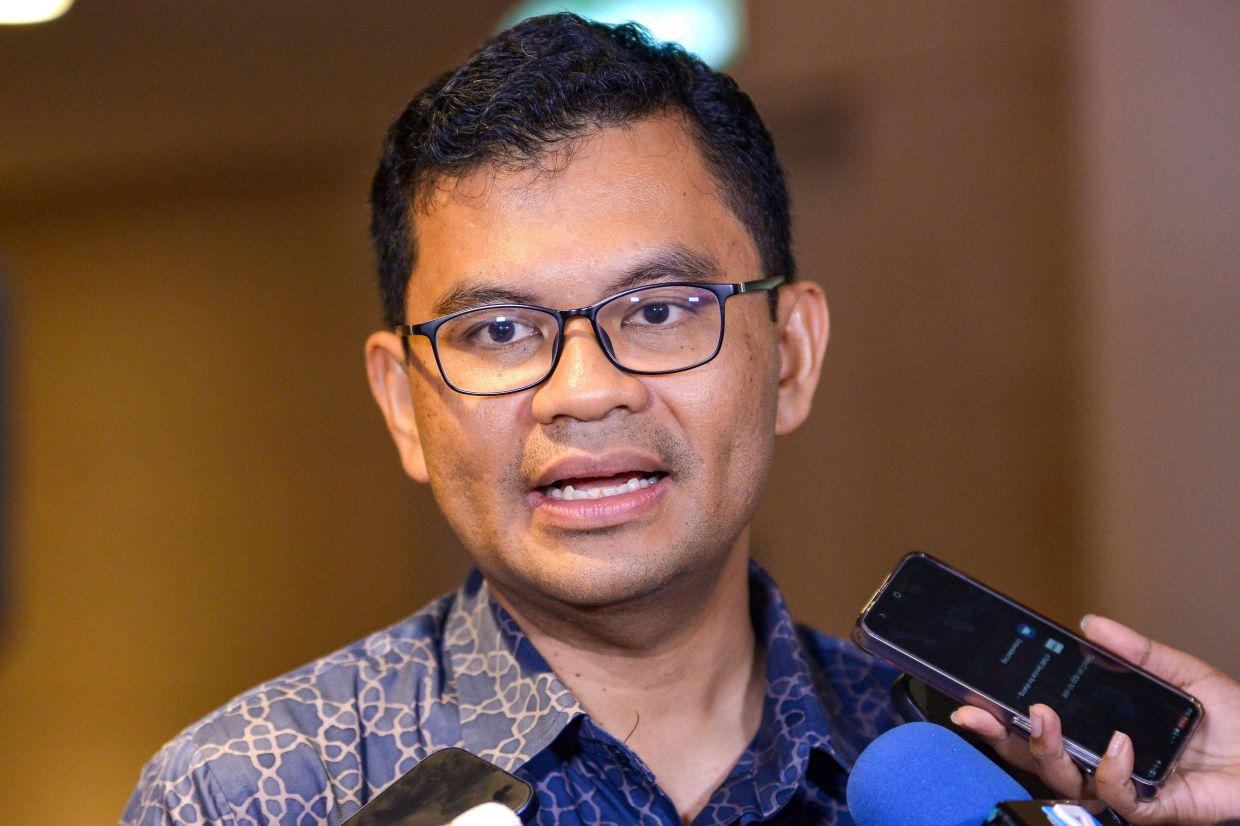
Malaysia's renewable energy sector has received a significant boost with the allocation of 42 Feed-in Tariff projects to private companies, positioning the country to unlock approximately RM4.3 billion in fresh capital investment. Economy Minister Akmal Nasrullah Mohd Nasir unveiled the development at the 7th International Sustainable Energy Summit, confirming that the carefully selected portfolio spans three renewable energy sources and will collectively contribute more than 331 megawatts of clean generation capacity to the national grid.
The successful applicants have been distributed across three technology categories, reflecting Malaysia's diversified approach to renewable development. Biogas initiatives secured 16 allocations with a combined capacity of 26.185 megawatts, while biomass projects claimed 11 awards generating 135.94 megawatts. Small hydropower ventures, benefiting from Malaysia's abundant water resources, received 15 approvals totalling 169.23 megawatts. This segmentation underscores the government's strategy to leverage different renewable sources according to regional advantages and resource availability across the country.
Beyond the immediate renewable energy generation, the FiT projects are anticipated to generate substantial ancillary economic benefits throughout Malaysia's manufacturing and services sectors. The minister projected that localised demand for gas engines and boilers would reach approximately RM617 million, directly stimulating domestic equipment manufacturers and strengthening the industrial supply chain. This backward linkage effect demonstrates how renewable energy policies can extend beyond environmental goals to fortify the domestic industrial base and reduce import dependency.
Employment creation represents another critical dimension of these allocations. The 42 projects are forecast to create roughly 7,738 indirect employment opportunities across construction, operations, maintenance and supporting services. These jobs would predominantly be generated during the implementation phase through 2029 and 2030, providing immediate economic stimulus to communities while establishing long-term operational positions. For a nation managing workforce transitions amid digital disruption, such labour-intensive renewable projects offer meaningful economic inclusion.
The selection process underwent rigorous evaluation to ensure optimal outcomes. The Sustainable Energy Development Authority (SEDA) Malaysia received 48 total applications representing a combined potential capacity of 370.480 megawatts, meaning approximately 88 per cent of proposed capacity proceeded to approval. The authority assessed candidates across multiple dimensions including geographical site suitability, competitive tariff structures offered by applicants and technical feasibility. Evaluators also examined the broader ecosystem requirements, considering grid integration, supply chain readiness and regulatory compliance infrastructure necessary to support successful project delivery.
This multi-criteria approach reflects increasing sophistication in renewable energy procurement. Rather than simply accepting the lowest tariff bids, policymakers recognised that sustainable outcomes depend on holistic project viability. A technically sound proposal in an optimal location with strong developer capacity creates greater certainty of timely completion and reliable operation than a low-cost bid from an unproven proponent in a problematic location. This maturation of procurement standards signals confidence in Malaysia's renewable sector maturation.
The FiT mechanism itself has evolved significantly since its inception, now functioning as a critical instrument for attracting private capital into distributed renewable generation. Unlike centralised utility-scale projects requiring massive upfront government investment, FiT schemes enable thousands of private operators to install generation capacity while guaranteeing fixed-rate electricity purchase agreements. This risk mitigation mechanism has proven effective throughout Southeast Asia, with Thailand, Vietnam and the Philippines adopting similar approaches. Malaysia's 2026 FiT allocation demonstrates renewed commitment to this proven instrument.
The projected timeline for grid connection between 2029 and 2030 implies a multi-year development pipeline. Developers must secure financing, obtain permits, construct infrastructure and conduct testing—activities typically spanning two to three years for renewable projects. This extended deployment schedule allows supply chains time to mobilise, workforce training programmes to develop and integration systems to prepare. However, it also emphasises the urgency of allocation now, as projects approved in 2026 would not contribute generation until the decade's final years.
For Malaysia's broader energy transition objectives, these allocations represent important progress. The nation has committed to achieving 31 per cent renewable energy in the electricity mix by 2050, requiring exponential acceleration in capacity addition. Current renewable contribution remains modest, with hydropower dominating historical capacity while solar and biomass remain nascent. The FiT approach directly addresses this gap by mobilising private investment in technologies—particularly biogas and biomass—that Malaysia possesses competitive advantages in developing.
Regional context further illuminates significance. Malaysia competes with increasingly ambitious renewable targets across Southeast Asia. Vietnam aggressively pursued solar and wind despite later entry, while Indonesia's vast archipelago enables geothermal dominance. Thailand's government-directed renewable policies have attracted major international developers. Malaysia's FiT allocation demonstrates responsive policymaking, though observers question whether the pace matches regional competition and global net-zero timelines.
The investment quantum of RM4.3 billion carries particular weight given Malaysia's broader economic context. Federal and state budgets face competing priorities in healthcare, education and infrastructure maintenance. Private capital mobilisation through FiT mechanisms consequently represents efficient capital deployment, enabling renewable expansion without crowding out essential public spending. This fiscal efficiency makes renewable FiT schemes politically sustainable even during economic pressures.
Looking forward, the success of these 42 projects will significantly influence subsequent FiT allocation rounds. Should developers deliver projects on schedule generating the projected employment and manufacturing stimulus, political support for expanded allocations would strengthen. Conversely, delays or cost overruns would complicate future renewable policy implementation. This initial tranche consequently carries symbolic weight beyond its immediate 331-megawatt contribution, essentially functioning as a proof-of-concept for scaled-up renewable energy development in Malaysia.

