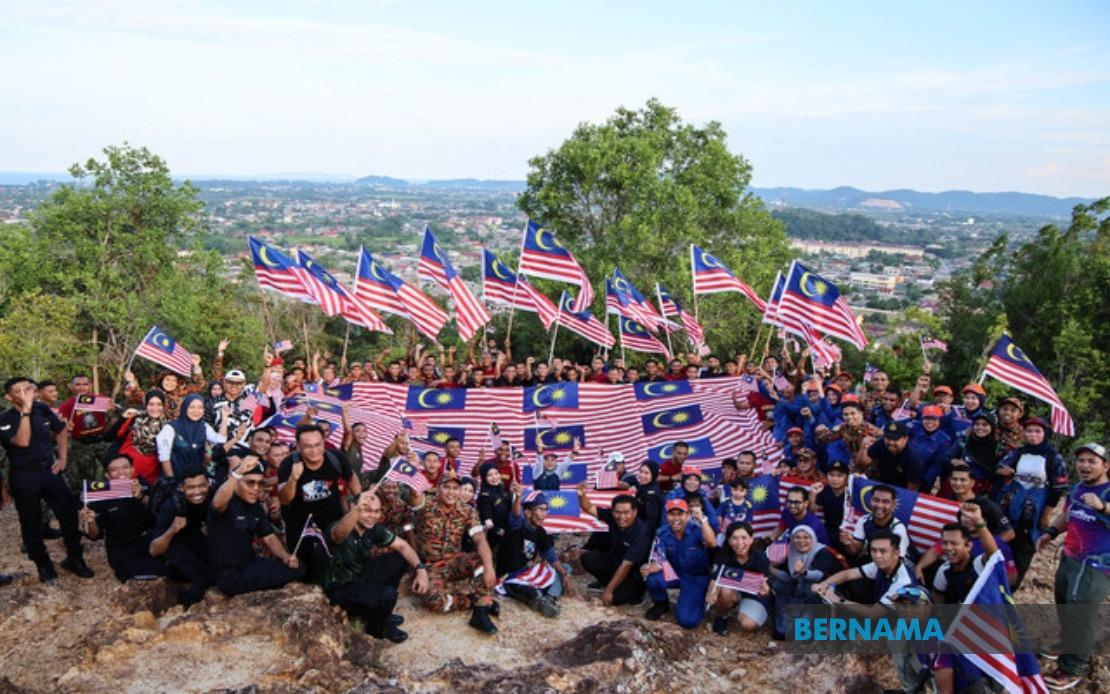
Three hundred uniformed personnel, government agency representatives and media professionals joined an inaugural summit hike in Kuala Terengganu during August, uniting in a show of patriotic spirit as the nation marked its National Month celebrations. The event, coordinated by the Media Terengganu (METRA) organisation, drew participants from diverse government and security sectors, reflecting a broad commitment to celebrating Malaysia's heritage across institutional boundaries.
METRA president Mohd Zaid Mohd Noor oversaw the gathering of personnel from multiple quarters. The Terengganu Fire and Rescue Department, Malaysian Armed Forces, Road Transport Department, Malaysian Anti-Corruption Commission, the Terengganu Ministry of Domestic Trade and Cost of Living, Terengganu Royal Malaysian Customs Department and Malaysia Civil Defence Force all sent representatives to participate in the collaborative initiative. This cross-agency participation underscored the inclusive nature of the programme, bringing together organisations that typically operate within separate administrative frameworks.
The fundamental purpose driving the event centred on channelling patriotic sentiment through tangible community action. Rather than confining National Month celebrations to formal ceremonies or symbolic gestures, organisers sought to create an experiential platform where participants could collectively demonstrate their love for country through shared physical endeavour. The summit hike itself became a metaphor for national unity—individuals from different institutions and professional backgrounds moving together towards a common destination.
Mohd Zaid emphasised the particular responsibility shouldered by media practitioners in this patriotic mission. As gatekeepers and disseminators of information, journalists and communications professionals occupy a strategic position in shaping public discourse around national identity and values. By organising such an event, METRA sought to lead by example, demonstrating how the media sector could actively contribute to fostering patriotic messaging across multiple communication channels rather than merely reporting on such initiatives from the sidelines.
The initiative carried practical dimensions beyond ceremonial significance. According to Mohd Zaid, the hiking event simultaneously promoted physical wellness among participating personnel while infusing that health-conscious activity with patriotic symbolism. The plan to unfurl a giant flag at the summit added a visual spectacle to the climbing experience, transforming an ordinary exercise routine into a moment of national affirmation. This combination of health promotion with patriotic expression reflects growing recognition that national building requires engaging citizens at multiple levels simultaneously—physical, emotional and intellectual.
Inter-agency cooperation constituted another substantive outcome of the gathering. In Malaysia's complex governance landscape, different authorities often operate within siloed structures, with limited informal interaction between personnel across sectors. An event bringing together fire and rescue staff, military officers, customs officials and civil defence personnel creates informal networking opportunities that can translate into improved coordination during emergency situations or national crises. These bonds forged during recreational activities frequently prove valuable when professionals from different agencies must collaborate under pressure.
The timing during National Month added ceremonial significance to the programme. August represents the peak season for patriotic commemorations in Malaysia, when flag-raising ceremonies, parades and public gatherings proliferate. METRA's summit hike positioned itself within this broader calendar of celebrations while offering a distinctive activity format that appealed to younger, more physically active participants who might find traditional ceremonies less engaging.
For Terengganu specifically, hosting such an event amplified the state's participation in national observances. While major celebrations tend to concentrate in Kuala Lumpur and other large urban centres, provincial initiatives demonstrate that patriotic spirit and civic engagement extend throughout the nation. The event helped ensure that National Month celebrations manifested across Malaysia's geography rather than remaining concentrated in the capital.
The involvement of media practitioners as organisers rather than mere observers represented a notable departure from conventional coverage patterns. Typically, journalists report on government-organised or formally sanctioned events. By initiating this programme, METRA members positioned themselves as active architects of the National Month narrative rather than passive chroniclers. This shift carries implications for how media engage with nation-building projects and suggests growing recognition that journalists can contribute substantively to civic discourse beyond traditional reportage functions.
The gathering also reflected how contemporary Malaysia navigates the balance between institutional formality and grassroots enthusiasm. While the event drew heavily on uniformed and government sectors, the inclusion of media practitioners introduced elements of democratic participation and public scrutiny. The combination suggests an approach to patriotic mobilisation that values both official gravitas and popular engagement, avoiding the risk that celebrations become purely top-down affairs disconnected from authentic public sentiment.
Looking forward, the inaugural nature of this event suggests potential for replication in other Malaysian states and the possible expansion of METRA's model to other professional sectors. Media associations elsewhere might similarly organise patriotic activities that simultaneously build internal professional cohesion while contributing to broader national observances. The success of bringing together 300 participants from diverse backgrounds demonstrates viable appetite for such multi-sector collaborative initiatives.

