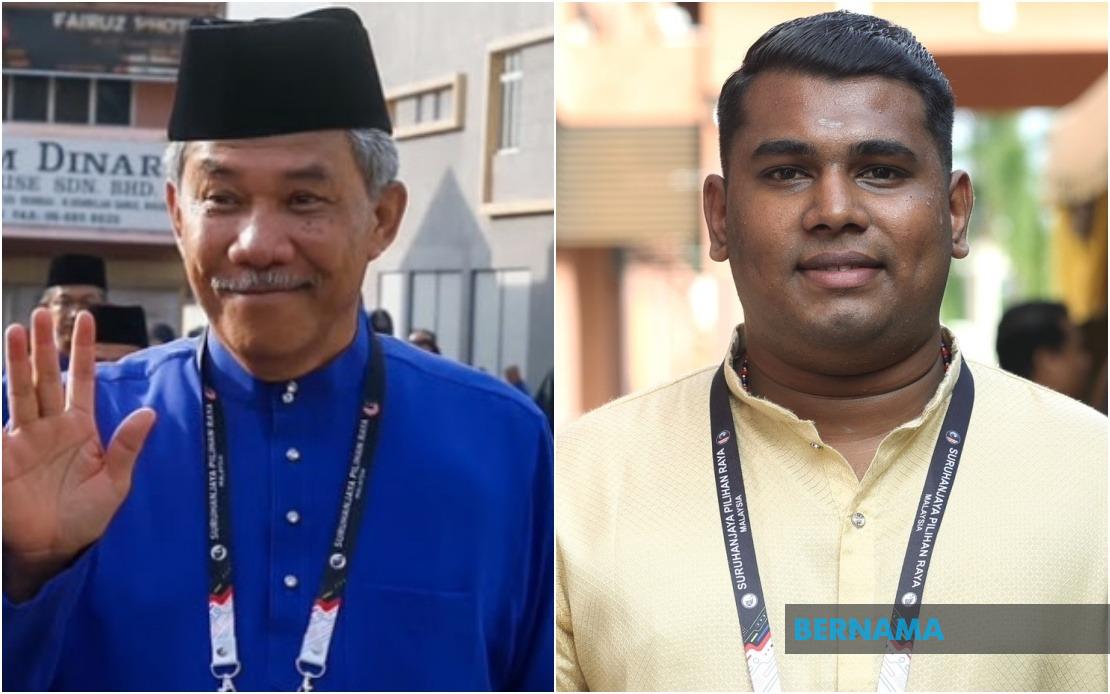
Malaysia's political landscape continues to expand its generational diversity as the 16th Negeri Sembilan state election showcases its youngest candidate yet. M. Leevineshwaraan, at just 23 years old, is flying the Bersatu flag in what promises to be a keenly contested battle for the Sri Tanjung state seat. The youthful contender's entry into electoral politics marks a notable moment in the state's political calendar, though his inexperience will likely be tested against more seasoned opponents in the five-way contest looming ahead.
The Sri Tanjung seat represents a particularly challenging environment for Leevineshwaraan's maiden political venture. Incumbent Datuk Dr G. Rajasekaran of Pakatan Harapan holds the position with considerable incumbency advantage, having secured the seat in the previous election with a commanding 3,996-vote majority. This substantial margin suggests strong voter consolidation around the PH representative, presenting a formidable hurdle for the fledgling Bersatu candidate. The broader Port Dickson constituency, within which Sri Tanjung sits as one of five state seats, encompasses 19,590 registered voters—a significant electoral base that Leevineshwaraan must penetrate to mount a credible challenge.
Leevineshwaraan's ascension to the record for youngest candidate represents a shift in Malaysian electoral dynamics. The previous benchmark was set in the 15th state election held in 2023, when Muhammad Syakir Fitri Sadri contested the Paroi seat as an Independent at 25 years of age. The two-year age gap between these successive records suggests an emerging trend of younger political aspirants seeking early entry into state-level contests, potentially signalling changing party strategies around candidate recruitment and voter appeal. Whether this trend reflects genuine grassroots enthusiasm for youth participation or calculated political manoeuvring by parties remains an open question for political observers.
At the opposite end of the generational spectrum, the Negeri Sembilan state election also features representation from Malaysia's political establishment. Two candidates have reached the age of 70, making them the oldest contenders in this electoral cycle. Barisan Nasional deputy chairman Datuk Seri Mohamad Hasan represents one pole of this senior contingent, defending his long-held Rantau seat in what appears positioned as a direct two-way contest. Pakatan Harapan's Abd Latif A Tambi mirrors this profile, contesting the Gemencheh seat in similarly streamlined opposition. Both constituencies carry substantial voter bases—Rantau, situated within the Rembau parliamentary constituency, registers 34,831 eligible voters, while Gemencheh, within Tampin, tallies 24,916 voters.
The presence of septuagenarian candidates differs noticeably from the previous electoral cycle. In the 15th Negeri Sembilan state election, the oldest candidate recorded was 72-year-old Bujang Abu, who stood as an Independent. Notably, Bujang will not repeat his candidacy this time, as documentation failures prevented him from meeting Election Commission requirements. This administrative barrier illustrates the procedural rigour expected even of veteran political figures, underscoring that age and experience do not exempt candidates from the technical compliance demands of the electoral process.
The geographic distribution of candidates across Rantau and Gemencheh reveals distinct political battlegrounds. Rantau's status as a two-way race between the BN deputy chairman and PH opposition suggests a zone of electoral stability where the contest has crystallized around two major forces. By contrast, Gemencheh's structure similarly indicates a consolidated confrontation between established players. These dynamics contrast sharply with the more fragmented Sri Tanjung landscape, where five contestants are competing for a single mandate, creating opportunities for vote-splitting and unexpected outcomes that could benefit tactical voting behaviour.
Gender representation within the 16th state election candidate pool reflects incremental but measurable progress toward greater diversity. Nine women candidates have secured nomination, representing an increase from the eight female contestants in the previous election. Pakatan Harapan has positioned itself as the leading party on this metric, fielding four women candidates compared to other coalitions and independent entries. While this expansion from eight to nine candidates might appear modest numerically, the symbolic and substantive weight of these incremental gains should not be underestimated. The fact that female representation has grown despite overall candidate numbers rising only marginally—from 83 candidates previously to 103 this time—indicates deliberate shifts in nomination strategies within at least some party structures.
The enhanced candidate pool reflects broader shifts in Negeri Sembilan's electoral competitiveness and party positioning. The increase from 83 to 103 total candidates across the state suggests intensified competition or revised candidate fielding strategies compared to the previous election. This expansion may indicate that parties view the 16th state election as a significant contest, warranting deeper candidate recruitment efforts or broader geographic competition across previously uncontested or lightly contested seats. For Malaysian observers tracking electoral dynamics, the candidate slate provides early signals about where each political formation expects to compete most vigorously.
Electoral procedures have been standardized for the upcoming poll, with the Election Commission establishing clear timelines for participation. Early voting has been scheduled for July 28, providing eligible voters advance voting opportunities before the main polling day on August 1. These administrative arrangements ensure sufficient time for voter mobilization while maintaining the procedural integrity expected of Malaysian electoral management. The compressed timeline between early and general voting may influence campaign strategy, particularly for candidates like Leevineshwaraan who may rely on intensive grassroots mobilization to overcome structural disadvantages facing new entrants.
The composition of the 16th Negeri Sembilan state election candidate field ultimately reflects broader tensions within Malaysian electoral politics. Leevineshwaraan's youth contrasts sharply with the seasoned incumbency of figures like Rajasekaran and the political veteran status of septuagenarian contestants. This generational spread mirrors national debates about succession planning, political renewal, and whether established political structures can effectively absorb emerging talent. For Negeri Sembilan specifically, the election will test whether voter preferences favour continuity and experience, as represented by incumbent performers like Rajasekaran, or whether constituencies prove receptive to younger political voices seeking to reshape electoral narratives and policy priorities.

