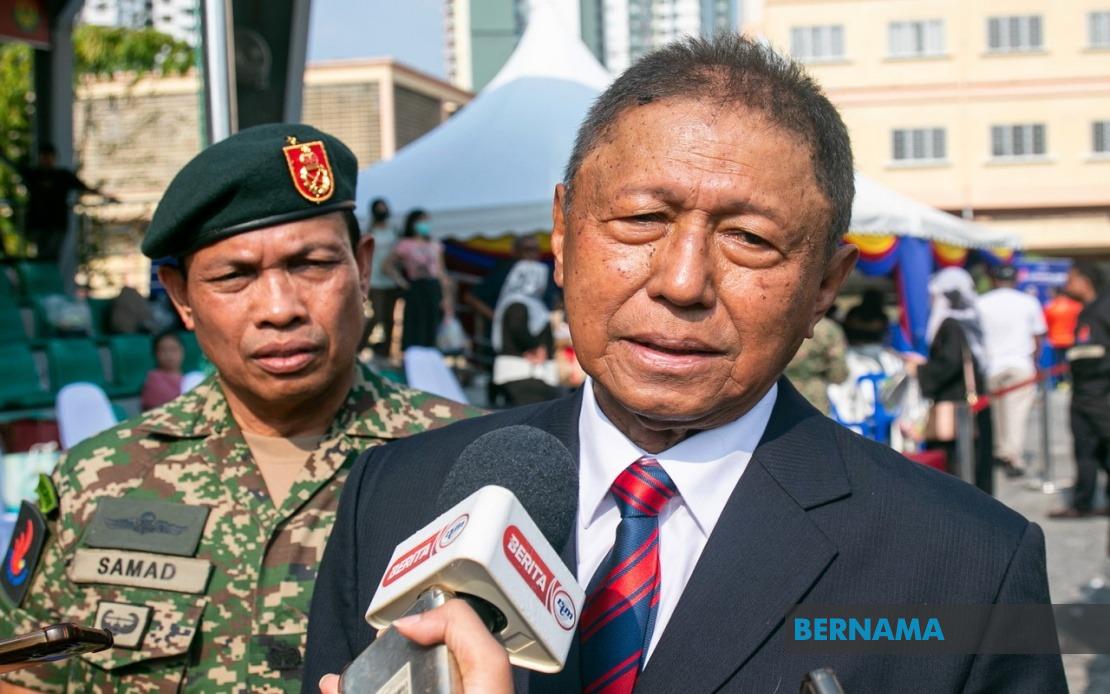
Malaysia's reinvigorated National Service Training Programme, known as PLKN 3.0, will achieve a significant milestone on August 31 when two hundred of its alumni participate in the National Day parade in Putrajaya. This inaugural appearance before the King, Prime Minister, Cabinet ministers, and assembled crowds represents a turning point for the controversial national service initiative, which has undergone considerable restructuring since its resurrection. General (Rtd) Tan Sri Dr Abdul Aziz Zainal, chairman of the National Service Training Council, announced that the selected participants have already begun intensive preparation exercises in Putrajaya, fine-tuning their formations and movements ahead of the high-profile national event.
The decision to feature PLKN 3.0 trainees in Malaysia's most important patriotic occasion underscores the government's commitment to rehabilitating the programme's public image. For years, national service has been a divisive issue in Malaysia, with critics questioning its necessity and efficacy. By showcasing recent graduates in the National Day parade—a setting that commands prime-time television coverage and draws thousands of spectators—authorities aim to demonstrate tangible results from the intensive 45-day training regime. Abdul Aziz framed the participation as an opportunity to exhibit not merely the trainees themselves, but the substantive outcomes of their military-style preparation, positioning them as exemplars of nationalistic fervour and disciplined citizenship.
The latest cohort, designated PLKN 3.0 Series 3/2026, concluded its training cycle with 795 trainees successfully completing the programme across three designated camps. Camp 504 AW in Bukit Keteri, Perlis, trained 106 female participants, while Camp 505 AW in Pekan, Pahang, accommodated 442 male trainees, and Camp 515 AW in Kuala Lumpur hosted 247 female participants. The gender balance across facilities reflects efforts to ensure equitable representation, though the considerably larger male intake suggests continued demographic disparities in voluntary enrolment. The programme, which commenced on July 11, operated across geographically dispersed locations to maximise accessibility for applicants nationwide.
Three outstanding performers emerged from this training series, each selected as the best trainee from their respective camps. An'nur Najiha Muhammad, an 18-year-old from Ipoh, Perak, led Camp 504 AW's cohort, while Muhammad Firdaus Muhammad Said, also 18 and hailing from Kuantan, Pahang, achieved top honours at Camp 505 AW. Cheyenne Alessandra Michael, 18, from Kuala Lumpur, distinguished herself at Camp 515 AW. These standout graduates exemplify the calibre of youth the programme attracts and seeks to develop as community role models.
Looking ahead, the National Service Training Council has signalled ambitious expansion plans for subsequent training cycles. The upcoming PLKN 3.0 Series 4/2026 will substantially increase participant numbers through the addition of new training facilities and strategic partnerships. Abdul Aziz indicated that the programme will leverage training centres operated by the Malaysian Volunteer Corps Department, commonly known as RELA, to augment existing military installations. This collaboration promises to boost annual training capacity to over one thousand trainees annually, a significant escalation from current throughput levels.
The expansion involves establishing five additional camps beyond the three currently operational locations. Camp 503 Hutan Melintang in Perak, Camp 506 Sungai Durian in Kelantan, and Camp 513 Bukit Pinang in Kedah will serve as primary training venues. Two further facilities, classified as alternative camps and operated through Public Training Institute centres, will open in Sungai Petani, Kedah, and Tuaran, Sabah, extending the programme's geographic reach into East Malaysia. The strategic positioning of these camps reflects demographic distribution patterns and accessibility considerations, ensuring no region feels excluded from participation opportunities.
The expansion strategy also contemplates augmenting trainer numbers, addressing a potential bottleneck in programme delivery. By recruiting additional military instructors and leveraging RELA's existing personnel infrastructure, the councils aims to maintain training quality whilst accommodating volume increases. This dual approach—expanding facilities whilst strengthening the instructor corps—suggests authorities view PLKN 3.0 as a long-term initiative requiring sustained institutional commitment rather than a temporary policy experiment.
For many trainees, the PLKN 3.0 experience transforms personal worldview and nationalist consciousness. Cheyenne Alessandra Michael, who volunteered for the programme driven by aspirations toward military service, described her 45-day training cycle as fundamentally altering her perspective. The immersive experience at Camp 515 AW, located within a Territorial Army installation, provided daily exposure to professional soldiers and operational military environments. This proximity to uniformed personnel, whom she observed firsthand conducting national defence duties, crystallised abstract notions of patriotism into visceral appreciation for military sacrifice.
Michael's testimony highlights how structured military exposure can catalyse psychological and emotional development in young citizens. Her repeated reference to soldiers' dedication and the historical context of national independence suggests the training programme successfully inculcates historical consciousness and gratitude for previous generations' sacrifices. She articulated recognition of the younger generation's responsibility to safeguard national unity and tranquility—precisely the messaging authorities hope to propagate through PLKN 3.0. Such personal transformation narratives, particularly from high-achieving participants, provide compelling counter-narratives to critics who dismiss national service as coercive indoctrination.
The participation of PLKN 3.0 alumni in Malaysia's National Day parade represents confluence of multiple policy objectives. Administratively, it showcases the programme's operational success and trainee calibre to national decision-makers and the broader electorate. Symbolically, it positions recently trained youth as embodiments of Malaysian patriotism, marching alongside establishment figures in the nation's preeminent civic ceremony. For trainees themselves, it constitutes public recognition of their commitment and achievement, transforming private training experience into national pageantry. For the government, it strategically normalises what remains a contested initiative, leveraging the ceremonial weight of National Day to reframe public service through shared patriotic enthusiasm rather than individual compulsion.
The expansion trajectory outlined by the National Service Training Council suggests Malaysia's leadership views PLKN 3.0 as integral to long-term nation-building strategy. Rather than treating the programme as supplementary to traditional defence structures, the council's capital investment in new facilities and partnerships indicates consideration of national service as foundational civilian-military integration mechanism. Southeast Asian regional context amplifies this perspective—neighbour nations increasingly emphasise citizen-soldier concepts and civic-military engagement as components of national security architecture. By scaling PLKN 3.0 from experimental initiative to established institutional feature, Malaysia positions itself within regional mainstream concerning youth mobilisation and national defence responsibility distribution.
Successful integration of PLKN 3.0 alumni into broader national narratives depends partly on the impressions created through high-visibility public events. The National Day parade participation thus carries significance transcending ceremonial symbolism. It represents opportunity to demonstrate programme credibility to sceptical demographic segments, including parents concerned about their children's safety and wellbeing, civil society watchdogs questioning state authority, and younger Malaysians weighing whether national service merits their commitment. The calibre of participants selected—achieving top marks across their respective camps—ensures the public faces reflect programme excellence, potentially influencing future volunteer applications and reducing recruitment pressures that might otherwise necessitate coercive measures.
As Malaysia continues developing PLKN 3.0 infrastructure and expanding participant numbers, success metrics will increasingly depend on graduate outcomes beyond training completion. Cheyenne Alessandra Michael's aspiration toward military service suggests at least some participants may pursue defence sector careers following their civilian training. Tracking employment pathways, further education pursuits, and civic engagement patterns among alumni could provide empirical foundation for assessing the programme's broader societal impact. Should graduates demonstrate elevated community participation, enhanced patriotic consciousness, and improved intercommunal understanding compared to non-participants, such evidence would substantially legitimise the considerable public investment national service demands.

