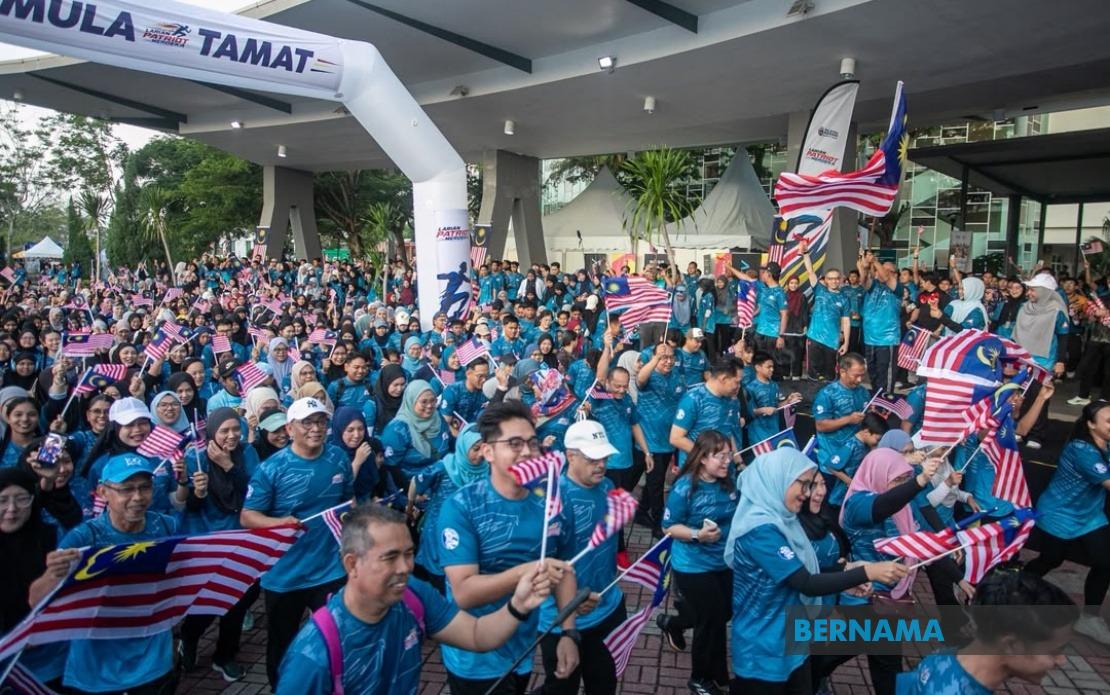
The Sultan Azlan Shah Ministry of Health Training Institute in Ipoh became a hub of patriotic activity as approximately 2,000 Malaysians of varying ages converged on the grounds early on July 19 for the Patriot Merdeka Run. The gathering demonstrated widespread community enthusiasm for the inaugural event of the 2026 National Month and Fly the Jalur Gemilang Campaign, with families arriving well before the 7 am start to secure their spots and soak in the celebratory atmosphere.
The morning's festivities commenced with a coordinated mass aerobics session that brought participants together in synchronized movement, creating a visual spectacle of unity across age groups and backgrounds. Following the exercise component, the assembled crowd engaged in a ceremonial waving of the Jalur Gemilang, a symbolic gesture intended to reinforce collective national identity and emotional connection to Malaysian independence. The sight of thousands of flags unfurling simultaneously across the training institute grounds encapsulated the event's underlying message of togetherness.
Datuk Abdul Halim Hamzah, who holds the position of secretary-general at the Communications Ministry, formally inaugurated the 2.5-kilometre fun run at 7.30 am. The route itself served as a patriotic corridor, with the national flag displayed prominently throughout the full distance to maintain the thematic focus on national pride. This deliberate design choice transformed what might otherwise be a routine community run into a statement of collective celebration.
The scenes captured throughout the morning reflected genuine family participation and community engagement. Parents guided young children through the route, creating intergenerational moments of shared patriotic expression. Numerous participants had chosen clothing inspired by the distinctive colours of the Jalur Gemilang—red, white, blue and yellow—turning the run into a mobile display of national symbolism. The enthusiastic interactions between runners, marked by encouraging shouts and expressions of goodwill, demonstrated that the event transcended the typical sporting context to become a gathering focused on social cohesion.
Organisers deliberately structured the Patriot Merdeka Run to serve a dual purpose: promoting physical wellness within the community whilst simultaneously cultivating patriotic consciousness. By framing the run as a participatory exercise accessible to citizens regardless of age, fitness level, or socioeconomic background, the event became genuinely inclusive. This approach recognises that patriotism need not be expressed through formal ceremonies alone but can be woven into everyday community activities that encourage healthy living.
The Patriot Merdeka Run represents the opening salvo in a broader series of commemorative activities scheduled for the 2026 National Day and Malaysia Day celebrations. Event planners view such grassroots initiatives as essential mechanisms for sustaining and deepening public understanding of what national independence signifies beyond the historical facts taught in schools. By creating platforms where citizens actively participate in patriotic expression rather than passively observing from the sidelines, organisers hope to foster a more meaningful connection to national identity.
The timing of the event also carries significance within Malaysia's political calendar. Prime Minister Datuk Seri Anwar Ibrahim was scheduled to officially launch the complete 2026 celebrations at 10 am the same morning, indicating high-level government commitment to the commemorative period. The Patriot Merdeka Run thus functioned as both a community-driven expression of patriotism and a symbolic prelude to national leadership's formal endorsement of the celebrations.
For Malaysian readers, the event reflects broader national trends in how contemporary governments seek to maintain patriotic sentiment and national unity. In an era where divisive issues frequently dominate public discourse, organising inclusive, family-oriented activities that celebrate shared national identity offers a counterweight to fractious political debate. The strong turnout in Ipoh suggests that significant segments of the population remain receptive to invitations to participate in collective patriotic expression when events are designed with accessibility and genuine community benefit in mind.
The 2026 National Month campaign also carries particular resonance given Malaysia's position as a multicultural Southeast Asian nation where maintaining social cohesion remains a persistent governmental priority. By anchoring patriotic expression to health and wellness activities that transcend ethnic and religious boundaries, organisers have crafted an approach that reinforces inclusive nationalism. The presence of children and families indicates intergenerational transmission of patriotic values, potentially establishing lasting emotional connections to national identity among younger Malaysians.
Looking forward, the success of the Patriot Merdeka Run may influence how future national commemorations are structured throughout the region. Malaysian initiatives often serve as models for neighbouring Southeast Asian nations grappling with similar challenges of maintaining national unity whilst respecting diversity. The demonstration that thousands will voluntarily participate in patriotic activities when given accessible, well-organised platforms provides valuable data for policymakers designing future nation-building initiatives.

