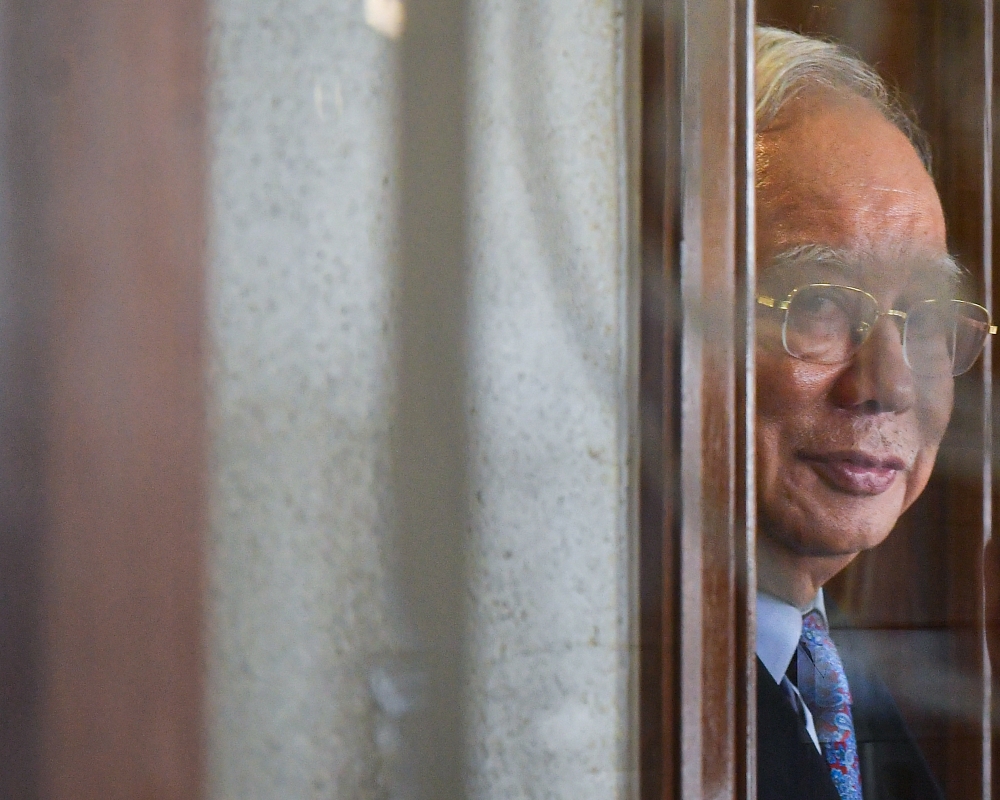
During proceedings at the High Court in Kuala Lumpur yesterday, investigators in the sprawling 1Malaysia Development Berhad corruption case acknowledged a significant gap in their financial tracking. Richard Templema, a key financial fraud investigator who worked on the scandal, testified that he had not conducted any verification to establish whether the US$620 million repatriated by former Prime Minister Najib Razak actually remained in its stated destination or was subsequently rerouted through alternative channels.
This admission strikes at the heart of forensic accounting scrutiny in one of the world's most complex financial scandals. When billions of dollars flowed through multiple jurisdictions and institutions, the ability to trace money movements after initial recovery becomes critical to understanding the full scope of how funds were diverted. The investigator's testimony underscores how challenging it can be to establish definitive accountability chains when dealing with sophisticated financial schemes that deliberately obscure transaction trails.
Najib's return of the US$620 million has been cited as a significant recovery in a case where the former Prime Minister faces multiple charges related to misappropriation of 1MDB funds. However, Templema's candid admission that he did not track the money beyond its immediate repatriation suggests that the prosecution's financial evidence may contain investigative blind spots. For observers following the case closely, this revelation raises questions about the completeness of the paper trail used to support charges.
The 1MDB case has been pursued across multiple countries and financial systems since details emerged in 2015 that approximately US$4.5 billion had been misappropriated from the sovereign wealth fund established in 2009. Malaysia's efforts to recover stolen assets have involved cooperation with authorities in the United States, Singapore, and other nations. Each jurisdiction has worked to trace and freeze assets, but the complexity of international financial investigations means that not every transaction pathway can be fully documented.
Templema's evidence highlights a practical reality of large-scale financial crime investigation: while investigators can establish that money moved from Point A to Point B, verifying that it remained at Point B or determining its subsequent movements requires either comprehensive banking records or the cooperation of foreign institutions. In the 1MDB case, where funds allegedly passed through banks in multiple countries, obtaining complete cooperation and records has proven challenging, particularly when those institutions may have had compliance failings of their own.
The timing of this testimony is significant as Malaysia's courts continue hearing evidence in what has become a litmus test for the country's capacity to prosecute high-level financial crimes. The 1MDB scandal had profound implications for Malaysia's international reputation and governance standards. Public confidence in the financial system and regulatory frameworks hinged partly on whether investigations would be thorough enough to prevent similar schemes.
From a Southeast Asian perspective, the 1MDB case carries lessons for financial regulation across the region. Neighbouring countries have watched closely as Malaysia tackled the scandal, understanding that their own sovereign wealth funds and government investment vehicles face similar vulnerabilities. The investigative shortcomings now being revealed in court suggest that regional financial supervisory bodies need to develop stronger real-time monitoring capabilities rather than relying on post-hoc forensic analysis.
For Najib's defence team, Templema's testimony provides ammunition to question the prosecution's financial reconstruction of events. If investigators cannot confirm where US$620 million actually went, the defence might argue that the narrative of misappropriation itself becomes less certain. Conversely, prosecutors may counter that the burden of proving money laundering does not require tracking every dollar through every transaction, only establishing that funds were diverted from their intended purposes.
The case also reflects the inherent difficulties Malaysian authorities faced in investigating a scheme that deliberately exploited gaps in international financial oversight. 1MDB's complexity stemmed not merely from the sums involved but from the cross-border nature of transactions, the use of shell companies, and the involvement of financial institutions that either failed in due diligence or actively facilitated the movement of funds.
Templema's acknowledgment during cross-examination demonstrates why financial crime investigations now increasingly depend on legislative frameworks that shift investigative burdens. Rather than requiring prosecutors to trace every dollar, modern approaches often require suspicious parties to demonstrate the legitimacy of their holdings. Malaysia has gradually adopted such frameworks, but the 1MDB case predates many of these reforms.
The High Court proceedings continue to reveal how even the most publicised investigations into financial crimes can contain gaps in evidentiary completeness. While Templema's failure to verify the destination of the repatriated US$620 million may seem like an oversight, it reflects the broader challenge: in a globalized financial system, absolute certainty about money movements often remains elusive unless every institution involved cooperates fully and maintains immaculate records.
For Malaysian readers and those across Southeast Asia invested in understanding whether large-scale financial fraud can be effectively prosecuted, Templema's testimony serves as a sobering reminder that even high-profile cases with significant political consequences may rest on foundations that are more fragile than public rhetoric suggests. The question of whether the US$620 million actually remained where returned, or was subsequently diverted again, may ultimately remain partially unanswered.

