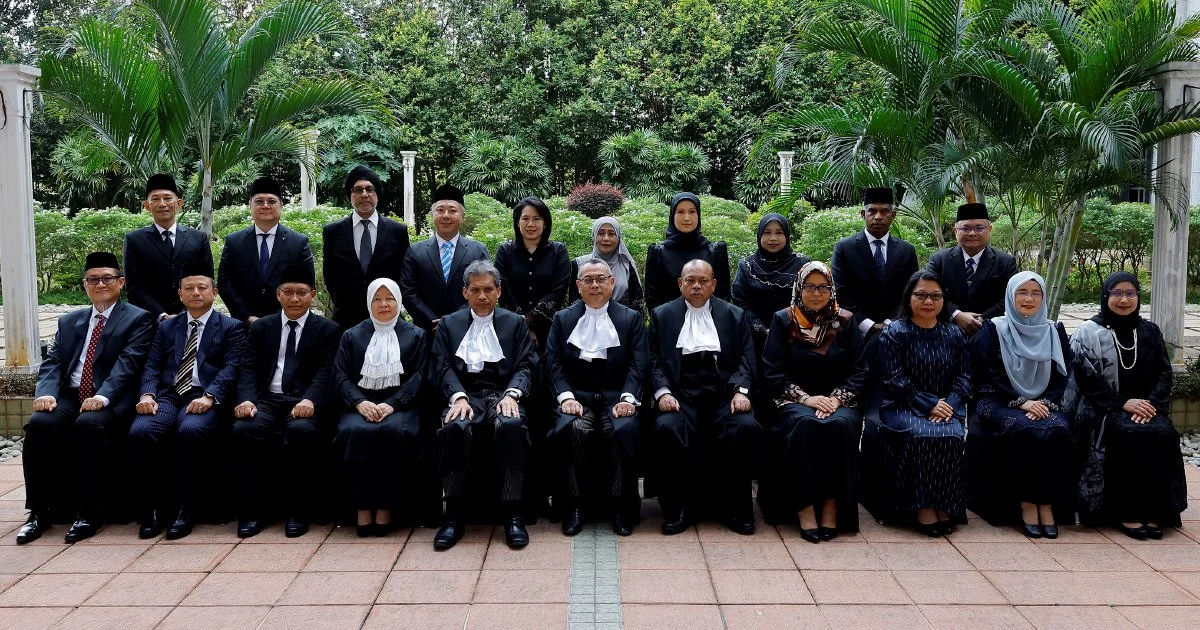
Malaysia's judicial hierarchy has been strengthened with the appointment of 17 new judicial commissioners, marking another significant expansion of the High Court bench. The latest round of elevations, announced in Putrajaya, reflects the government's continuing effort to build judicial capacity and address the persistent case backlog that has characterised Malaysian courts in recent years. Among those selected is a lawyer whose family background underscores the interconnected nature of Malaysia's legal establishment: her father previously held the position of Court of Appeal president.
The expansion of the judicial commissioner cadre represents a systematic response to longstanding structural challenges within the Malaysian court system. High Courts across the country have struggled with mounting caseloads and extended waiting periods for trial dates, issues that affect both criminal and civil litigants. By drawing from the ranks of experienced lawyers and existing judicial service officials, these appointments aim to distribute judicial workload more effectively and reduce the time cases spend in the system. The decision to elevate candidates with demonstrated legal expertise and institutional knowledge signals confidence that these individuals will transition smoothly into their new roles.
Appointments of this nature typically follow rigorous vetting processes overseen by the Judicial Appointments Commission, an independent body responsible for assessing candidates' qualifications, integrity, and suitability for the bench. The fact that 17 individuals have successfully completed this evaluation in a single round suggests that the pool of eligible candidates remains robust, despite periodic concerns about the supply of sufficiently qualified lawyers willing to accept judicial positions. Each appointment represents not merely a personal career advancement but a state resource allocated to the administration of justice.
The professional backgrounds of appointees usually span diverse sectors of legal practice, from government legal service, private law firms, and judicial positions themselves. This diversity brings varied perspectives and experience to the bench, enriching judicial decision-making and ensuring that courts can draw on expertise spanning different areas of law. Some appointees may have specialised in commercial law, others in administrative law or criminal practice, creating a more comprehensive knowledge base within the judiciary.
The appointment of a Court of Appeal president's daughter carries particular symbolic weight within Malaysia's legal circles, though such appointments are not unusual in senior judicial hierarchies worldwide where family connections to the law profession often span generations. Her elevation suggests she has established her own credibility and legal credentials independently, meeting the same exacting standards applied to all candidates. At the same time, the appointment subtly reflects how Malaysia's elite legal networks function, with high-profile legal families frequently producing successive generations of judges and senior lawyers.
For the Malaysian public, these judicial appointments carry practical implications. More judges and commissioners on the bench can theoretically translate into faster case resolution, reduced hearing delays, and improved access to justice. Citizens waiting years for civil cases to reach trial, or accused persons held in remand pending trial dates, stand to benefit if the expanded bench delivers on its promise to expedite proceedings. The cumulative effect of appointing 17 commissioners across multiple rounds over recent years represents a substantial injection of judicial capacity.
Regionally, Malaysia's approach to expanding judicial capacity through systematic appointment rounds aligns with broader Southeast Asian trends in judicial reform. Neighbouring countries including Thailand, the Philippines, and Indonesia have undertaken similar initiatives to modernise their court systems and improve adjudication efficiency. How Malaysia implements and manages this enlarged judicial cohort may offer lessons for other regional jurisdictions facing comparable challenges.
The timing of these appointments also reflects Malaysia's broader governance priorities. Judicial reform has featured prominently in recent policy discussions as the government seeks to enhance institutional efficiency and public confidence in the rule of law. Appointing qualified judges demonstrates a tangible commitment to these objectives, though observers note that expanding judicial personnel must be accompanied by adequate court infrastructure, modern case management systems, and sufficient administrative support staff to achieve genuine improvements in case throughput.
Looking ahead, the integration of these 17 new judicial commissioners into existing High Court operations will require careful management. Senior judges responsible for assigning cases and mentoring newer appointees will need to ensure that experience gaps do not compromise decision quality. Court administration must implement proper training programmes and supervisory mechanisms to support commissioners adjusting to their new positions. These internal processes, though less visible to the public than appointment announcements, ultimately determine whether the judiciary can effectively leverage its expanded capacity.
The appointment round also invites reflection on longer-term judicial succession planning in Malaysia. As senior judges approach retirement, ensuring a sufficient pipeline of qualified successors becomes critical. Regular appointment rounds help maintain intergenerational continuity and prevent gaps in expertise. However, the underlying question persists: are Malaysia's law schools, legal profession, and judicial service structures producing enough qualified candidates willing to accept bench positions at rates sufficient to sustain quality and capacity into coming decades?

