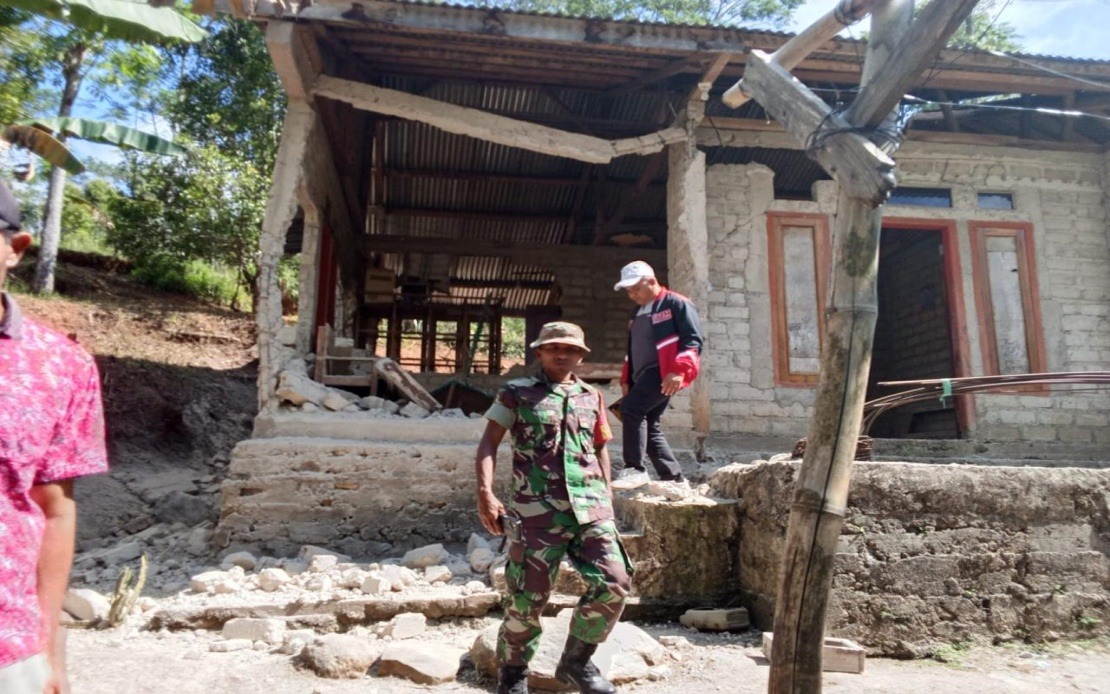
The Malaysian Foreign Ministry moved quickly to reassure the public on Saturday following a powerful 7.7 magnitude earthquake that struck Flores Island in Indonesia's East Nusa Tenggara province early in the morning. The seismic event, which occurred at 4.58 am local time in the Nagekeo Regency area northeast of Mbay, prompted immediate coordinated action between Kuala Lumpur and the Malaysian Embassy in Jakarta to account for citizens in the affected regions. Through swift communication efforts, embassy officials established contact with a group of 16 Malaysian tourists known to be near the epicentre, and all members of the party have been verified as unharmed and in stable condition.
The earthquake, which measured 7.7 on the moment magnitude scale, represents a significant seismic event for the region and underscores the persistent geological hazards facing Indonesia, one of the world's most active earthquake zones. The speed with which Malaysian diplomatic officials confirmed the safety of nationals reflects standard consular protocols designed to minimise anxiety among families back home and to provide early situational awareness during natural disasters. The ministry's formal statement provided reassurance that no Malaysians had been reported as injured or missing in connection with the earthquake, a crucial first step in managing public concern during such emergencies.
The confirmation process highlighted the importance of maintaining functional communication networks between diplomatic missions and citizens abroad during crises. The Malaysian Embassy in Jakarta's ability to rapidly contact and account for the tourist group demonstrates the value of established consular infrastructure and the utility of pre-existing communication channels with hotels, tour operators, and travel agencies that cater to Malaysian visitors. Such rapid response capability is particularly vital in Indonesia, where Malaysian tourists regularly travel to popular destinations including Bali, Lombok, and the eastern islands, and where natural disasters can occur with little warning.
Beyond the immediate relief of confirming the safety of the 16 tourists, the ministry's response highlighted the broader responsibility of monitoring conditions throughout affected areas. Embassy officials were instructed to continue active engagement with local Indonesian authorities to obtain comprehensive information about the overall impact of the earthquake and to identify any additional Malaysians who might require assistance. This systematic approach ensures that isolated cases of distress are not overlooked and that the consular mission maintains a complete picture of the safety status of nationals scattered across potentially affected communities.
The ministry issued clear guidance to all Malaysians in the region advising them to exercise heightened vigilance and to follow local safety protocols without exception. Residents and travellers were explicitly encouraged to remain alert to aftershock risks and to heed emergency instructions from Indonesian authorities, who possess direct knowledge of local conditions and evacuation procedures. This guidance reflects the reality that major earthquakes are frequently followed by substantial secondary seismic events that can cause additional damage and injury, and that coordinated response depends on populations maintaining awareness and discipline.
Recognising the challenge of maintaining contact with dispersed nationals during emergency situations, the ministry reinforced its call for Malaysians to register their details through the e-Konsular portal, an online system designed specifically to facilitate rapid communication with citizens abroad. The portal allows travellers and expatriates to keep their contact information current, enabling the Foreign Ministry and its diplomatic missions to reach out proactively during emergencies and to provide targeted updates and assistance. Despite the availability of this resource, uptake among Malaysian travellers remains uneven, and the ministry continues to encourage greater participation to strengthen emergency response capabilities.
For those facing immediate dangers or requiring emergency consular assistance following the earthquake, the ministry provided direct contact channels including an emergency helpline for the Jakarta Embassy accessible at +6281380813036 and an email address at [email protected]. These dedicated communication pathways ensure that individuals in distress can connect with trained consular staff capable of providing practical guidance, arranging medical assistance, facilitating evacuations, or coordinating with local authorities on behalf of Malaysian citizens. The availability of multiple contact methods accounts for the reality that telecommunications infrastructure may be partially compromised in earthquake-affected areas.
The incident underscores the ongoing exposure of Malaysian travellers to natural hazards in Southeast Asia and beyond. Flores Island and East Nusa Tenggara remain popular destinations for Malaysian tourists seeking cultural experiences, natural beauty, and outdoor activities, yet the region's location along the Pacific Ring of Fire means that seismic risk is an inherent feature of the landscape. While the probability of any individual tourist experiencing a major earthquake remains low, the absolute numbers of Malaysians travelling to Indonesia mean that statistical likelihood occasionally translates into lived experience.
The swift resolution of this particular crisis reflects both the effectiveness of existing consular protocols and the fortunate circumstance that the tourist group was unharmed by the earthquake's immediate impacts. However, it also serves as a reminder of the importance of travel preparedness and awareness. Malaysians venturing to seismically active regions should familiarise themselves with basic earthquake safety procedures, remain aware of their surroundings, and maintain communication with their embassy or high commission. The Foreign Ministry's continued monitoring of the situation suggests that officials recognise the potential for complications or secondary incidents that might affect nationals in the coming days.
Looking forward, the ministry indicated its intention to maintain close observation of developments in East Nusa Tenggara and to issue updated guidance as the situation evolves. This commitment reflects the dynamic nature of earthquake emergencies, where initial assessments may change as damage reports are compiled, aftershock patterns develop, and recovery operations commence. Malaysian diplomatic missions will remain in communication with local authorities and with the tourist group to ensure that any emerging needs are quickly identified and addressed through appropriate consular channels.

