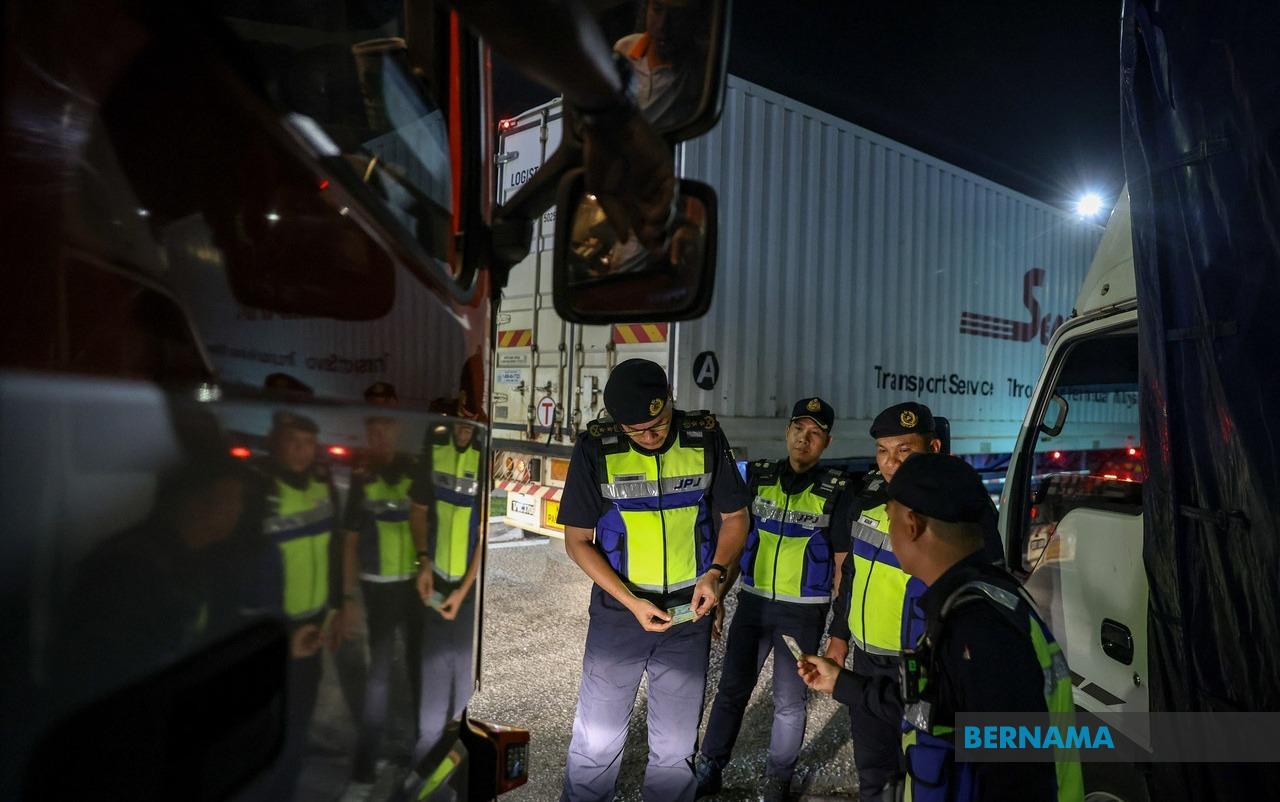
A coordinated crackdown on road safety violations in Johor has resulted in 16 commercial and public transport drivers testing positive for drug use, the state's Road Transport Department revealed following operations conducted from July 1 through July 10. The multi-agency initiative reflects growing concern among Malaysian authorities over substance abuse among professional drivers, whose impaired judgment poses significant risks to public safety on increasingly congested highways and urban roads throughout the peninsula.
The operation, coordinated by Johor's Road Transport Department (JPJ) under director Zulkarnain Yasin, brought together resources from the Royal Malaysia Police, the National Anti-Drug Agency (NADA), and highway operator PLUS Malaysia Berhad. This collaborative approach demonstrates the integrated enforcement model that Malaysian transport authorities have increasingly adopted to address road safety comprehensively. Rather than operating in isolation, agencies pooled intelligence and personnel to conduct simultaneous checks at multiple strategic locations throughout the state, maximising detection capability and deterrent effect.
Of the 164 professional drivers who underwent urine screening tests, the positive cases involved various controlled substances. Methamphetamine emerged as the most frequently detected drug, accounting for 10 cases, followed by crystal methamphetamine or ice at three instances. Cannabis use was identified in two drivers, while one tested positive for morphine. These findings align with regional patterns of substance misuse among transport workers, where stimulants like methamphetamine are sometimes abused to counteract fatigue during extended driving shifts, creating a dangerous false sense of alertness that masks impaired motor control and judgment.
Checkpoints were strategically positioned at high-traffic locations including highway rest and service areas, the JPJ Enforcement Station compound, and major bus terminals—facilities where large numbers of professional drivers congregate. The choice of venues reflects tactical understanding of enforcement effectiveness; concentrating resources where target populations naturally gather during operational hours yields higher detection rates than dispersed random checks. The Pagoh R&R area served as a particular focus point, given its significance as a major waypoint on north-south routes connecting Kuala Lumpur with southern Johor.
Beyond drug screening, the operation uncovered an extensive catalogue of traffic and vehicle regulation violations that underscore systemic compliance challenges within Malaysia's commercial transport sector. Authorities documented 707 cases of drivers operating without valid driving licences, a figure suggesting either deliberate circumvention of licensing requirements or administrative lapses. Expired road tax and insurance violations numbered 626 and 574 respectively—infractions that leave drivers and operators financially exposed and technically uninsured in accident scenarios.
Commercial vehicle licensing deficiencies proved equally problematic. One hundred twenty-eight drivers lacked valid Goods Vehicle Licences, a fundamental requirement for operating commercial transport. Additionally, 113 vehicles were found to be dangerously overloaded, a violation that compromises vehicle stability, increases stopping distances, and risks catastrophic multi-vehicle collisions on congested highways. Expired driving licences and goods vehicle permits numbered 30 and 14 cases respectively, while 51 vehicles displayed expired PUSPAKOM inspection discs, indicating vehicles operating without current roadworthiness certification.
Technical violations compounded these administrative failures. Thirty cases involved tyres not meeting safety specifications—a particularly concerning issue given Malaysia's tropical climate and monsoon seasons, where tyre quality directly impacts wet-weather braking performance. Thirty-nine vehicles displayed unauthorized modifications, alterations that may compromise original safety systems, structural integrity, or braking characteristics. The remaining 928 technical offences encompassed diverse issues ranging from lighting failures to suspension defects, collectively representing hidden hazards that could trigger accidents in critical driving scenarios.
The JPJ has signalled that licences and vocational permits for drug-positive drivers face suspension or revocation under Section 56(4) of the Road Transport Act 1987. This punitive approach aims to remove impaired operators from commercial service, though the effectiveness of such measures depends on consistent enforcement and comprehensive driver monitoring systems. Malaysia's transport sector has historically struggled with driver compliance, partly due to the informal economy's prevalence and cross-border movement of vehicles and personnel in Southeast Asian logistics networks.
The operation reflects a broader regional recognition that professional driver safety requires integrated approaches combining drug testing, vehicle inspections, and administrative compliance verification. In Southeast Asia, road safety remains a public health crisis, with traffic fatalities substantially exceeding regional averages. Drug impairment among drivers—often combined with fatigue, inadequate training, and mechanical defects—creates compound risk factors that make commercial transport particularly vulnerable to catastrophic failures.
For Malaysian freight and passenger operators, findings from this Johor initiative carry implications for fleet management practices. Companies face mounting regulatory pressure to verify driver credentials, conduct regular safety audits, and implement fatigue management systems. The sheer volume of violations documented suggests that cursory compliance checking inadequately addresses systemic issues. Industry observers note that genuine safety improvement requires investment in driver training, vehicle maintenance standards, and technological solutions like dashcam monitoring and telematics systems—measures that increase operational costs but demonstrably reduce accident rates.
The operation also illustrates enforcement resource allocation challenges facing transport authorities. With hundreds of drivers and thousands of vehicle movements daily across Johor alone, sustained comprehensive enforcement requires either massive budget increases or technological solutions including roadside cameras and automated number-plate recognition systems. Without such infrastructure expansion, enforcement operations remain episodic, potentially creating perception among some operators that compliance violations carry manageable risks.
Moving forward, sustainability of these enforcement efforts will determine their impact on road safety outcomes. Isolated operations, however successful in detecting violations, generate temporary behavioural compliance that dissipates once enforcement visibility decreases. The test for Malaysian transport regulators involves translating individual operations into systematic, technology-enabled monitoring that maintains consistent pressure on driver and operator compliance across all jurisdictions.

