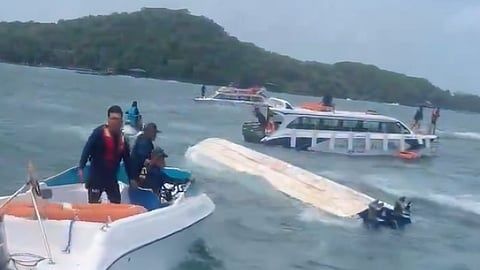
A tragic maritime incident unfolded in southern Vietnam on Saturday when a tourist speedboat sank near one of the country's premier holiday destinations, claiming the lives of 15 Indian visitors. The vessel, which had been transporting 32 Indian sightseers and four crew members on an island excursion, overturned approximately 400 meters from Hon May Rut Ngoai Island, situated in the waters off Phu Quoc, Vietnam's largest island. Vietnamese state media confirmed the death toll, marking one of the deadliest recent tourist accidents in the Southeast Asian nation.
The disaster unfolded during what should have been a routine recreational outing in one of the region's most visited beach destinations. Phu Quoc Island, positioned in the Gulf of Thailand, has become a major draw for both domestic Vietnamese holidaymakers and international visitors seeking its renowned white-sand beaches and crystalline waters. Hon May Rut Island, located approximately 10 kilometres south of Phu Quoc's main settlements, forms part of the extensive archipelago that contributes significantly to Vietnam's tourism revenue and regional reputation as an accessible tropical destination.
Rescue efforts commenced immediately when nearby vessels witnessed the catastrophe unfolding and moved to assist stranded passengers. According to reports from VN Express, civilian boats reached the scene first, with crew members working to extract people from the water before official rescue agencies including border guards, naval personnel, coast guard units, and other emergency services arrived at the location. The rescue operation proved exceptionally challenging given that numerous passengers remained trapped within the vessel's confines as it filled with water.
Ultimately, 21 people were pulled to safety during the rescue operation, while recovery teams located and retrieved all 15 victims. Those who survived the ordeal were transported to local medical facilities for treatment of injuries sustained during the capsizing and subsequent time spent in the water. The final casualty figure, while devastating for the affected families and the Indian tourist community, could have been considerably worse given the scale of the vessel and the circumstances surrounding its sinking.
The incident raises significant questions about maritime safety protocols governing tourist operations in Vietnam's popular island regions. The speedboat industry caters to hundreds of thousands of international and domestic tourists annually, yet detailed standards and enforcement mechanisms for vessel maintenance, passenger capacity limits, and crew training requirements remain inconsistently applied across different operators. For Malaysian tourists and travel companies in the region, the accident serves as a sobering reminder of the varying safety standards that exist across Southeast Asian tourist destinations.
The cause of the capsizing remained unclear immediately following the disaster, with Vietnamese authorities indicating that a formal investigation had commenced to determine the factors contributing to the vessel's failure. Preliminary inquiries would likely examine multiple potential causes including mechanical failure, adverse weather conditions, operator error, overcrowding, or inadequate maintenance of the speedboat. Such investigations typically require several weeks to complete and involve maritime experts, engineering assessments, and witness testimony collection.
Vietnam has experienced other significant maritime incidents involving tourists in recent years, though fatalities on this scale remain comparatively uncommon. The country's coastguard and maritime authorities have implemented various safety initiatives in response to previous accidents, yet enforcement remains variable across the nation's sprawling archipelago and tourist zones. The incident will likely prompt renewed scrutiny of safety standards at Phu Quoc, which generates substantial economic returns through tourism and requires consistent regulatory oversight.
For Indian tourists and travel operators, the tragedy represents an unexpected and devastating loss during what was intended as an enjoyable experience. India maintains significant tourism exchanges with Vietnam, with thousands of Indian citizens visiting annually to explore the country's cultural heritage, beaches, and natural attractions. Such incidents inevitably affect tourism confidence and may prompt Indian tour operators to reassess safety protocols with their Vietnamese counterparts.
The broader implications for Southeast Asian tourism extend beyond this single incident. Regional tourist destinations compete vigorously for international visitors, and safety perceptions substantially influence travel decisions. Visitors from Malaysia and other neighbouring countries often share similar concerns about maritime safety standards when selecting tour operators and activities. The incident underscores the importance of maintaining rigorous safety compliance across all commercial tourism operations, particularly those involving water-based activities where risks are inherently elevated.
As investigations proceed, the focus will inevitably shift toward identifying systemic deficiencies and implementing corrective measures to prevent similar tragedies. Vietnamese authorities and the tourism industry will face pressure to demonstrate strengthened oversight mechanisms and enhanced safety standards. For regional travellers and tour companies, the incident serves as a crucial reminder to verify operator credentials, safety records, and insurance coverage before booking activities in popular but sometimes under-regulated tourism zones throughout Southeast Asia.

